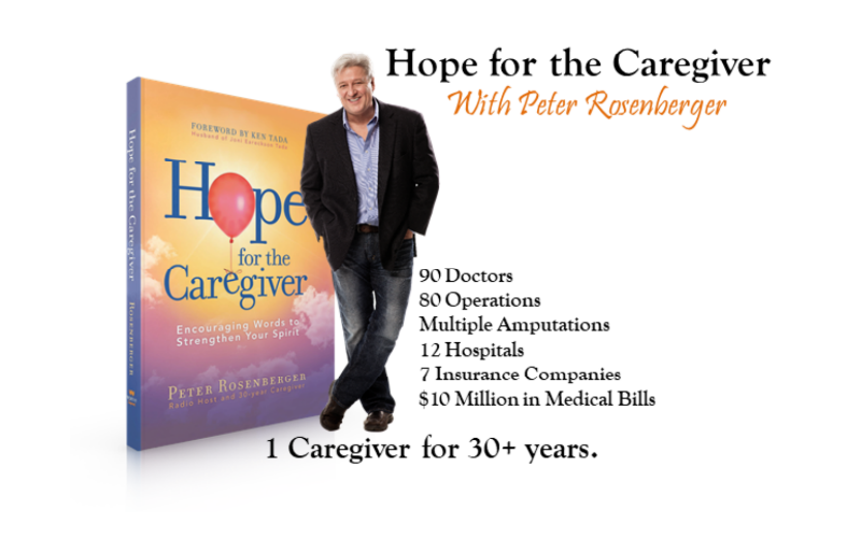
• Welcome to Hope for the Caregiver. This is Peter Rosenberger. Glad to be with you. This is the program for you as a family caregiver. For those of you who are putting yourself between a chronically impaired loved one and even worse, disaster. How are you doing? How are you holding up? What's going on • • with you? • • You're the reason we • • do the program. • Hope for the caregiver.com what is hope for the Caregiver? What is the conviction that we, as family caregivers can live a calmer, • healthier, and dare I say it, a, um, more joyful life while serving as a caregiver, • not in spite of serving as a caregiver, • • not • • after we serve as a caregiver while we're doing it, because we're doing it. • • And we can become greater because we're doing. We could become better people through this process. • • • That's the whole point of this. It's not that we've got to get through this, and then we can get on with our lives. This is our life. It's not a bad life. And we can become better through it. And we can, more importantly, see things • more clearly about the things of God. • • Hope for the caregiver.com • hopeforthecaregiver.com over the years, • • I have had the opportunity to speak with thousands of family caregivers. • • • And in doing so, I've learned to identify a few common denominators. • • You want to hear? • • Okay, since you asked. • • • • For example, every caregiver I've met struggles with • • what I call the three eyes. • • We lose our identity, • • we become isolated, and we lose our independence. The three eyes. I've talked about this extensively, and I've covered that in my book, particularly Hope for the Caregiver, which is available, which I wrote many years ago. And I would highly recommend getting a copy of that book. • • Um, it will. It would lay it all out for you very easily. There's audio version and the print and the E version, so I would recommend that. • • But there are other • common • denominators among caregivers. Now, the circumstances we all deal with are very different. I deal with somebody who endured extreme trauma. • • Okay, you may not be dealing with that. • • You may be dealing with somebody who has a, um, disease such as Alzheimer's or so forth. • • Some of you may be dealing with • • • • • a special needs child, • • some of you dealing with aging parents, some of you dealing with somebody who has mental illness or somebody who has an addiction. There are all kinds of different scenarios, • • but there are • common denominators • • • that • • transcend all of those things. They intersect all of those things that people are dealing with • • that go beyond the three eyes • • of identity, isolation and independence issues. • • • I have come to believe and understand and experience that when caregivers face brutal challenges, particularly challenges that stretch on beyond the horizon, • three • core questions eventually emerge. • • • • • Three core questions. The first one is, • • • • • where is God? • • • • • • • • • The second one is, • • • • why would a good and loving God allow this? • • • • • • And the third • • comes directly from scripture, • • • how long, O Lord? • • • • • Now, • sometimes the questions may come in various, • • • you know, • • versions of that, but those, those are the three distilled • • questions that I see so many caregivers • • ask • • in addition to the. A lot of times the person that they're caring for, if they're lucid. But certainly the caregivers • • will ask these questions • • • maybe very timidly, maybe not very, • • very • forcefully at all. They may be, uh, too embarrass • to ask them, ashamed, feel guilty, or feel like they're being irreverent towards God or, or all kinds of things. But whatever, uh, the question still there, it's still lurking. It comes from the basement of our hearts, and it hangs out there. • • And every so often, if the pain is enough, if the heartache is enough, • • • it'll go beyond being whispered in a hospital chapel • • or behind the closed door of a bathroom, and it'll erupt. • • • It will come out. • • • •
Now, we all have lots of different types of questions as we're caregivers. I mean, you know, some of us have to learn how to give injections. • Some of us have to learn how to change a urine bag. Some of us have to learn how to take out drains. Some of us have to do wound care. Some of us have to deal with lots of meds. Some of us have to deal with learning disabilities. Some of us have to deal with, • • um, the effects of alcoholism and addiction and so forth, and memory care. There's so many different things, • and every unique situation comes with its own set of unique questions. But, but those questions can be answered • • • • relatively • • • quickly. For example, wound care. I remember the first time I had to change a very complex dressing. I'm not talking about band aid, I'm talking about complex dressings. • • And yeah, it was a little nerve wracking, but I did it and I learned how to do it. And I don't freak out about it anymore. I don't ask that question • • every day. I don't wake up thinking, how am m I going to learn how to change this dressing? • • • How am I going to learn how to give this injection? • • How do I deal with this insurance company. How do I deal with this, doctor? I don't wake up every day and think about it. Uh, of fact, I don't even think about it • • once a week, once a month. • • I rarely think about it once a year. • • • I mean, it's one and done. I've learned it. • • • • • Chances are, so have you. • • • • But that's not what I'm talking about. • • • What I'm talking about are, uh, theological questions. • Now, the word theology • • • • • can intimidate people. • • • It sounds like it's something • reserved for seminaries and professors and pastors and people surrounded by a lot of • big books. • • • • • But theology simply concerns • what we know and believe about God. • • • • • • • • When we ask, where is God? We are doing theology. • • You know, there used to be a time when we studied theology and it was considered the queen of sciences and philosophy, • • its handmaiden. Now, what does that mean? • • Theology was the queen of sciences and his handmaiden was philosophy. • • • • Think about, think about that. • • Harvard • • was founded for the theological studies. • That's why Harvard was founded. And Princeton for that matter. • • They've deviated from that founding, wouldn't you say? Quite a bit. • • But there was no higher, • • • nobler pursuit of knowledge than the study of theology. • • • And philosophy was right there with it to ask those questions. Why are we here? • • • • • What, who are we? What are the implications of what we're learning in theology? • • • • • Theology was the queen of sciences. Now, we don't teach theology in a lot of our, • • uh, higher education, • • • • • or should I say higher indoctrination institutions. • • • • We have religion department, where religion and theology are not the same. • • • Theology • • • in a nutshell is the study of God. • • • More specifically, the study of the nature and character of God. • • • • • • Religion, on the other hand, is something different. • • • Religion is the study of human behavior regarding worship rituals and religious practices. • • • • Religion is fundamentally man centered. As an academic subject, theology is God centered. • • • • Religion studies human behavior, what people believe, how they worship and the practices they observe. • • • • Theology has as its object the nature and the character of God. • • • • • • Religion begins with man. Theology begins with God. Okay, • • • can we, can we all kind of • • nod along that we understand those basic differences? Because it's really important where we go from here and why I'm even doing this • • • • • • • again. You may be tuning in for the first time. You said, I thought this was a show for caregivers, not a studies, uh, of theology. • • It is a show for caregivers. • • • And I'm telling you, I have been doing this for a very, very long time. • • 40 years now, • • in fact. • Tomorrow's our 40th anniversary. • • We've been married 40 years. • • • I've been doing this • • for a long time. • • • • And in that journey, I've learned some • • • profound principles • • • • about life, love, faith, • • • • • and the character of God. • • • • • • And I've learned that • • • • • figuring out how to give an injection or dealing with an insurance company is not my major battle. • • • • • • I am my major battle. • • • • And my beliefs about God • • • and how my life is governed by those beliefs • • • • • • is the major battle. • • • • • • • What I do as a caregiver reflects what I believe about God. • • • • • And I had to be • • • • deconstructed and then reconstructed • • with understanding in order to • • gain what I've learned through this journey. • • And so I. I want to share this with you fellow caregivers, • that • • • we are not merely asking • • how we should behave • religiously • • while we're suffering. • What is the best way to go to • • church service while you're suffering? That's not what we're asking. What kind of music should we listen to while we're suffering? Now • • • • we're asking questions about the nature and the character of God himself. • Where is he? Is he good? Can he be trusted? These are theological questions. • • • You are not going to tune into this show and listen to me say, you need to pray more, you need to go to church more. You need to quote this verse. No, • • we're going to learn together • • more about the character of God • • and what that means to us while we take care of somebody • who is suffering. • • • • That's what we're going to learn together, you and me, • • • because that is hope for the caregiver. We'll be right back. • • • • • • • • • • • • • • • • • • • • • • • •
Hello, I'm Peter Rosenberger. Did you know that this show is listener supported? Without people like you, this show would not exist. • • That's why we need you. A generous monthly gift of any amount will help sustain American Family Radio, specifically this show, as we reach thousands of people each week with biblical truth. Please • • consider • becoming m a monthly financial partner today by visiting afr m.net give that's afr.net • • • • give • • • • • • • • • • • • • the following is a real life story from Trinity Debt Management. •
When I was feeling the stress of too much credit card debt, I looked at two different options, debt settlement and debt management. • They may sound the same, but guess what?
What?
They're not. Debt settlement seemed like a quick fix, but I found out it would destroy my credit, create tax headaches and hit me with huge fees. They actually told me to stop paying my bills. No way. Not me. Then I turned to a debt management plan developed by the team at Trinity. They worked with my creditors, lowered my payments, reduced my interest, • • saved me thousands, and paid off my debt • and Trinity is a Christian company, which is important to me.
If credit card debt has you down,
call Trinity at, uh, 1-800-788-1813.
• Welcome to Hope for the Caregiver. This is Peter Rosenberger. Glad to be with you. This is the program for you as a family caregiver. For those of you who are putting yourself between a chronically impaired loved one and even worse, disaster. How are you doing? How are you holding up? What's going on • • with you? • • You're the reason we • • do the program. • Hope for the caregiver.com what is hope for the Caregiver? What is the conviction that we, as family caregivers can live a calmer, • healthier, and dare I say it, a, um, more joyful life while serving as a caregiver, • not in spite of serving as a caregiver, • • not • • after we serve as a caregiver while we're doing it, because we're doing it. • • And we can become greater because we're doing. We could become better people through this process. • • • That's the whole point of this. It's not that we've got to get through this, and then we can get on with our lives. This is our life. It's not a bad life. And we can become better through it. And we can, more importantly, see things • more clearly about the things of God. • • Hope for the caregiver.com • hopeforthecaregiver.com over the years, • • I have had the opportunity to speak with thousands of family caregivers. • • • And in doing so, I've learned to identify a few common denominators. • • You want to hear? • • Okay, since you asked. • • • • For example, every caregiver I've met struggles with • • what I call the three eyes. • • We lose our identity, • • we become isolated, and we lose our independence. The three eyes. I've talked about this extensively, and I've covered that in my book, particularly Hope for the Caregiver, which is available, which I wrote many years ago. And I would highly recommend getting a copy of that book. • • Um, it will. It would lay it all out for you very easily. There's audio version and the print and the E version, so I would recommend that. • • But there are other • common • denominators among caregivers. Now, the circumstances we all deal with are very different. I deal with somebody who endured extreme trauma. • • Okay, you may not be dealing with that. • • You may be dealing with somebody who has a, um, disease such as Alzheimer's or so forth. • • Some of you may be dealing with • • • • • a special needs child, • • some of you dealing with aging parents, some of you dealing with somebody who has mental illness or somebody who has an addiction. There are all kinds of different scenarios, • • but there are • common denominators • • • that • • transcend all of those things. They intersect all of those things that people are dealing with • • that go beyond the three eyes • • of identity, isolation and independence issues. • • • I have come to believe and understand and experience that when caregivers face brutal challenges, particularly challenges that stretch on beyond the horizon, • three • core questions eventually emerge. • • • • • Three core questions. The first one is, • • • • • where is God? • • • • • • • • • The second one is, • • • • why would a good and loving God allow this? • • • • • • And the third • • comes directly from scripture, • • • how long, O Lord? • • • • • Now, • sometimes the questions may come in various, • • • you know, • • versions of that, but those, those are the three distilled • • questions that I see so many caregivers • • ask • • in addition to the. A lot of times the person that they're caring for, if they're lucid. But certainly the caregivers • • will ask these questions • • • maybe very timidly, maybe not very, • • very • forcefully at all. They may be, uh, too embarrass • to ask them, ashamed, feel guilty, or feel like they're being irreverent towards God or, or all kinds of things. But whatever, uh, the question still there, it's still lurking. It comes from the basement of our hearts, and it hangs out there. • • And every so often, if the pain is enough, if the heartache is enough, • • • it'll go beyond being whispered in a hospital chapel • • or behind the closed door of a bathroom, and it'll erupt. • • • It will come out. • • • •
Now, we all have lots of different types of questions as we're caregivers. I mean, you know, some of us have to learn how to give injections. • Some of us have to learn how to change a urine bag. Some of us have to learn how to take out drains. Some of us have to do wound care. Some of us have to deal with lots of meds. Some of us have to deal with learning disabilities. Some of us have to deal with, • • um, the effects of alcoholism and addiction and so forth, and memory care. There's so many different things, • and every unique situation comes with its own set of unique questions. But, but those questions can be answered • • • • relatively • • • quickly. For example, wound care. I remember the first time I had to change a very complex dressing. I'm not talking about band aid, I'm talking about complex dressings. • • And yeah, it was a little nerve wracking, but I did it and I learned how to do it. And I don't freak out about it anymore. I don't ask that question • • every day. I don't wake up thinking, how am m I going to learn how to change this dressing? • • • How am I going to learn how to give this injection? • • How do I deal with this insurance company. How do I deal with this, doctor? I don't wake up every day and think about it. Uh, of fact, I don't even think about it • • once a week, once a month. • • I rarely think about it once a year. • • • I mean, it's one and done. I've learned it. • • • • • Chances are, so have you. • • • • But that's not what I'm talking about. • • • What I'm talking about are, uh, theological questions. • Now, the word theology • • • • • can intimidate people. • • • It sounds like it's something • reserved for seminaries and professors and pastors and people surrounded by a lot of • big books. • • • • • But theology simply concerns • what we know and believe about God. • • • • • • • • When we ask, where is God? We are doing theology. • • You know, there used to be a time when we studied theology and it was considered the queen of sciences and philosophy, • • its handmaiden. Now, what does that mean? • • Theology was the queen of sciences and his handmaiden was philosophy. • • • • Think about, think about that. • • Harvard • • was founded for the theological studies. • That's why Harvard was founded. And Princeton for that matter. • • They've deviated from that founding, wouldn't you say? Quite a bit. • • But there was no higher, • • • nobler pursuit of knowledge than the study of theology. • • • And philosophy was right there with it to ask those questions. Why are we here? • • • • • What, who are we? What are the implications of what we're learning in theology? • • • • • Theology was the queen of sciences. Now, we don't teach theology in a lot of our, • • uh, higher education, • • • • • or should I say higher indoctrination institutions. • • • • We have religion department, where religion and theology are not the same. • • • Theology • • • in a nutshell is the study of God. • • • More specifically, the study of the nature and character of God. • • • • • • Religion, on the other hand, is something different. • • • Religion is the study of human behavior regarding worship rituals and religious practices. • • • • Religion is fundamentally man centered. As an academic subject, theology is God centered. • • • • Religion studies human behavior, what people believe, how they worship and the practices they observe. • • • • Theology has as its object the nature and the character of God. • • • • • • Religion begins with man. Theology begins with God. Okay, • • • can we, can we all kind of • • nod along that we understand those basic differences? Because it's really important where we go from here and why I'm even doing this • • • • • • • again. You may be tuning in for the first time. You said, I thought this was a show for caregivers, not a studies, uh, of theology. • • It is a show for caregivers. • • • And I'm telling you, I have been doing this for a very, very long time. • • 40 years now, • • in fact. • Tomorrow's our 40th anniversary. • • We've been married 40 years. • • • I've been doing this • • for a long time. • • • • And in that journey, I've learned some • • • profound principles • • • • about life, love, faith, • • • • • and the character of God. • • • • • • And I've learned that • • • • • figuring out how to give an injection or dealing with an insurance company is not my major battle. • • • • • • I am my major battle. • • • • And my beliefs about God • • • and how my life is governed by those beliefs • • • • • • is the major battle. • • • • • • • What I do as a caregiver reflects what I believe about God. • • • • • And I had to be • • • • deconstructed and then reconstructed • • with understanding in order to • • gain what I've learned through this journey. • • And so I. I want to share this with you fellow caregivers, • that • • • we are not merely asking • • how we should behave • religiously • • while we're suffering. • What is the best way to go to • • church service while you're suffering? That's not what we're asking. What kind of music should we listen to while we're suffering? Now • • • • we're asking questions about the nature and the character of God himself. • Where is he? Is he good? Can he be trusted? These are theological questions. • • • You are not going to tune into this show and listen to me say, you need to pray more, you need to go to church more. You need to quote this verse. No, • • we're going to learn together • • more about the character of God • • and what that means to us while we take care of somebody • who is suffering. • • • • That's what we're going to learn together, you and me, • • • because that is hope for the caregiver. We'll be right back. • • • • • • • • • • • • • • • • • • • • • • • •
Hello, I'm Peter Rosenberger. Did you know that this show is listener supported? Without people like you, this show would not exist. • • That's why we need you. A generous monthly gift of any amount will help sustain American Family Radio, specifically this show, as we reach thousands of people each week with biblical truth. Please • • consider • becoming m a monthly financial partner today by visiting afr m.net give that's afr.net • • • • give • • • • • • • • • • • • • the following is a real life story from Trinity Debt Management. •
When I was feeling the stress of too much credit card debt, I looked at two different options, debt settlement and debt management. • They may sound the same, but guess what?
What?
They're not. Debt settlement seemed like a quick fix, but I found out it would destroy my credit, create tax headaches and hit me with huge fees. They actually told me to stop paying my bills. No way. Not me. Then I turned to a debt management plan developed by the team at Trinity. They worked with my creditors, lowered my payments, reduced my interest, • • saved me thousands, and paid off my debt • and Trinity is a Christian company, which is important to me.
If credit card debt has you down,
call Trinity at, uh, 1-800-788-1813.
(00:00) Peter Rosenberger writes Hope for the Caregiver about family caregivers
(04:14) This show is about questions caregivers face as they care for patients
(10:00) American Family Radio is listener supported; without you, this show would not exist
(12:41) Peter Rosenberger: How can theology be a science?
(16:13) Suffering prompts theological questions, not just for the sufferer
(19:58) One man asked me where was God when Benjamin got hurt in Ghana
(22:52) Benjamin: Was God there when that vehicle struck, Benjamin
(23:38) Todd Stearns: Where was God when Benjamin was hurt
(27:38) Peter Rosenberger tackles where's God in caring after 40 years as caregiver
(33:23) This is where caregivers live. Caregiver to caregiver. And this is our life as caregivers
(39:21) Peter Rosenberger: Caregivers struggle with isolation following amputation
(42:40) Hope for the Caregiver is tackling some theological issues for caregivers
(45:12) We'll continue our series of hymns that every caregiver ought to know
(53:57) Peter Rosenberger: Hope for the caregiver.
(00:00) Peter Rosenberger writes Hope for the Caregiver about family caregivers
(04:14) This show is about questions caregivers face as they care for patients
(10:00) American Family Radio is listener supported; without you, this show would not exist
(12:41) Peter Rosenberger: How can theology be a science?
(16:13) Suffering prompts theological questions, not just for the sufferer
(19:58) One man asked me where was God when Benjamin got hurt in Ghana
(22:52) Benjamin: Was God there when that vehicle struck, Benjamin
(23:38) Todd Stearns: Where was God when Benjamin was hurt
(27:38) Peter Rosenberger tackles where's God in caring after 40 years as caregiver
(33:23) This is where caregivers live. Caregiver to caregiver. And this is our life as caregivers
(39:21) Peter Rosenberger: Caregivers struggle with isolation following amputation
(42:40) Hope for the Caregiver is tackling some theological issues for caregivers
(45:12) We'll continue our series of hymns that every caregiver ought to know
(53:57) Peter Rosenberger: Hope for the caregiver.
 Live
Live
Did you know American Family Radio is listener-supported? Your monthly financial support will allow us to continue upholding Godly values through our numerous channels, like American Family Radio, One Million Moms, The Stand magazine, and many more.
Become a Great Commission Partner TODAY to help AFR transform culture by rebuilding the family. When you donate today, you’ll get access to: