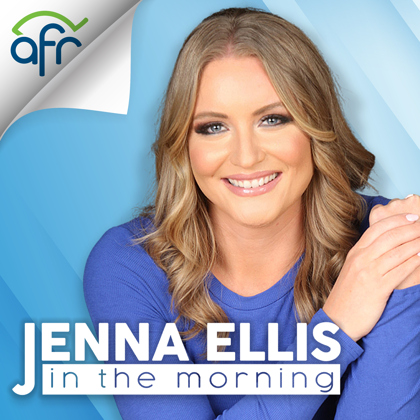
Alex McFarland welcomes guest host Rob Manison on American Family Radio
: Jenna Ellis in the morning on American Family Radio.
: I love talking about the things of God. Because of truth and the biblical worldview, the U.S. constitution obligates our government to preserve and protect. The rights that our founders recognize come from God our creator, not our government. I believe that scripture in the Bible is very clear that God is the one that raised up each of you and God has allowed us to be brought here to this specific moment in time.
Alex McFarland: Now here's guest host Alex McFarland. Well, good morning everybody. Happy Friday. I hope you're already off to a good start this day. We've got a great show for you. I'm very honored to be sitting in for Jenna Ellis on the American Family Radio Network. And we're going to start out, you know, this breaking news story out of, ah, Georgia that many, many boxes of ballots that could have had a decisive impact on the 2020 election that were said not to exist have been discovered and the DOJ has subpoenaed those. And so there's something I think many people knew all along, election fraud in the state of Georgia. We might talk about that. But we've got a very special guest that I'm honored to, bring to the mic in just a moment. For one thing, he's a, ah, Christian servant of our Lord, but he's also a servant of our nation. Rob Manison. He's a decorated veteran. He has a lifelong record of serving our country, not only as a private citizen, but he was, ah, in the military in a number of, really, heroic capacities. He led numerous combat operations, including a bomber squadron commander in Enduring Freedom, Iraqi Freedom. He was a bomb disposal technician in three assignments, countering terrorism. And he was commissioned for many, special operations. And I want to say this, there are so many people on his website that endorse Rob Manus. People like Rick Perry and Sarah Palin says Colonel MANUS is a 32 year decorated combat veteran whose story of service is incredible. And, I want to pick his brain about a lot of things. His website, robmanus.com but good morning sir. Thanks for being with us and welcome to the American Family Radio Network.
Rob Maness : Hey, good morning. It's good to see y'. All.
Alex McFarland: Good to see you again.
Rob Manus says our Constitution is at risk because of corrupt politics
hey, before we get into some headlines and I want to talk about the corruption, the moral decay in our nation and what can be done to reverse that, but, give people kind of a snapshot about the work you do, Colonel Manus.
Rob Maness : Well, these days, I'm Involved in a number of things. I'm a small business owner. we're involved in consulting, in things like, leadership, safety and those kind of things on occasion, but primarily focused on digital, media and publishing, on the Internet, my show, the Rob Manus show, runs live four days a week, Monday through Thursday from 3 to 4pm Eastern. and it's on the Worldview Tube Network, that's owned and operated by my friend, Brandon House. And we have a great audience, there, and love doing that show. Of course, we are in the political space, in a political action committee in 501c4 that's centered around the name Gator Pack. Gator Pack is the Pack, and Gator Pack direct is the 501C4. and as you mentioned, I just became a real author, so to speak, by getting my first book published.
Alex McFarland: Congratulations. Yeah. And what is, the title of that book?
Rob Maness : What you can do about it. And I'm involved in, Mississippi politics. I'm on the executive committee for the GOP for Harrison county down here on the coast of Mississippi, and among other things, and the vice president of the Conservative Coalition of Mississippi, which is a statewide, job. And I, work with the convention, of states folks here in the state, trying to get good amendments passed, to return our government back to a constitutional government.
Alex McFarland: Amen. God bless you. I mean, that is so vitally important. and let me ask you this. Try to help people appreciate the degree to which our Constitution in recent years has been at risk.
Rob Maness : Well, all you have to do is look at the congressional redistricting, fight that's happening all around us today. I don't know if you saw what happened in Tennessee yesterday, but, those are constitutionally, accurate, decisions and votes taken to redistrict the state of Tennessee, and away from an unconstitutional scheme of racist gerrymandering, and give all of the people of Tennessee an opportunity not only to to vote for who they want, but good candidates to come up. As a matter of fact, the The left is screaming and throwing a violent temper tantrum about that vote yesterday and saying things like, well, it's taking a black district away. Well, the district's represented by a white Jewish guy named Steve Cohen, for 20 years now. and the leading conservative Republican candidate is a. Is a black woman, out of west southwest Tennessee where Memphis is. And I'M excited to hear that news. But that's, that is why our Constitution is at risk and has been at risk, is because these decades and decades of the judiciary, academia, and politics of the left and weak politics of the Republicans, that have been leading the Republican Party, up until Donald Trump, came on the scene. That is the result of that, is that we now have, racist people screaming, threatening, violent insurrection. Actually, one state representative got in the face of a, of a white, state trooper that was trying to protect him, and he's a young black man, in Tennessee and called him boy, and use some expletives that I'm not going to go on to here, right in his face, as if, you turn the clock back to, Jim Crow era and reverse the races, and that's the kind of way people were treated, in the black community by a lot of folks back in those days. And we've deemed that unacceptable in this country. Our culture doesn't accept it. there's no reason for it because everybody that's an American has a right to be able to live free and be prosperous in this country without interference from politics or government. and, that's why our Constitution has been under threat is because we've allowed these kinds of things to grow and fester and haven't taken action. Now we've got a judiciary in the Supreme Court that has the courage to say it's wrong. and we have state legislatures and governors that are stepping up to the plate. And our governor here in Mississippi, Governor Tate Reeves, has called for a special session. I think that will start on May 20th. but you know what, there's still a lot of weakness out there. Alex, here in Mississippi, only one statewide elected official besides the governor is calling for redistricting these congressional districts. And, that's Shad White, the state auditor, where the rest of them is what the people are asking the rest of them. Because our Constitution is at stake. And the very thing we're celebrating this year, the Declaration of Independence that resulted in this constitutional government, those ideas, those values that still apply, all of them in that document that is at risk too, if we don't stop this and we're working to stop.
Alex McFarland: Well, and you know, one of the things, a whole nother topic we could unpack one day perhaps, is the way that the left has intentionally, in the minds of the American people, tried to, cut the Constitution loose from the Declaration. And really, the founders saw the Declaration, the preamble the Constitution as a cohesive whole. And we should talk about that, by the way, the Supreme Court, in a good way, they're kind of on a roll making some consistently good decisions.
Rob Man: The way the left has fought redistricting amounts to affirmative action
but I want to talk just a moment. And this is really not what I had you on to talk about, but, you know, the way the left has fought redistricting, I mean, the way the voting districts have been laid out for many decades really amounts to affirmative action for voting, if you will, rather than just an honest, layout of the voting district. Speak to that, if you would, why the left has such a visceral aversion to fair voting protocols.
Rob Maness : You know, let's get one thing clear, very early in the conversation, and that is that gerrymandering, is named after, a man from the founding fathers area era. So gerrymandering in itself is not out of the ordinary, for state legislatures to do. and, gerrymandering along partisan lines for political purposes is perfectly allowed. The Supreme Court has ruled on it over and over again, to do that, that you're okay to do that. And that's what we see happening today. so a lot of people are screaming about it, even on the right, are objecting to it. We saw what happened in Indiana, but they're wrong. it is the right thing to do. If we have the majority and the people that voted for that, it should be done because it resets the table away from this affirmative. I'm glad you called it affirmative action, for voting. Yeah, because. Because let's take Mississippi, for instance, and let's compare it to Massachusetts. In Massachusetts, there are 60% Democrat and 40% Republicans in four congressional districts. All congressional districts are Democrat. Okay? All of them are Democrat. No Republican wins in Congress there. In Mississippi, there are 60% Republican Republicans, and 40% Democrats. And we have three Republican districts in one gerrymander rate by race. congressional district that's led by Bennie Thompson, one of the worst of the worst. An actual communist. If you go back and look at his history, the district is, is poor. he brings nothing home to the people, of that district, that, where they could point to it and say, oh, look, we're going to be prosperous because of this. We get more jobs. No, I don't know what he does with the funds that he brings home to that district, but it's not happening. so it is a gerrymandered district. It's by race, and it needs to be eliminated. It'll do two things that will get rid of Bennie Thompson out of the United States Congress and, And the platform that that Communist has, been able to use for decades now, including being the chairman of the select committee on January 6, which was a farce. And, he's actually calling for a by. He's actually called in the last 48 hours for a violent insurrection if we eliminate that district. So I'm calling for the rest of the Republicans in this state that are in elected office to stand up, step up to the plate, have courage, and do the right thing by the people of that district so that they can get somebody elected. And it may be a black man or a woman, just like in Tennessee, that's fine. But it's the ideas, the ideas of the Declaration and the Constitution of the United States that all Americans deserve to have, be able to vote for representatives, that believe in those. And you just mentioned it, the Democrats are trying to disconnect the Constitution from the Declaration. regular Americans, whether they're Democrat or Republican, that still believes in those ideas, want somebody that represents them, that follows them. And that's what's going to happen if the folks here in Mississippi have the courage to step up and do the right thing.
Alex McFarland: You know, earlier this week, and folks, Alex McFarland here, we're talking with Colonel Rob Manus of the Rob Manes Show. I, was in Washington this week, and we were in a number of the buildings up there, like the Rayburn Building, and, the different buildings where the congressmen and senators have their offices. And you can tell the ideological divide because you're walking down the hallways and, you know, some offices, you can always tell the Republicans that they would maybe have a picture of Charlie Kirk by the side of their door or, you know, make America great again. And then, you'll see these offices where there's a rainbow flag and, you know, January 6th, we will not forget. And really the ideological divide, although I will say the vast majority of the congressional offices that I walked past Monday and Tuesday, and many, of which I was in to meet with, officials, the vast majority appear to be pro Trump conservative, but the, the Marxist globalist, anti American, pro transgender, pro Hamas, wrong on everything offices, boy, they surely do let their colors fly. the ideological divides are pretty flagrant and visible, aren't they?
Rob Maness : Oh, yeah, they are flagrant. They're visible. and, in some cases they may be insurmountable, you know, and Some of those offices, you'll see flags like Palestinian flags. And I saw ideological flags which are totally anathema, to constitutional values and the declarations, values of liberty, and freedom and prosperity, with the least amount of government that's possible. those, those types of ideologies, are more aligned to Nazi Germany, the Soviet Union's communism. The version of communism practice, in the People's Republic of China, today, is where those ideologies are. That's why you see the Chinese, alignment with the Iranians.
Alex McFarland: Indeed. We've got a break. We're going to come back more with Colonel, Rob Manus. Give the website quickly, and then we've got a break.
: Robmanus.com and you can find the book, what you can do about it on Amazon.
: Right on. Stay tuned, folks. Alex McFarland here, the American Family Radio Network. We're back after this. Don't go away.
Alex McFarland talks with Colonel Rob Manus on American Family Radio
Welcome back to Jenna Ellis in the Morning on American Family Radio. Welcome back to the program. Alex McFarland here, talking with Colonel Rob Manus. You know, I was thinking about something. Colonel Manus, first of all, again, thank you for your stand for truth, your stand for Christ, and your service to our nation. I just want to say on behalf of, Americans everywhere that actually love America. Thank you, Alex.
Rob Maness : I appreciate that. It was an honor to do. It still is.
Alex McFarland: Yeah. Yeah. You know what? when I was a kid coming up in school, I remember being taught about, the winter at Valley Forge. And, I just remember even as a kid in elementary school when we were getting the basics of American history, and I'm fortunate enough, I'm old enough that actually, you know, I think even though I was in public school, not Christian school, it was back when it was pretty good education, and it wasn't as ideologically programmed as it is now. But, you know, we weren't at Valley Forge. but we've got a different battle on our hands and maybe even, what's equally consequential, but maybe even a little bit more challenging, if you would.
Benny Thompson says freedom and a constitutional republic must be defended in every generation
And then I want to get into your book, but talk to the people about the fact that freedom and a constitutional republic has to be defended, really, again, in every generation. And while we may not be, frozen in the snow of Valley Forge, we are absolutely in a battle. And it's every citizen's, I think God ordained responsibility to help preserve America.
Rob Maness : Yeah, exactly right. You know, Americans from before we were independent, through today, that Understand reality, acknowledge that freedom is perishable. It's a perishable commodity. and, Americans, greater than me have said, Said things like, you know, when Benjamin Franklin was asked, what did you make? Or what did you create a republic, madam, if you can keep it. Something to that effect. I'm paraphrasing him. Sure. You know, and President Reagan said that, that, you know, generation, you know, freedom and liberty can disappear in one generation. It's up to our, descendants, and it's up to us to teach our descendants that they have to defend liberty and defend our freedom on a daily basis in order to make sure that their children and grandchildren get the opportunity to live in the greatest nation that's ever been, created, by mankind, by the grace of God and with his, permission and assistance, obviously. so we have to fight for that every single day. That's why it's important that I'm glad President Trump made a conscious decision in his first administration to celebrate the 250th anniversary of, the Declaration of Independence. Because, that is the core set of ideas that the founders of this country passed to you and me, and that we pass, and the 250th celebration is a good way to observe that. That we are passing those ideas, that torch of liberty, to our children, and grandchildren. And they'll pass it on and they'll know, because of the celebration throughout this year, that, that is a requirement in order to preserve, what we know as the United States of America under a constitutional government that's underpinned by that declaration only, not a constitutional government, that's a living, breathing document, but underpinned by that, Declaration of Independence. And those values. And those values are timeless. if you read the document, and I read it every year, you see, those words like life, liberty and the pursuit of happiness, the concepts of, having representation in our government, the concept of overthrowing or throwing off a tyrannical government, no longer supports the ends, which is the people, you know, the individual's right to that life, liberty and the pursuit of happiness. And when a government no longer supports that purpose, it's our right, it's not only our right, it's our duty and responsibility, to, to abolish that government and recreate one that will, so. And that's not seditionist or anti American. That is American. That idea is American. It certainly is American. and a lot of people, we need to fully understand those ideas so we can fight back against things like when a sitting congressman like Bennie Thompson just two days ago on national television said we need a violent insurrection to stop these constitutional actions, of branches of our government and elected officials in our government. See the difference there? the constitutional actions are the ones he's fighting against, and that's why he's wrong. If somebody was saying look, the government is taking unconstitutional and tyrannical actions like when we all protested against the, the taking of individual liberties in the pandemic, environment and those policies and, and other policies that Americans have protested and even taken up arms, to stop before, because they were unconstitutional and against the Declaration of Independence. we have to have a solid understanding of what all this means so that we can identify the people that are the posers, like Benny Thompson, and throw them out and replace them with people that understand these ideas and want to implement them and protect them and live by them.
Alex McFarland: I gotta ask you this question by the way. I've come to just love American history really. And the longer I live, the more I study, the more I write and speak, the more I appreciate the absolute miracle that was the American Revolution, the Constitutional Convention. And here we are a quarter millennia in to a nation under ah, this Constitution folks. It's a miracle what God has entrusted to us. And so we've had like 12 presidents since World War II, you know, ah, Truman, Eisenhower, Kennedy, Johnson, Nixon, Ford, Carter, Reagan, two Bushes, Bill Clinton, Barack Obama, Donald Trump. In your opinion, Colonel Manuscript, which Since World War II, give me the top two or three favorite presidents of the founders. If we could interview America's founders, Jefferson, whom I love, Washington, James Madison, Jon Adams, who would our founding Fathers point to as maybe the two best presidents of our lifetime?
Rob Maness : You know, I think that Ronald Reagan and Donald Trump would be those two of the 20th century and 21st century, to be honest with you, good answer. And a lot of people don't won't acknowledge this, but I think most Americans probably would give that answer today. now if you had asked my grandparents that question, they probably would have said Jon F. Kennedy and fdr because they were a farming family from West Tennessee. and and saw the things that those two individuals did and were going to do in the case of Jon Kennedy, although he, he, he, he had some great conservative ideas like cutting taxes hey, by
Alex McFarland: the way, so I. I got to throw this in there. About three years ago in the Wall Street Journal, there was an article, and it's probably still online, by a guy named Micah Bleckman, a, Jewish Democrat who, he worked for jfk. And he was. If he wasn't campaign manager for, Bobby. He was high up in his campaign. Maybe he was the manager, but Micah Blackman. And he wrote this article and he said neither JFK nor, Bobby Kennedy would be Democrats today.
Rob Maness : Because I agree with that. I agree with that.
Alex McFarland: Yeah. And folks, yes, jfk, by comparison, he would almost be ideologically a Republican today.
Rob Maness : Yeah, absolutely. Because they leaned into the concepts in the Declaration of Independence, Alex. those guys believed in that, you know. And, I was fortunate enough to study under a man named Richard Neustadt, who wrote the book Presidential, Power. He was Jon F. Kennedy's close aide, when he was a young man in that administration, and got to have many conversations with him about the details that he listened to and heard and watched and, those kind of things. And I'm convinced that Black, Winter is right. JFK would, be. Would, definitely be a Republican today. But Donald Trump, I think is. Is, And I'm biased because my first president I voted for when I was 18 was Ronald Reagan first election. but, I think Donald Trump is more of a constitutional president than Ronald Reagan was.
Alex McFarland: Yeah, Reagan.
Rob Maness : Reagan started bringing it back to the forefront of how important it is that we, govern, by the Declaration and the Constitution, in a very conservative, manner. but Donald Trump is more, of a president, in constitutional action than I expected, to be honest with you. I mean, the man was a Democrat, I think.
Alex McFarland: Oh, yeah, he was.
Rob Maness : The only office he's ever held is the presidency of the United States. And that may be why he's able to think that way. yeah, you know, of course he's pragmatic. He spends, money, differently than I think I would, if I were in that position. But I don't know. I don't know. I mean, sometimes we have to, strengthen, ourselves and. And spend the resources. We have to do that before we can, start going, okay, the principle is we need to lower the debt and all that. And at the times in our country's history when we were under threat, is when we had presidents that would do that, and Trump is doing that, but he's doing it in a way, that, where he's communicating to the American people if they can listen, and not all of them can, unfortunately, as to why it's happening and what the plan is, and at the same time, he's doing everything he can with his team to, improve the economy that he inherited this time that was being crushed by Democrat policies. so that we're back to being prosperous and, and, and have an eye on, on even the goal of, Of a single family having a single income and being able to live and be prosperous and free on a single income these days. So, I mean, the folks in his administration that he's leading are following those ideas because they're his types of ideas. Sure. And he makes these decisions, that turn out to be the most constitutionally correct of my lifetime.
Alex McFarland: And folks, this is why, and believe me, I will be talking a lot about this in the next weeks and months, but, it is imperative, imperative that you vote in the midterms and frankly, pray for the midterms, because, if a wave of Democrats, are put in office, I mean, and the last two years of Trump's presidency are wasted, that would be tragic.
Rob Manus: Colonel Manus wrote a book about anti-Americanism
and we'll talk more about that, but I want to talk about your book, what you can do about it. And by the way, you've dedicated the book to my, friend and yours, the late Charlie Kirk. But, the book showing how patriots can respond to anti Americanism. Colonel Manus, if you would tell us about your new book, what you can do about it.
Rob Maness : Well, Alex, I entered the political arena as a candidate, in the US Senate race in Louisiana against Bill Cassidy and Mary Landrieu in the, the 2013, 2014, election cycle. and ever since then, people have been bugging me to write a biography because I've had a very interesting life. I've had some things happen in my lifetime, both growing up in my military career and, even after my military career, that are interesting. but I didn't want to do that. I wanted to write a book, that actually, does something. And the. Something in this case is help people understand how they can answer the question that I get asked all the time, whether I've been in a, in a community town hall leading that, as, as a, As a, a mayor type individual out in Albuquerque, NewSong Mexico, when I was the base commander out there, at the large base out there, or whether I've been, in a commander's call with my troops, or whether I've Been running for office and, and doing rallies where I've taken questions. when I'm talking about a specific issue, the answer or the answers that I get back from the people is a question. And the question is always, what can I do about that? Because Americans, they are men and women of action. We are a people of action for good. so that is the question that I have tried to ask and answer all of my life, all of my life. And I've been surrounded by historical figures, family members, aunts, uncles, my mom and dad, friends, my Air Force dads, I call them. I entered the air force at 17. So the early NCOs, that took care of me, or I consider my Air Force dads, even though my dad's an air force in CO2. you know, but, so we wanted to use stories from my lifetime, to paint the picture, to accomplish something. And accomplishing something is that question, what can I do about it? and here's why. The left in this country, I have seen it my whole life, have out organized, outfunded, and out advocated, the people that are Americans like us that still believe in the Declaration and the Constitution of the United States. Some might say on the right, some might say on the Republican Party, we use all those terms in the book. but we wanted to use those stories from my life to talk about how to organize, raise money and then act, in a positive manner, so the citizens, have more control and more power to change things, to get them back on track, which will change things for the better, to follow the Declaration and the Constitution and to get politicians that might be in agreement with us, like Jon Thune, who we need to get the Save America act passed. That's a prime example of the type of situation is I wanted to give an individual that's reading this book the tools as a way to think about this process so that they can have a positive impact on an issue that's made them ask that question. What can I do about it? that's why.
Alex McFarland: Where may people find the book?
Rob Maness : I'm sorry?
Alex McFarland: where may people find your book?
Rob Maness : You can find it at Amazon. Just type in Rob Manus or what can I do about it? It pops right up. and, that's where it's for sale right now. And coming soon is the hardback. We've got paperback and Kindle available now. Coming soon is the hardback, copy. and then I will be doing an audiobook in my own voice and
Alex McFarland: and where can people listen to your show?
Rob Maness : You can find [email protected] M at on X at Robmanus R O B M A N E S S, on Facebook at C O L robmanus, and, any other social media like Getter, and those kinds of places, usually at Rodmanus. Well, Rumble Channel is the Rob Manus show and YouTube is Rob Manus show too.
Alex McFarland: Hey, folks, when we come back and thank you, Colonel Manus, we appreciate it. We're going to talk about the anxious generation, Gen Z, and why so many are depressed, anxious, and what we can do about rescuing this lonely generation. Stay tuned. We're back after this brief break.
Alex McFarland: Garrett Bryant addresses spiritual hunger of young people
Welcome back to Jenna Ellis in the Morning on American Family Radio. Welcome back to the program. Alex McFarland, I'm going to change gears here a little bit. As you probably know, for years and years and years we've done youth, camps and, we love, you know, middle school, high schoolers and young adults, and we've had thousands and thousands over the years. By the way, the summer camps. You can learn [email protected] but in the last two years, I've noticed something that when we do Q and A and we interact with, you know, youth from all over America, they've been talking about, being anxious and afraid. You know, 20 years ago, I mean, on Worldview and apologetics, they would ask about, you know, how do we know the Bible is true and have the manuscripts been preserved? And we love that kind of content. But, I would say that the struggles nowadays are less intellectual and more emotional. And to help us understand about this, the, the 61% of 14 to 29 year olds are saying that loneliness affects their mental health, 36% report anxiety and 29% say they're depressed. Well, to help us weigh in on this and to make a positive difference, Garrett Bryant, and he is the spokesman of Prayer at the Heart, a movement that addresses the spiritual hunger of this generation. And, he's just a leader that God is using in a great way, and he's with us now. Garrett, thanks for being with us on the American Family Radio Network. But, even more importantly, thank you for what you're doing in the, hearts and lives of young people. Garrett, are you there?
Garrett Bryant: I am, yes, sir. It's an honor to be here with you today. Thanks for having me.
Alex McFarland: Well, thank you.
Prayer at the Heart is what we're calling a movement of hope
Good morning. I've got a lot I want to ask you, but talk to us about, prayer at the heart. I know Franklin, Graham and Ronnie Floyd, and just a lot of our valued colleagues have endorsed what you're doing. Tell us about it, if you would.
Garrett Bryant: Yes, sir. So, as you can see kind of on the graphic behind me, Prayer at the Heart is what we're calling a movement of hope. And it was established back in 2021 when our founder, Dr. Doug Small, had it in his heart. The Lord put it in his heart to have a prayer meeting at the center of the nation. Hence, Prayer at the Heart. The heart of America. Right. So about 3,000 people joined together in a little town called Lebanon, Kansas, at the very north part of Kansas in July of 2021. And they got together there to pray for the nations, taking the idea of 2nd Chronicles 7:14 to heart. If my people who are called by my name will humble themselves and pray, seek my face, turn from their wicked ways, then I will hear from heaven, forgive their sins, and heal their land. That's what it was all about. And from there, from that meeting there at the heart of America, Prayer of the Heart became what it is today. An incredible prayer organization that seeks to engage culture and be counterculture and get people praying.
Alex McFarland: Well, that is wonderful. And I love the idea of being at the geographic center of the country. you know, the, studies that Barna and others are documenting and yourself, and then just what we're seeing firsthand in our camps and conferences. Gen Z, there's a lot of emotional stress and fear and anxiety, on them, isn't there?
Garrett Bryant: There is, There is. And it's a reality of the culture in which we live in. and I have some stats to back it up, if you don't mind me sharing them. Because I can give my opinions all the time and my personal experience. Personal, experience. But I think stats will help us along the way as well. So when we're talking about Gen Z, we're talking specifically about individuals, young people between the ages of 14 and 29 at the time of this recording. Right. And 61% of them. 61, that's a majority say that loneliness affects their mental health in a negative way. 36% report feeling anxiety or anxiousness. 29 say that they are depressed. And then finally, another majority statistic, 50% say their life lacks purpose. And there's a lot of things that go into this, namely comparison culture, the accessibility of seeing what their friends are doing on, social media, what famous individuals are doing on social media, and trying to live up to those sort of standards, which, by the way, are Just people's highlights. It's not always a reflection of reality. Right?
Alex McFarland: Oh, yeah, exactly. I didn't mean to interrupt you, but, but that's right. I mean, comparison on social media, that's one of the, the real joy killers. And but, but I mean, we all know that I used to say kids live on their screens and mobile devices. People of all ages do. but we see this too. The stats are very accurate. I believe that there is an anxiety.
Garrett Bryant: 52% of US teens are very motivated
Talk to us, if you would, Garrett, about lack, of purpose. What does that do to a young person when they feel like they really don't have any reason to be here and that like this huge number say they, they don't really have any purpose in life?
Garrett Bryant: Yeah, it's a, it's a sad statistic and a sad reality based on, these studies. But I believe that's rooted in the, in the idea and the fact that they don't have what they believe to be a strong foundation. Culture wants to give them this, what I, what I like to call microwave, culture. And that is you press a few buttons and 30 seconds later your meal is ready. Right. So they are in constant contact and under the constant pressure of, okay, I've got to get what's mine or I've got to measure up to the next best thing. And they're in this cycle of trying to figure out what is going to last for me, what is going to stay sure and strong and true in my life. What can I depend on? My favorite celebrity just went through a scandal. My favorite sports star did the same thing. What is real, what is true? And many of them, there is hope, by the way. Many of them are turning to the faith as a way to express and understand and find grounding in life. And for that I'm so thankful.
Alex McFarland: Well, and the very same group that are anxious though, the good news is they're also very open, to learn more about Jesus Christ, aren't they?
Garrett Bryant: That's exactly right. In fact, another Barna poll. Thank goodness for Barna, right? Such incredible studies on this next generation. On Gen Z, this poll has revealed that 52%. So again, another majority statistic, 52% of US teenagers are very motivated and they add in that. Very motivated. Not just kind of motivated. No, it's very motivated to learn more about Jesus Christ. And I want to add here, it's not just learning about religion or learning about any other faith background or famous individual from religious, history. No, it's specifically 52% of them are very interested in learning more about Jesus Christ himself.
Alex McFarland: That's awesome. and by the way, before we go too much farther, we're talking with Garrett Bryant, who is, just a wealth of information about Gen Z and prayer at the Heart. give us website, any, broadcast you create digital content. Where can people follow you?
Garrett Bryant: Yeah, absolutely.
Garrett, what can churches and individuals do about the Million Soul campaign
So let me talk about the Million Soul campaign. You can find us [email protected] right now we are really pushing the idea of what's called the Million Soul campaign, and that's for all ages. My responsibility is to focus on the next generation and Gen Z, but we want all ages to join us on this campaign, which is to commit as an individual. So say Garrett is committing to pray for a lost family member or a lost friend between now and Passover or, sorry, excuse me, Pentecost Sunday, which is May 24th.
Alex McFarland: Sure, sure. that's great because I was going to ask you what can churches and individuals do? So give us this website again. And I know there's I've got a document open called a digital toolkit that has some very good calls to action. Because folks, this is the Great Commission. I mean really, and we're called to be representatives of Jesus to our generation. But give us these action steps again if you would, Garrett.
Garrett Bryant: Absolutely. So you can go to prayerattheheart.org and right there on the homepage, nice and easy and accessible, is a little signup sheet. And if you sign up there, it's just an acknowledgement for us as your commitment to be one in a million, praying for another individual that you know to be saved. And we're hoping that 1 million, we're believing that 1 million people will be saved here in the near future. Prayer@the heart.org Amen.
Do you have any advice for churches struggling to reach younger audiences
Alex McFarland: Do you have any advice, Garrett, for, for churches that are, you know, really struggling to reach, you know, 30 and younger and a Gen Z is a pretty broad swath of the population. But for you know, the thousands of churches, their heart is right and they've got the right heart. They want to reach people, but they just don't quite know where to begin, especially for this younger demographic. Do you have any advice?
Garrett Bryant: Yes sir. And I don't want it to sound, ah, like a cop out answer, but I believe it's true. First of all, I don't want to let those individuals that might be experiencing that maybe you're a pastor or you're a parent and you want your child or other Kids, in your sphere of influence to come to church, and they don't seem very interested. There is hope because statistics would suggest that this generation is more interested in things of the faith than even previous generations at that age. But taking that a step further, I would encourage those leaders, those parents, whoever it might be, to pray. This is what we are instructed to do in Scripture. To pray for the lost. To pray for those individuals that they would come to know Jesus, that they would want and desire a relationship with Christ. And that's most easily found within the context of a local church. In fact, planting churches is currently the most effective way to reach the lost.
Alex McFarland: Amen. And you know what I mean, Talk about having a purpose in life. you know, I would encourage churches, and this is going to take some time, but to evangelize and disciple all ages, but especially young people, and then train them for ministry and then go plant churches. I mean, look, I'm in the Bible Belt and down south, there's a church on every corner. Praise God. But what about the Upper Northeast, Garrett? I've had friends that have gone to places like Boston and, NewSong Haven, Connecticut, and incredibly fruitful opportunity for evangelism. go to the Upper Northeast, go to the Upper Northwest, Seattle, Portland, Sacramento, where there's just a lot of Wicca and occult and NewSong Age, and talk about purpose, to go and take Jesus back to these very unreached, dark places. And it will work. It can happen. And you know, let me just say to everybody in heartland America, your church can become a mission sending church. I'm not talking about to the other side of the planet. I'm talking about to the unreached people groups here in the usa.
Garrett Bryant: Yeah, yeah, absolutely. you know, we're instructed by Jesus to reach our Jerusalem, so our immediate sphere of influence, our Judea, our Samaria, those that maybe we don't get along with and don't like, and then spread the gospel to the uttermost parts of the earth. So what a, call to action. To go to those places that may be viewed as hard ground and preach the word and preach Jesus and share the gospel to those that don't know him. It reminds me of Jonah, right? He didn't really want to go to Nineveh, but man, once he did, that whole, city was changed and transformed and they had relationship with God. And wouldn't it be awesome if through the prayers of God's people, our hearts would be transformed and we would be sent out to represent him to a lost and dying world?
Alex McFarland: Garrett, how did God bring you to where you are in your journey? I'm just so, honored to meet you, man. And your, the, the way God is using you and your passion, it's, it's thrilling and refreshing. But, how did you get to where you are in your journey, brother?
Garrett Bryant: Well, sir, that's very kind to say, two primary influences within the context of prayer at the heart and my personal life. my father is an incredible man of God, and I owe a debt of gratitude to him. my mother as well. They're both incredible individuals praying m men and women. So they set a great example for me as a young kid growing up and into my teenage years. I will admit though, I did have this sort of prodigal son experience of kind of turning away from the faith and going after the things of the world. Not, to get all into that, but I had this experience and it left me wanting. Right? Just like it did for the prodigal son in the Bible. It left me wanting. So I came back to the faith and came back to grace. Thank God for grace. Am I right? Thank God for grace. I came back to it in my young, 20s. And, really at that point in my life, I also met the founder of Prayer at the heart, coincidentally, Dr. Doug Small. And he took me and a few others on a two year intensive journey of getting together and learning about prayer. Learning what prayer was all about, learning about God through prayer, learning to pray good and effective prayers according to what scripture teaches us. So, yeah, my parents and then Dr. Doug Small have been incredible influences in my life.
Alex McFarland: Amen at this point. Well, hey, it's great to have you on. And again, folks, prayer at the heart. Franklin Graham supports it and many others trying to get a million Christians to pray for the salvation of people. By Pentecost Sunday, May 24. Garrett Bryant, thanks for being with us. We're almost out of time, folks. The Jenna Ellis show [email protected] you can tell people about it, forward the link and bless somebody's day. In the meantime, thanks for listening. Thanks for Jenna Ellis allowing me to sit in and I'll be back. Good Lord willing. 3:00 clock Central on exploring the word. Blessings to all.
Alex McFarland welcomes guest host Rob Manison on American Family Radio
: Jenna Ellis in the morning on American Family Radio.
: I love talking about the things of God. Because of truth and the biblical worldview, the U.S. constitution obligates our government to preserve and protect. The rights that our founders recognize come from God our creator, not our government. I believe that scripture in the Bible is very clear that God is the one that raised up each of you and God has allowed us to be brought here to this specific moment in time.
Alex McFarland: Now here's guest host Alex McFarland. Well, good morning everybody. Happy Friday. I hope you're already off to a good start this day. We've got a great show for you. I'm very honored to be sitting in for Jenna Ellis on the American Family Radio Network. And we're going to start out, you know, this breaking news story out of, ah, Georgia that many, many boxes of ballots that could have had a decisive impact on the 2020 election that were said not to exist have been discovered and the DOJ has subpoenaed those. And so there's something I think many people knew all along, election fraud in the state of Georgia. We might talk about that. But we've got a very special guest that I'm honored to, bring to the mic in just a moment. For one thing, he's a, ah, Christian servant of our Lord, but he's also a servant of our nation. Rob Manison. He's a decorated veteran. He has a lifelong record of serving our country, not only as a private citizen, but he was, ah, in the military in a number of, really, heroic capacities. He led numerous combat operations, including a bomber squadron commander in Enduring Freedom, Iraqi Freedom. He was a bomb disposal technician in three assignments, countering terrorism. And he was commissioned for many, special operations. And I want to say this, there are so many people on his website that endorse Rob Manus. People like Rick Perry and Sarah Palin says Colonel MANUS is a 32 year decorated combat veteran whose story of service is incredible. And, I want to pick his brain about a lot of things. His website, robmanus.com but good morning sir. Thanks for being with us and welcome to the American Family Radio Network.
Rob Maness : Hey, good morning. It's good to see y'. All.
Alex McFarland: Good to see you again.
Rob Manus says our Constitution is at risk because of corrupt politics
hey, before we get into some headlines and I want to talk about the corruption, the moral decay in our nation and what can be done to reverse that, but, give people kind of a snapshot about the work you do, Colonel Manus.
Rob Maness : Well, these days, I'm Involved in a number of things. I'm a small business owner. we're involved in consulting, in things like, leadership, safety and those kind of things on occasion, but primarily focused on digital, media and publishing, on the Internet, my show, the Rob Manus show, runs live four days a week, Monday through Thursday from 3 to 4pm Eastern. and it's on the Worldview Tube Network, that's owned and operated by my friend, Brandon House. And we have a great audience, there, and love doing that show. Of course, we are in the political space, in a political action committee in 501c4 that's centered around the name Gator Pack. Gator Pack is the Pack, and Gator Pack direct is the 501C4. and as you mentioned, I just became a real author, so to speak, by getting my first book published.
Alex McFarland: Congratulations. Yeah. And what is, the title of that book?
Rob Maness : What you can do about it. And I'm involved in, Mississippi politics. I'm on the executive committee for the GOP for Harrison county down here on the coast of Mississippi, and among other things, and the vice president of the Conservative Coalition of Mississippi, which is a statewide, job. And I, work with the convention, of states folks here in the state, trying to get good amendments passed, to return our government back to a constitutional government.
Alex McFarland: Amen. God bless you. I mean, that is so vitally important. and let me ask you this. Try to help people appreciate the degree to which our Constitution in recent years has been at risk.
Rob Maness : Well, all you have to do is look at the congressional redistricting, fight that's happening all around us today. I don't know if you saw what happened in Tennessee yesterday, but, those are constitutionally, accurate, decisions and votes taken to redistrict the state of Tennessee, and away from an unconstitutional scheme of racist gerrymandering, and give all of the people of Tennessee an opportunity not only to to vote for who they want, but good candidates to come up. As a matter of fact, the The left is screaming and throwing a violent temper tantrum about that vote yesterday and saying things like, well, it's taking a black district away. Well, the district's represented by a white Jewish guy named Steve Cohen, for 20 years now. and the leading conservative Republican candidate is a. Is a black woman, out of west southwest Tennessee where Memphis is. And I'M excited to hear that news. But that's, that is why our Constitution is at risk and has been at risk, is because these decades and decades of the judiciary, academia, and politics of the left and weak politics of the Republicans, that have been leading the Republican Party, up until Donald Trump, came on the scene. That is the result of that, is that we now have, racist people screaming, threatening, violent insurrection. Actually, one state representative got in the face of a, of a white, state trooper that was trying to protect him, and he's a young black man, in Tennessee and called him boy, and use some expletives that I'm not going to go on to here, right in his face, as if, you turn the clock back to, Jim Crow era and reverse the races, and that's the kind of way people were treated, in the black community by a lot of folks back in those days. And we've deemed that unacceptable in this country. Our culture doesn't accept it. there's no reason for it because everybody that's an American has a right to be able to live free and be prosperous in this country without interference from politics or government. and, that's why our Constitution has been under threat is because we've allowed these kinds of things to grow and fester and haven't taken action. Now we've got a judiciary in the Supreme Court that has the courage to say it's wrong. and we have state legislatures and governors that are stepping up to the plate. And our governor here in Mississippi, Governor Tate Reeves, has called for a special session. I think that will start on May 20th. but you know what, there's still a lot of weakness out there. Alex, here in Mississippi, only one statewide elected official besides the governor is calling for redistricting these congressional districts. And, that's Shad White, the state auditor, where the rest of them is what the people are asking the rest of them. Because our Constitution is at stake. And the very thing we're celebrating this year, the Declaration of Independence that resulted in this constitutional government, those ideas, those values that still apply, all of them in that document that is at risk too, if we don't stop this and we're working to stop.
Alex McFarland: Well, and you know, one of the things, a whole nother topic we could unpack one day perhaps, is the way that the left has intentionally, in the minds of the American people, tried to, cut the Constitution loose from the Declaration. And really, the founders saw the Declaration, the preamble the Constitution as a cohesive whole. And we should talk about that, by the way, the Supreme Court, in a good way, they're kind of on a roll making some consistently good decisions.
Rob Man: The way the left has fought redistricting amounts to affirmative action
but I want to talk just a moment. And this is really not what I had you on to talk about, but, you know, the way the left has fought redistricting, I mean, the way the voting districts have been laid out for many decades really amounts to affirmative action for voting, if you will, rather than just an honest, layout of the voting district. Speak to that, if you would, why the left has such a visceral aversion to fair voting protocols.
Rob Maness : You know, let's get one thing clear, very early in the conversation, and that is that gerrymandering, is named after, a man from the founding fathers area era. So gerrymandering in itself is not out of the ordinary, for state legislatures to do. and, gerrymandering along partisan lines for political purposes is perfectly allowed. The Supreme Court has ruled on it over and over again, to do that, that you're okay to do that. And that's what we see happening today. so a lot of people are screaming about it, even on the right, are objecting to it. We saw what happened in Indiana, but they're wrong. it is the right thing to do. If we have the majority and the people that voted for that, it should be done because it resets the table away from this affirmative. I'm glad you called it affirmative action, for voting. Yeah, because. Because let's take Mississippi, for instance, and let's compare it to Massachusetts. In Massachusetts, there are 60% Democrat and 40% Republicans in four congressional districts. All congressional districts are Democrat. Okay? All of them are Democrat. No Republican wins in Congress there. In Mississippi, there are 60% Republican Republicans, and 40% Democrats. And we have three Republican districts in one gerrymander rate by race. congressional district that's led by Bennie Thompson, one of the worst of the worst. An actual communist. If you go back and look at his history, the district is, is poor. he brings nothing home to the people, of that district, that, where they could point to it and say, oh, look, we're going to be prosperous because of this. We get more jobs. No, I don't know what he does with the funds that he brings home to that district, but it's not happening. so it is a gerrymandered district. It's by race, and it needs to be eliminated. It'll do two things that will get rid of Bennie Thompson out of the United States Congress and, And the platform that that Communist has, been able to use for decades now, including being the chairman of the select committee on January 6, which was a farce. And, he's actually calling for a by. He's actually called in the last 48 hours for a violent insurrection if we eliminate that district. So I'm calling for the rest of the Republicans in this state that are in elected office to stand up, step up to the plate, have courage, and do the right thing by the people of that district so that they can get somebody elected. And it may be a black man or a woman, just like in Tennessee, that's fine. But it's the ideas, the ideas of the Declaration and the Constitution of the United States that all Americans deserve to have, be able to vote for representatives, that believe in those. And you just mentioned it, the Democrats are trying to disconnect the Constitution from the Declaration. regular Americans, whether they're Democrat or Republican, that still believes in those ideas, want somebody that represents them, that follows them. And that's what's going to happen if the folks here in Mississippi have the courage to step up and do the right thing.
Alex McFarland: You know, earlier this week, and folks, Alex McFarland here, we're talking with Colonel Rob Manus of the Rob Manes Show. I, was in Washington this week, and we were in a number of the buildings up there, like the Rayburn Building, and, the different buildings where the congressmen and senators have their offices. And you can tell the ideological divide because you're walking down the hallways and, you know, some offices, you can always tell the Republicans that they would maybe have a picture of Charlie Kirk by the side of their door or, you know, make America great again. And then, you'll see these offices where there's a rainbow flag and, you know, January 6th, we will not forget. And really the ideological divide, although I will say the vast majority of the congressional offices that I walked past Monday and Tuesday, and many, of which I was in to meet with, officials, the vast majority appear to be pro Trump conservative, but the, the Marxist globalist, anti American, pro transgender, pro Hamas, wrong on everything offices, boy, they surely do let their colors fly. the ideological divides are pretty flagrant and visible, aren't they?
Rob Maness : Oh, yeah, they are flagrant. They're visible. and, in some cases they may be insurmountable, you know, and Some of those offices, you'll see flags like Palestinian flags. And I saw ideological flags which are totally anathema, to constitutional values and the declarations, values of liberty, and freedom and prosperity, with the least amount of government that's possible. those, those types of ideologies, are more aligned to Nazi Germany, the Soviet Union's communism. The version of communism practice, in the People's Republic of China, today, is where those ideologies are. That's why you see the Chinese, alignment with the Iranians.
Alex McFarland: Indeed. We've got a break. We're going to come back more with Colonel, Rob Manus. Give the website quickly, and then we've got a break.
: Robmanus.com and you can find the book, what you can do about it on Amazon.
: Right on. Stay tuned, folks. Alex McFarland here, the American Family Radio Network. We're back after this. Don't go away.
Alex McFarland talks with Colonel Rob Manus on American Family Radio
Welcome back to Jenna Ellis in the Morning on American Family Radio. Welcome back to the program. Alex McFarland here, talking with Colonel Rob Manus. You know, I was thinking about something. Colonel Manus, first of all, again, thank you for your stand for truth, your stand for Christ, and your service to our nation. I just want to say on behalf of, Americans everywhere that actually love America. Thank you, Alex.
Rob Maness : I appreciate that. It was an honor to do. It still is.
Alex McFarland: Yeah. Yeah. You know what? when I was a kid coming up in school, I remember being taught about, the winter at Valley Forge. And, I just remember even as a kid in elementary school when we were getting the basics of American history, and I'm fortunate enough, I'm old enough that actually, you know, I think even though I was in public school, not Christian school, it was back when it was pretty good education, and it wasn't as ideologically programmed as it is now. But, you know, we weren't at Valley Forge. but we've got a different battle on our hands and maybe even, what's equally consequential, but maybe even a little bit more challenging, if you would.
Benny Thompson says freedom and a constitutional republic must be defended in every generation
And then I want to get into your book, but talk to the people about the fact that freedom and a constitutional republic has to be defended, really, again, in every generation. And while we may not be, frozen in the snow of Valley Forge, we are absolutely in a battle. And it's every citizen's, I think God ordained responsibility to help preserve America.
Rob Maness : Yeah, exactly right. You know, Americans from before we were independent, through today, that Understand reality, acknowledge that freedom is perishable. It's a perishable commodity. and, Americans, greater than me have said, Said things like, you know, when Benjamin Franklin was asked, what did you make? Or what did you create a republic, madam, if you can keep it. Something to that effect. I'm paraphrasing him. Sure. You know, and President Reagan said that, that, you know, generation, you know, freedom and liberty can disappear in one generation. It's up to our, descendants, and it's up to us to teach our descendants that they have to defend liberty and defend our freedom on a daily basis in order to make sure that their children and grandchildren get the opportunity to live in the greatest nation that's ever been, created, by mankind, by the grace of God and with his, permission and assistance, obviously. so we have to fight for that every single day. That's why it's important that I'm glad President Trump made a conscious decision in his first administration to celebrate the 250th anniversary of, the Declaration of Independence. Because, that is the core set of ideas that the founders of this country passed to you and me, and that we pass, and the 250th celebration is a good way to observe that. That we are passing those ideas, that torch of liberty, to our children, and grandchildren. And they'll pass it on and they'll know, because of the celebration throughout this year, that, that is a requirement in order to preserve, what we know as the United States of America under a constitutional government that's underpinned by that declaration only, not a constitutional government, that's a living, breathing document, but underpinned by that, Declaration of Independence. And those values. And those values are timeless. if you read the document, and I read it every year, you see, those words like life, liberty and the pursuit of happiness, the concepts of, having representation in our government, the concept of overthrowing or throwing off a tyrannical government, no longer supports the ends, which is the people, you know, the individual's right to that life, liberty and the pursuit of happiness. And when a government no longer supports that purpose, it's our right, it's not only our right, it's our duty and responsibility, to, to abolish that government and recreate one that will, so. And that's not seditionist or anti American. That is American. That idea is American. It certainly is American. and a lot of people, we need to fully understand those ideas so we can fight back against things like when a sitting congressman like Bennie Thompson just two days ago on national television said we need a violent insurrection to stop these constitutional actions, of branches of our government and elected officials in our government. See the difference there? the constitutional actions are the ones he's fighting against, and that's why he's wrong. If somebody was saying look, the government is taking unconstitutional and tyrannical actions like when we all protested against the, the taking of individual liberties in the pandemic, environment and those policies and, and other policies that Americans have protested and even taken up arms, to stop before, because they were unconstitutional and against the Declaration of Independence. we have to have a solid understanding of what all this means so that we can identify the people that are the posers, like Benny Thompson, and throw them out and replace them with people that understand these ideas and want to implement them and protect them and live by them.
Alex McFarland: I gotta ask you this question by the way. I've come to just love American history really. And the longer I live, the more I study, the more I write and speak, the more I appreciate the absolute miracle that was the American Revolution, the Constitutional Convention. And here we are a quarter millennia in to a nation under ah, this Constitution folks. It's a miracle what God has entrusted to us. And so we've had like 12 presidents since World War II, you know, ah, Truman, Eisenhower, Kennedy, Johnson, Nixon, Ford, Carter, Reagan, two Bushes, Bill Clinton, Barack Obama, Donald Trump. In your opinion, Colonel Manuscript, which Since World War II, give me the top two or three favorite presidents of the founders. If we could interview America's founders, Jefferson, whom I love, Washington, James Madison, Jon Adams, who would our founding Fathers point to as maybe the two best presidents of our lifetime?
Rob Maness : You know, I think that Ronald Reagan and Donald Trump would be those two of the 20th century and 21st century, to be honest with you, good answer. And a lot of people don't won't acknowledge this, but I think most Americans probably would give that answer today. now if you had asked my grandparents that question, they probably would have said Jon F. Kennedy and fdr because they were a farming family from West Tennessee. and and saw the things that those two individuals did and were going to do in the case of Jon Kennedy, although he, he, he, he had some great conservative ideas like cutting taxes hey, by
Alex McFarland: the way, so I. I got to throw this in there. About three years ago in the Wall Street Journal, there was an article, and it's probably still online, by a guy named Micah Bleckman, a, Jewish Democrat who, he worked for jfk. And he was. If he wasn't campaign manager for, Bobby. He was high up in his campaign. Maybe he was the manager, but Micah Blackman. And he wrote this article and he said neither JFK nor, Bobby Kennedy would be Democrats today.
Rob Maness : Because I agree with that. I agree with that.
Alex McFarland: Yeah. And folks, yes, jfk, by comparison, he would almost be ideologically a Republican today.
Rob Maness : Yeah, absolutely. Because they leaned into the concepts in the Declaration of Independence, Alex. those guys believed in that, you know. And, I was fortunate enough to study under a man named Richard Neustadt, who wrote the book Presidential, Power. He was Jon F. Kennedy's close aide, when he was a young man in that administration, and got to have many conversations with him about the details that he listened to and heard and watched and, those kind of things. And I'm convinced that Black, Winter is right. JFK would, be. Would, definitely be a Republican today. But Donald Trump, I think is. Is, And I'm biased because my first president I voted for when I was 18 was Ronald Reagan first election. but, I think Donald Trump is more of a constitutional president than Ronald Reagan was.
Alex McFarland: Yeah, Reagan.
Rob Maness : Reagan started bringing it back to the forefront of how important it is that we, govern, by the Declaration and the Constitution, in a very conservative, manner. but Donald Trump is more, of a president, in constitutional action than I expected, to be honest with you. I mean, the man was a Democrat, I think.
Alex McFarland: Oh, yeah, he was.
Rob Maness : The only office he's ever held is the presidency of the United States. And that may be why he's able to think that way. yeah, you know, of course he's pragmatic. He spends, money, differently than I think I would, if I were in that position. But I don't know. I don't know. I mean, sometimes we have to, strengthen, ourselves and. And spend the resources. We have to do that before we can, start going, okay, the principle is we need to lower the debt and all that. And at the times in our country's history when we were under threat, is when we had presidents that would do that, and Trump is doing that, but he's doing it in a way, that, where he's communicating to the American people if they can listen, and not all of them can, unfortunately, as to why it's happening and what the plan is, and at the same time, he's doing everything he can with his team to, improve the economy that he inherited this time that was being crushed by Democrat policies. so that we're back to being prosperous and, and, and have an eye on, on even the goal of, Of a single family having a single income and being able to live and be prosperous and free on a single income these days. So, I mean, the folks in his administration that he's leading are following those ideas because they're his types of ideas. Sure. And he makes these decisions, that turn out to be the most constitutionally correct of my lifetime.
Alex McFarland: And folks, this is why, and believe me, I will be talking a lot about this in the next weeks and months, but, it is imperative, imperative that you vote in the midterms and frankly, pray for the midterms, because, if a wave of Democrats, are put in office, I mean, and the last two years of Trump's presidency are wasted, that would be tragic.
Rob Manus: Colonel Manus wrote a book about anti-Americanism
and we'll talk more about that, but I want to talk about your book, what you can do about it. And by the way, you've dedicated the book to my, friend and yours, the late Charlie Kirk. But, the book showing how patriots can respond to anti Americanism. Colonel Manus, if you would tell us about your new book, what you can do about it.
Rob Maness : Well, Alex, I entered the political arena as a candidate, in the US Senate race in Louisiana against Bill Cassidy and Mary Landrieu in the, the 2013, 2014, election cycle. and ever since then, people have been bugging me to write a biography because I've had a very interesting life. I've had some things happen in my lifetime, both growing up in my military career and, even after my military career, that are interesting. but I didn't want to do that. I wanted to write a book, that actually, does something. And the. Something in this case is help people understand how they can answer the question that I get asked all the time, whether I've been in a, in a community town hall leading that, as, as a, As a, a mayor type individual out in Albuquerque, NewSong Mexico, when I was the base commander out there, at the large base out there, or whether I've been, in a commander's call with my troops, or whether I've Been running for office and, and doing rallies where I've taken questions. when I'm talking about a specific issue, the answer or the answers that I get back from the people is a question. And the question is always, what can I do about that? Because Americans, they are men and women of action. We are a people of action for good. so that is the question that I have tried to ask and answer all of my life, all of my life. And I've been surrounded by historical figures, family members, aunts, uncles, my mom and dad, friends, my Air Force dads, I call them. I entered the air force at 17. So the early NCOs, that took care of me, or I consider my Air Force dads, even though my dad's an air force in CO2. you know, but, so we wanted to use stories from my lifetime, to paint the picture, to accomplish something. And accomplishing something is that question, what can I do about it? and here's why. The left in this country, I have seen it my whole life, have out organized, outfunded, and out advocated, the people that are Americans like us that still believe in the Declaration and the Constitution of the United States. Some might say on the right, some might say on the Republican Party, we use all those terms in the book. but we wanted to use those stories from my life to talk about how to organize, raise money and then act, in a positive manner, so the citizens, have more control and more power to change things, to get them back on track, which will change things for the better, to follow the Declaration and the Constitution and to get politicians that might be in agreement with us, like Jon Thune, who we need to get the Save America act passed. That's a prime example of the type of situation is I wanted to give an individual that's reading this book the tools as a way to think about this process so that they can have a positive impact on an issue that's made them ask that question. What can I do about it? that's why.
Alex McFarland: Where may people find the book?
Rob Maness : I'm sorry?
Alex McFarland: where may people find your book?
Rob Maness : You can find it at Amazon. Just type in Rob Manus or what can I do about it? It pops right up. and, that's where it's for sale right now. And coming soon is the hardback. We've got paperback and Kindle available now. Coming soon is the hardback, copy. and then I will be doing an audiobook in my own voice and
Alex McFarland: and where can people listen to your show?
Rob Maness : You can find [email protected] M at on X at Robmanus R O B M A N E S S, on Facebook at C O L robmanus, and, any other social media like Getter, and those kinds of places, usually at Rodmanus. Well, Rumble Channel is the Rob Manus show and YouTube is Rob Manus show too.
Alex McFarland: Hey, folks, when we come back and thank you, Colonel Manus, we appreciate it. We're going to talk about the anxious generation, Gen Z, and why so many are depressed, anxious, and what we can do about rescuing this lonely generation. Stay tuned. We're back after this brief break.
Alex McFarland: Garrett Bryant addresses spiritual hunger of young people
Welcome back to Jenna Ellis in the Morning on American Family Radio. Welcome back to the program. Alex McFarland, I'm going to change gears here a little bit. As you probably know, for years and years and years we've done youth, camps and, we love, you know, middle school, high schoolers and young adults, and we've had thousands and thousands over the years. By the way, the summer camps. You can learn [email protected] but in the last two years, I've noticed something that when we do Q and A and we interact with, you know, youth from all over America, they've been talking about, being anxious and afraid. You know, 20 years ago, I mean, on Worldview and apologetics, they would ask about, you know, how do we know the Bible is true and have the manuscripts been preserved? And we love that kind of content. But, I would say that the struggles nowadays are less intellectual and more emotional. And to help us understand about this, the, the 61% of 14 to 29 year olds are saying that loneliness affects their mental health, 36% report anxiety and 29% say they're depressed. Well, to help us weigh in on this and to make a positive difference, Garrett Bryant, and he is the spokesman of Prayer at the Heart, a movement that addresses the spiritual hunger of this generation. And, he's just a leader that God is using in a great way, and he's with us now. Garrett, thanks for being with us on the American Family Radio Network. But, even more importantly, thank you for what you're doing in the, hearts and lives of young people. Garrett, are you there?
Garrett Bryant: I am, yes, sir. It's an honor to be here with you today. Thanks for having me.
Alex McFarland: Well, thank you.
Prayer at the Heart is what we're calling a movement of hope
Good morning. I've got a lot I want to ask you, but talk to us about, prayer at the heart. I know Franklin, Graham and Ronnie Floyd, and just a lot of our valued colleagues have endorsed what you're doing. Tell us about it, if you would.
Garrett Bryant: Yes, sir. So, as you can see kind of on the graphic behind me, Prayer at the Heart is what we're calling a movement of hope. And it was established back in 2021 when our founder, Dr. Doug Small, had it in his heart. The Lord put it in his heart to have a prayer meeting at the center of the nation. Hence, Prayer at the Heart. The heart of America. Right. So about 3,000 people joined together in a little town called Lebanon, Kansas, at the very north part of Kansas in July of 2021. And they got together there to pray for the nations, taking the idea of 2nd Chronicles 7:14 to heart. If my people who are called by my name will humble themselves and pray, seek my face, turn from their wicked ways, then I will hear from heaven, forgive their sins, and heal their land. That's what it was all about. And from there, from that meeting there at the heart of America, Prayer of the Heart became what it is today. An incredible prayer organization that seeks to engage culture and be counterculture and get people praying.
Alex McFarland: Well, that is wonderful. And I love the idea of being at the geographic center of the country. you know, the, studies that Barna and others are documenting and yourself, and then just what we're seeing firsthand in our camps and conferences. Gen Z, there's a lot of emotional stress and fear and anxiety, on them, isn't there?
Garrett Bryant: There is, There is. And it's a reality of the culture in which we live in. and I have some stats to back it up, if you don't mind me sharing them. Because I can give my opinions all the time and my personal experience. Personal, experience. But I think stats will help us along the way as well. So when we're talking about Gen Z, we're talking specifically about individuals, young people between the ages of 14 and 29 at the time of this recording. Right. And 61% of them. 61, that's a majority say that loneliness affects their mental health in a negative way. 36% report feeling anxiety or anxiousness. 29 say that they are depressed. And then finally, another majority statistic, 50% say their life lacks purpose. And there's a lot of things that go into this, namely comparison culture, the accessibility of seeing what their friends are doing on, social media, what famous individuals are doing on social media, and trying to live up to those sort of standards, which, by the way, are Just people's highlights. It's not always a reflection of reality. Right?
Alex McFarland: Oh, yeah, exactly. I didn't mean to interrupt you, but, but that's right. I mean, comparison on social media, that's one of the, the real joy killers. And but, but I mean, we all know that I used to say kids live on their screens and mobile devices. People of all ages do. but we see this too. The stats are very accurate. I believe that there is an anxiety.
Garrett Bryant: 52% of US teens are very motivated
Talk to us, if you would, Garrett, about lack, of purpose. What does that do to a young person when they feel like they really don't have any reason to be here and that like this huge number say they, they don't really have any purpose in life?
Garrett Bryant: Yeah, it's a, it's a sad statistic and a sad reality based on, these studies. But I believe that's rooted in the, in the idea and the fact that they don't have what they believe to be a strong foundation. Culture wants to give them this, what I, what I like to call microwave, culture. And that is you press a few buttons and 30 seconds later your meal is ready. Right. So they are in constant contact and under the constant pressure of, okay, I've got to get what's mine or I've got to measure up to the next best thing. And they're in this cycle of trying to figure out what is going to last for me, what is going to stay sure and strong and true in my life. What can I depend on? My favorite celebrity just went through a scandal. My favorite sports star did the same thing. What is real, what is true? And many of them, there is hope, by the way. Many of them are turning to the faith as a way to express and understand and find grounding in life. And for that I'm so thankful.
Alex McFarland: Well, and the very same group that are anxious though, the good news is they're also very open, to learn more about Jesus Christ, aren't they?
Garrett Bryant: That's exactly right. In fact, another Barna poll. Thank goodness for Barna, right? Such incredible studies on this next generation. On Gen Z, this poll has revealed that 52%. So again, another majority statistic, 52% of US teenagers are very motivated and they add in that. Very motivated. Not just kind of motivated. No, it's very motivated to learn more about Jesus Christ. And I want to add here, it's not just learning about religion or learning about any other faith background or famous individual from religious, history. No, it's specifically 52% of them are very interested in learning more about Jesus Christ himself.
Alex McFarland: That's awesome. and by the way, before we go too much farther, we're talking with Garrett Bryant, who is, just a wealth of information about Gen Z and prayer at the Heart. give us website, any, broadcast you create digital content. Where can people follow you?
Garrett Bryant: Yeah, absolutely.
Garrett, what can churches and individuals do about the Million Soul campaign
So let me talk about the Million Soul campaign. You can find us [email protected] right now we are really pushing the idea of what's called the Million Soul campaign, and that's for all ages. My responsibility is to focus on the next generation and Gen Z, but we want all ages to join us on this campaign, which is to commit as an individual. So say Garrett is committing to pray for a lost family member or a lost friend between now and Passover or, sorry, excuse me, Pentecost Sunday, which is May 24th.
Alex McFarland: Sure, sure. that's great because I was going to ask you what can churches and individuals do? So give us this website again. And I know there's I've got a document open called a digital toolkit that has some very good calls to action. Because folks, this is the Great Commission. I mean really, and we're called to be representatives of Jesus to our generation. But give us these action steps again if you would, Garrett.
Garrett Bryant: Absolutely. So you can go to prayerattheheart.org and right there on the homepage, nice and easy and accessible, is a little signup sheet. And if you sign up there, it's just an acknowledgement for us as your commitment to be one in a million, praying for another individual that you know to be saved. And we're hoping that 1 million, we're believing that 1 million people will be saved here in the near future. Prayer@the heart.org Amen.
Do you have any advice for churches struggling to reach younger audiences
Alex McFarland: Do you have any advice, Garrett, for, for churches that are, you know, really struggling to reach, you know, 30 and younger and a Gen Z is a pretty broad swath of the population. But for you know, the thousands of churches, their heart is right and they've got the right heart. They want to reach people, but they just don't quite know where to begin, especially for this younger demographic. Do you have any advice?
Garrett Bryant: Yes sir. And I don't want it to sound, ah, like a cop out answer, but I believe it's true. First of all, I don't want to let those individuals that might be experiencing that maybe you're a pastor or you're a parent and you want your child or other Kids, in your sphere of influence to come to church, and they don't seem very interested. There is hope because statistics would suggest that this generation is more interested in things of the faith than even previous generations at that age. But taking that a step further, I would encourage those leaders, those parents, whoever it might be, to pray. This is what we are instructed to do in Scripture. To pray for the lost. To pray for those individuals that they would come to know Jesus, that they would want and desire a relationship with Christ. And that's most easily found within the context of a local church. In fact, planting churches is currently the most effective way to reach the lost.
Alex McFarland: Amen. And you know what I mean, Talk about having a purpose in life. you know, I would encourage churches, and this is going to take some time, but to evangelize and disciple all ages, but especially young people, and then train them for ministry and then go plant churches. I mean, look, I'm in the Bible Belt and down south, there's a church on every corner. Praise God. But what about the Upper Northeast, Garrett? I've had friends that have gone to places like Boston and, NewSong Haven, Connecticut, and incredibly fruitful opportunity for evangelism. go to the Upper Northeast, go to the Upper Northwest, Seattle, Portland, Sacramento, where there's just a lot of Wicca and occult and NewSong Age, and talk about purpose, to go and take Jesus back to these very unreached, dark places. And it will work. It can happen. And you know, let me just say to everybody in heartland America, your church can become a mission sending church. I'm not talking about to the other side of the planet. I'm talking about to the unreached people groups here in the usa.
Garrett Bryant: Yeah, yeah, absolutely. you know, we're instructed by Jesus to reach our Jerusalem, so our immediate sphere of influence, our Judea, our Samaria, those that maybe we don't get along with and don't like, and then spread the gospel to the uttermost parts of the earth. So what a, call to action. To go to those places that may be viewed as hard ground and preach the word and preach Jesus and share the gospel to those that don't know him. It reminds me of Jonah, right? He didn't really want to go to Nineveh, but man, once he did, that whole, city was changed and transformed and they had relationship with God. And wouldn't it be awesome if through the prayers of God's people, our hearts would be transformed and we would be sent out to represent him to a lost and dying world?
Alex McFarland: Garrett, how did God bring you to where you are in your journey? I'm just so, honored to meet you, man. And your, the, the way God is using you and your passion, it's, it's thrilling and refreshing. But, how did you get to where you are in your journey, brother?
Garrett Bryant: Well, sir, that's very kind to say, two primary influences within the context of prayer at the heart and my personal life. my father is an incredible man of God, and I owe a debt of gratitude to him. my mother as well. They're both incredible individuals praying m men and women. So they set a great example for me as a young kid growing up and into my teenage years. I will admit though, I did have this sort of prodigal son experience of kind of turning away from the faith and going after the things of the world. Not, to get all into that, but I had this experience and it left me wanting. Right? Just like it did for the prodigal son in the Bible. It left me wanting. So I came back to the faith and came back to grace. Thank God for grace. Am I right? Thank God for grace. I came back to it in my young, 20s. And, really at that point in my life, I also met the founder of Prayer at the heart, coincidentally, Dr. Doug Small. And he took me and a few others on a two year intensive journey of getting together and learning about prayer. Learning what prayer was all about, learning about God through prayer, learning to pray good and effective prayers according to what scripture teaches us. So, yeah, my parents and then Dr. Doug Small have been incredible influences in my life.
Alex McFarland: Amen at this point. Well, hey, it's great to have you on. And again, folks, prayer at the heart. Franklin Graham supports it and many others trying to get a million Christians to pray for the salvation of people. By Pentecost Sunday, May 24. Garrett Bryant, thanks for being with us. We're almost out of time, folks. The Jenna Ellis show [email protected] you can tell people about it, forward the link and bless somebody's day. In the meantime, thanks for listening. Thanks for Jenna Ellis allowing me to sit in and I'll be back. Good Lord willing. 3:00 clock Central on exploring the word. Blessings to all.
In our latest episode, we explore the critical issues facing our nation today, from the integrity of our elections to the challenges confronting Gen Z. Colonel Rob Manus shares his insights on the importance of the Constitution and how we can take action to preserve our freedoms. Discover the hope found in faith and learn how you can make a difference in your community. Don't miss this inspiring conversation!
 Live
Live
Did you know American Family Radio is listener-supported? Your monthly financial support will allow us to continue upholding Godly values through our numerous channels, like American Family Radio, One Million Moms, The Stand magazine, and many more.
Become a Great Commission Partner TODAY to help AFR transform culture by rebuilding the family. When you donate today, you’ll get access to: