President Jimmy Carter visited Iran in 1977
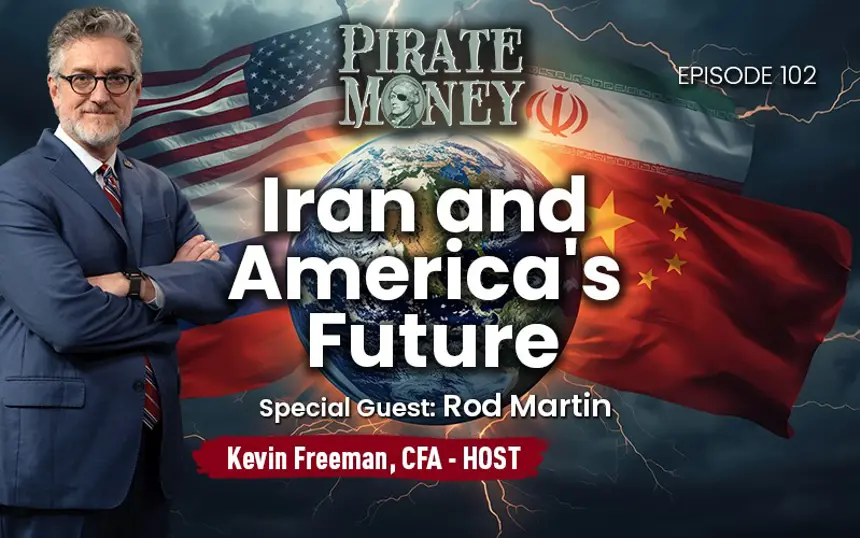
Kevin Freeman: You know, it was about 50 years ago, on NewSong Year's Eve, in 1977, then President Jimmy Carter visited Tehran. That would be the last time an American president entered the country. Believe it or not, Iran used to be a place for not infrequent state visits from President Franklin Roosevelt, Dwight Eisenhower and even Richard Nixon. So looking back, it seems almost unthinkable today. But during Carter's visit, he declared that Iran was an island of stability in one of the more troubled areas of the world. Less than two years later, on November 4, 1979, students stormed the US embassy in Tehran, taking 53 people hostage. Of course, they were all released when Reagan was sworn in as president. But how, how did things shift so quickly? The answer was the red green axis. Marxists and Islamists took over the once stable country and Carter paved the way for the Ayatollah Khomeini to take power. Now I look at UK Guardian, it says US had extensive contact with the Ayatollah Khomeini before the Iran revolution. I share this history as a backdrop and a context for what should be a spirited conversation with an incredible analyst and great friend, Rod Martin.
Do you remember when the American hostages were taken in Iran
But before we bring on Rod, I should welcome my favorite co host, my wife of nearly three decades, the mother of our children, my very best friend Marnie. If, you're listening on radio, you really should check out the podcast so you can see this amazing red hair, fiery red hair that she has. Welcome Marnie to Pirate Money Radio.
Marnie Freeman: The fiery red hair goes with my personality.
Kevin Freeman: Fiery red personality.
Marnie Freeman: Thanks for putting up with me. I love you.
Kevin Freeman: I love you too, dear. And you put up with so much from me. But do you remember when the American, hostages were taken in Iran?
Marnie Freeman: Yes. It was actually very frightening because my dad was in and out of Iran and Saudi Arabia and all that area. Cause he's an engineer, so he worked over there a lot in oil and gas and air cooled exchangers.
Kevin Freeman: Yep. Well, I just graduated from high school, which means that you're a bit younger than me and we didn't date until you were fully adult. But you were a bit younger.
Marnie Freeman: not that much younger.
Kevin Freeman: anyway, it was a shock to me. Iran had been a source of stability in the Middle East. I remember I was in debate and we debated energy policy and Iran was always ally and our friend and they had lots of oil and they were going to help us. Jimmy Carter was downplaying American strength, though at the time he said, we have to put on sweaters, the end of Great America is over and all that. There was an energy crisis. He gave away the Panama Canal. But I didn't expect him to be taken in by the Ayatollah and surrender American interests to the red green axis.
Marnie Freeman: Yeah.
Kevin Freeman: Well, better understand what happened and how it relates to us today.
Rod Martin is an investor, technology entrepreneur and futurist
We have Rod Martin. Rod Martin's founder and CEO of Martin Capital and the Rod Martin Report. He's investor, technology entrepreneur, futurist from Destin, Florida. Fox Business calls him a tech guru. Gawker once labeled him a brilliant nonconformist, while Britain's Guardian describes him as a philosopher capitalist. Epoch Times quotes him as the leading China expert, and BlazeTV has named him one of America's leading public intellectuals. Rod was part of PayPal's Pre IPO startup team, serving as special counsel to founder and CEO Peter Thiel, and also served as policy director to former Governor Mike Man.
Marnie Freeman: If you are not following Rod Martin somewhere, shape or form you, I don't know what you're doing. You are missing out.
Kevin Freeman: If you want to learn more, go to rodmartin.org but just stay tuned and you'll learn more because, Rod, you're here with us at Pirate Money Radio.
Rod Martin: I am good to be here.
Marnie Freeman: We're glad to have you. Good to see you.
New documents show Iranian leader went to great lengths to ensure American return
Kevin Freeman: All right, let's start with Iran. I want to set the stage and then get your thoughts, from the UK Guardian. It says, Khomeini, the charismatic leader of the Iranian revolution, had exchanged some Messages with the U.S. through an intermediary while living in exile in Paris. But new documents seen by the BBC's Persian Service show he went to great lengths to ensure the Americans he would not jeopardize. So, ensure, the Americans that. So it would not jeopardize his return to Iran. And he even personally wrote to U.S. officials. The reporting suggests the Carter administration took heed of his pledges and in effect, paved the way for his return by holding the Iranian army back. Here's the declassified cable. November, 63. So he'd been doing this a long time. He explained his belief in close cooperation between Islam and other world religions, particularly Christendom. Rod, obviously, the Ayatollah lied to us, as proven by the American hostage taking. But he was working with the Marxists also. What happened when he took power?
Rod Martin: You would have to be singularly stupid to believe the Ayatollah when he said any of this. Matter of fact, our, by his own statement, nuclear engineer Jimmy Carter was in fact stupendously stupid when it came to all of these things. And it's worth remembering that it wasn't Carter by himself because the Democrats had taken an overwhelming majority in Congress, after the Watergate scandal broke loose. And they, with Carter over the five year period from 1975 to 1980, lost 26 countries around the world either to the communists or to allies of the communists. It was absolutely an era of complete disaster for the free world. And Iran sticks out as one of the worst examples of this. Iran was a liberalizing country. Iran was on a path. It was already partially a democracy. The Shah was committed to getting it all the way there. He was trying not to move so fast that it would provoke a reaction from what in their context would be called conservative forces. Those conservative forces, of course, were the Ayatollah. He provoked exactly that reaction by trying to be a good guy. And of, course they used all his virtues against him. And of course they used all of Carter's biases against him. So, you know, Carter comes in absolutely lapping up Soviet propaganda at every point. You'll constantly hear, even now that, you know, the 79 revolution was a reaction to America overthrowing the elected government of Iran in 1953. No, not at all. The case there was an attempted Soviet, takeover of Iran in 1953 that we thwarted in favor of a pro Western Shah just a year after the Soviets got the hydrogen bomb. So, you know, context matters here a little bit. And the truth of the matter is Iran was an island of stability. Iran sold US oil even when OPEC was embargoing US in 73 and 79. Iran was a friend of Israel. Iran was our key ally in containing the Soviets and keeping them out of a position to dominate the Middle East. And toppling the Shah meant that you got a hostile regime that is the armor, the director, and absolutely the funder of every current armed conflict in the Middle east down to the present day. It's been 47 years of hell for the Iranians. 16, year old girls get executed by the Iranian government for getting raped. It has been hell for everybody around Iran. And they would love to bring that hell to the United States if they can finish the ICBM program that has actually accelerated since we bombed Fordo.
Kevin Freeman: Wow. And what happened, of course, when the Ayatollah took power? The red green axis was then splintered. They'd achieved their objective and he killed all the Marxists and all of the willing idiots that went along with him. but he also did something to women's rights. And I saw a picture, Marnie, I want to bring it up to you. women before the Islamic revolution looked very Western, very well dressed. and then the saddest picture, you as a mother, mother of daughters who will be shopping for wedding dresses soon for both our girls. The picture of the fully clad, covered women looking through the window. Did you see that one?
Marnie Freeman: Yes, I did. It's horrifying. And they tried to fight the forced wearing of the hijab. And it's just they had a, society like us, very Western. They were educated. They could do and make and create and be and build families and help society. And that all was stripped.
Kevin Freeman: Yeah, no, it goes from women who are leading intellectuals in Iran, and they're, prospering in all different fields to all of a sudden. And they still are active, but they're considered worth half of a man, under Sharia. And Sharia is the evil here. And the people here, they're upset, aren't they, Rod? The people, they've been riding even to the point of, being massacred, because they're so upset with the regime.
Rod Martin: Hundreds of thousands of Iranians in the streets in the face of just wanton murder. So much so, you know, we had a two day period where about 36,000 peaceful protesters were gunned down in the streets. If they got clubbed over the head by one of the Islamist militia guys and they ended up in the hospital, the, secret police comes to the hospital and shoots them in their hospital bed. And. And yet they keep coming. And when Reza Pahlavi calls them to rise, they rise. And so I have a lot of hope for where this goes in the next few weeks.
Kevin Freeman: All right, we're going to have to take a break. When we come back, though, I'm going to talk further about what's happening in Iran, what the impact it will be on the American people, how it will impact our stock market, how it's going to impact global security and all of that. We're talking with the great Rod Martin. We're going to take a break, but we'll be right back with Marnie Freeman and Rod Martin in just a minute.
Pirate Money Radio focuses on three things you can do with your money
Rod Martin: Welcome back to Pirate Money Radio with your host, Kevan Freeman.
Kevin Freeman: I'm joined by Marnie and Rod Martin, my best friend Marnie and Rod Martin, another great friend. and we're talking about what's happening in Iran. And it's going to impact your livelihood, it may impact your money. Short Term, long term may be beneficial, maybe detrimental. we'll get into that. But before we do, there are only three things you can do with your money. You can give it, spend it, or invest it. Here at Pirate Money Radio, we work to explain solutions that support all three areas in a way that promotes liberty, security and values. Patriot Mobile, a mobile phone company, supports the Pirate Money radio program. Patriot Mobile uses US carriers, including AT&T, Verizon and T Mobile, and operates on both Apple and Android phones. More information about the economic war room and Patriot Mobile is [email protected] AFR that's PirateMoneyRadio.com AFR and, Rod, we're talking about money.
Iran taking steps to interdict oil traffic in Strait of Hormuz
there will be some implications to what we're doing in Iran. Trump has taken a very bold step. but we're seeing some, movements in oil prices and stock markets and things like that. What are the implications for Americans and our wallets?
Rod Martin: Well, clearly, Iran taking steps to interdict traffic in the Strait of Hormuz is not good for global oil prices. And we've seen the price shift up in the direction of $100 a barrel now twice. And could it go higher? Of course it could go higher. But, the reality is they're running out of munitions. These are desperation plays and they affect everybody, including their alleged ally, China. I would suggest that the fact that they're now seeking to close the Strait to the degree that's possible for them is an acknowledgement that China's not going to do a thing to help them. Nothing. And they didn't last year. So China is being shown to be one of the world's worst possible allies. Anyone who trusts China to come in and help them is going to be disappointed. And the whole world is seeing that. By the way, if you trust in their air defense systems or in Russia's, you're also going to be disappointed. So don't waste your money. Buy from Boeing, Lockheed and Raytheon. Duh. in any case, the price of oil is a problem. The IEA did the right thing in unanimously authorizing the release of 400 million barrels from the various, strategic petroleum reserves. I think that helps. That probably buys the world about a month. It's true that we burn 100 million barrels a day globally, but the Middle east doesn't affect that. It's more like 10 to 15. And so that release helps. It buys time for US forces to take out the Iranian forces that can possibly threaten the Strait. And of course, Trump has already said that the U.S. navy is going to start escorting tankers through the strait. The Iranians aren't going to be able to do anything about that. So I think the short term is, you know, a little troubling, but not any big deal. The long term is we're going to bring a lot of supply back online that hasn't really been online in decades. And we're going to see much lower oil prices 18 months from now than anybody could have imagined.
Marnie Freeman: Wow. that would be amazing.
Kevin Freeman: It would.
Marnie Freeman: I would like that at the gas, gas pump.
Kevin Freeman: Yeah.
Rod Martin: But there's also another aspect to that. China will not see lower oil prices. Almost half of China's oil is sanctioned, illegal oil from Russia, Venezuela and Iran. They actually buy 90% of Iran's oil and they don't do it as a favor. It's not charity. The Chinese are taking that oil sometimes as much as 2/3 less than market price. So. So they're just toasting their supposed allies and now they're going to have to buy on the open market. That's going to remove a huge subsidy to the already over subsidized Chinese economy. That is really in a lot of trouble.
Kevin Freeman: Yeah, no, there's no question. I want to cover China and the implications long term. A little bit after the break.
The Muslim world is divided about Iran, according to Rod Martin
But before the break, Marnie, did you see the, ex post on the Muslim nation? Can you just run that down for us?
Marnie Freeman: So the Muslim world is divided about Iran. So there's Muslim countries in favor of removing this regime and that'd be Jordan, Kuwait, uae, Saudi Arabia, Oman, Qatar and Bahrain. And then there's Muslim countries against the removal of the regime.
Kevin Freeman: And who are they?
Marnie Freeman: This is interesting. Yeah, great bit. Great Britain, France and Spain.
Kevin Freeman: That's funny.
Marnie Freeman: Are you kidding?
Kevin Freeman: Yeah, no, that's true. They unfortunately have large Muslim populations, but those that are truly Muslim nations, they understand the threat, they're against it. They understand the threat that Iran has been. all right, so Rod Martin, we need to take another break. but when we come back, I want to dive deeper into to the long term plans for Trump around the world and strategically how he's using this Iran move.
Rod Martin: Pirate Money Radio helping you give, spend and invest in ways that align with liberty, security and values.
President Trump is pulling puzzle pieces together with Iran and China
Kevin Freeman: Yeah, I'm joined by Marnie Freeman and Rod Martin. And Marnie, before we get into this, I'm thinking about puzzle pieces because I'm gonna ask Rod to put the pieces that are disparate together. And you and I love to build puzzles Right. Remember that double sided puzzle that we built?
Marnie Freeman: Yes.
Kevin Freeman: It was. What was it? Up.
Marnie Freeman: It was up. The movie up.
Kevin Freeman: And on one side was one side,
Marnie Freeman: Ellie and her boyfriend.
Kevin Freeman: Carl.
Marnie Freeman: Carl. They were very young, getting ready to get married. And then on the other side, it's a double sided puzzle. On the other side was them older,
Kevin Freeman: which, which made it quite the challenge to put it together. And of course, we lost one piece.
Marnie Freeman: We did. So you ordered an entire puzzle?
Rod Martin: I did.
Kevin Freeman: I thought I could find that one piece. But Rob, we've got puzzle pieces here. And, and it's a, it's more than a two sided puzzle. It's complicated as it gets. And somehow President Trump is pulling puzzle pieces together by removing Maduro and what he's doing with China and Iran and so forth. Build a picture out of that for us. We've got about four minutes before the break.
Rod Martin: Look, the President has, cultivated an image of unpredictable, crazy action that's unrelated to all the others. That's not at all what's happening. You know, that is an image that is to keep his enemies off balance. That is for advantage in negotiat. In reality, Donald Trump learned deeply from Ronald Reagan. And we see a very similar approach to these things, even though it's communicated very differently and we live in a different world. We all understood that the Soviet Union was our principal geopolitical opponent in the 1980s. We knew that if things went badly, we would all end up speaking Russia or living in a camp. People don't necessarily perceive that with regard to China, but Donald Trump does. Donald Trump understands we're in an existential battle for who is going to determine the future of the world. And it's us in China. And everybody else is kind of, you know, they showed up too. So his whole strategy, as you see it unfold, is aimed at containing China in the way Reagan contained the Soviets. So that deprived of hard currency earnings, deprived of the ability to expand, deprived of key allies, China actually has to live with the consequences of its own communist, and I would say these days, more fascist than, strictly communist, economic policies, with the result that eventually they will collapse from within, just like the Soviet Union did. And that's what's playing out. So you take away the bases in Panama. Those ports are no longer under Chinese control. That prevents China from turning the Caribbean into a, first island chain for the United States. Venezuela takes a bunch of their oil, their discounted oil, offline. It also prevents them from creating a naval facility in Venezuela that deprives Cuba of Cash that deprives it not only creates a really great opportunity in Panama, Venezuela and Cuba, but in Cuba you have Russian and Chinese intelligence bases that are very active against the United States just 90 miles off our coast. And now with Iran. This is a key, key focus of Chinese efforts to disrupt American policy. And that goes away, too, along with a huge chunk of their oil. What's missing in that, of course, is the big thing we're working toward, which is peace in Ukraine. And Trump's strategy there is playing out brilliantly. By disrupting the shadow fleet, by seizing shadow fleet tankers, by making them uninsurable, you deprive China of the oil that is coming from Russia. You force Russia into a position where it can't afford its war, and eventually you flip it to the US Column by making a peace and investing heavily in Russia in a way that detaches them partly, not completely from China. In every case, this gets you to an isolated China.
Kevin Freeman: You know, we're not hearing this, Marnie, on the U.S. media, but the BBC had a headline. What is the game plan? The Iran war is unsettling China and its ambitions. The BBC has caught this, but the American media has largely ignored it, except for the places where Rod Martin and a few other, leading intellectuals are sharing these thoughts. So we really live in interesting times where the Americans are. Media is not telling the American people the truth. That's why you got to listen to Pirate Money Radio. We've got so much more with Marnie Freeman and Rod Martin, and we'll cover all of this right after the break.
Marnie Freeman: Foreign.
Rod Martin says President Trump is using economic warfare against adversaries
Rod Martin: Welcome to Pirate Money Radio with your host Kevan Freeman, helping you unpack the economic headlines and providing real money solutions.
Kevin Freeman: Yeah, and speaking of real money solutions, we're facing a crisis short term that Rod Martin's been helping us understand, that there's maybe long term benefit. I'm sure it wasn't very pleasant. well, I remember it during the 1980s when we fought the Cold War with economic warfare. We're doing economic warfare and a little strategic, specialist military attacks to get us here. but, it looks like President Trump has a plan and yet he's perceived by the American people as maybe just, you know, just hither there doing whatever he wants to do. But, Rod, you've been sharing with us that it's a detailed plan and I appreciate that. But I'm watching the financial markets and I see the US Dollar index strengthened. The dollar has gotten stronger in global markets. But at the same time, and this is unusual, treasury yields have gone up. Normally, when the dollar strengthens, treasury yields, will go down because people like the stronger dollar. But here we've seen a little change in that. We've seen oil prices shoot up dramatically. But interestingly enough, we've seen gold not only go up from February 26th at $4,600 an ounce, recently it's been around $5,200 an ounce. What do you make of this, economically? And does this make a case for transactional gold and silver that maybe during economic turmoil, it's good to have some options in your money. And I know you've been a big advocate with us for pirate money, as we call it. Pirate money radio. What are your thoughts?
Rod Martin: You really don't need a case for transactional gold and silver. It's just so painfully obvious that you want that, that everyone should just intuitively understand it. And we'll come back to that in a second. But as far as Trump's strategy, it should be painfully obvious to his opponents, and some of them who can see through their tds, actually do see it, that he spent four years in exile being persecuted by prosecutors everywhere. Democrats trying to get him thrown off the ballot unconstitutionally in multiple states, sat at Mar a Lago and planned out every minute of his next four years in the White House, along with some of the most brilliant conservatives alive. And we've seen that executed over the last year. Donald Trump accomplished more in the last year than any president has ever accomplished in a single year in American history. There's nothing to compare, except possibly Roosevelt, Franklin Roosevelt's first year. And I would contend strongly that Donald Trump has exceeded his achievements in that time. So, you know, of course, this is all of a piece. He goes out of his way to make sure that you don't necessarily see how they all fit together, because that would disrupt his negotiating strategy. But it's very, very similar to Ronald Reagan. As we were saying earlier, Reagan very rarely used the military. When he did, it was short, it was sharp, it was painful to the enemy, and it took ground that was absolutely essential. Like, for instance, the operation in Grenada. He also funded the Soviet Union's enemies so that they actually had to fight on their own turf, like Islam. The communist view was that if one inch of land ever falls to communism, it is communist forever, and we're only going to fight on other people's turf. And certainly that had been the position of prior US Administrations. We didn't want to poke the bear. We didn't want to maybe cause A nuclear war. Reagan said, that's stupid. You know, they're not going to start a nuclear war over Angola or Nicaragua, and we're going to arm the rebels there and give them something to deal with and something to pay for. So you're seeing the same thing play out here. Reagan. Reagan is being channeled by Trump in a meaningful way to bring about a world order that is fundamentally different from the one he inherited, one that actually operates, by his phrase in Riyadh last year. Commerce, not chaos. We can all get rich together or we will give you the stick. And Iran is getting the stick right now.
Kevin Freeman: Well, and I think that they will. The Iranian people, you've noted, are wonderful Persian people with a long history of commerce, long history of support, support for peace around the world, long history of support for Israel. the Iranian people want to get rich. I think they've been held back and they want that now.
Marnie Freeman: I mean, they're enslaved, all of them. Even the leadership is in some degree spiritually enslaved.
Kevin Freeman: We've been watching that program, Tehran, on Apple tv, and, yeah, I'd say
Marnie Freeman: it's pretty close to accurate.
Kevin Freeman: Yeah, made by the Israelis, interestingly enough. And Israel makes this, and yet they don't put Israel in perfect light. They show all of the flaws, laws and foible. It's a fascinating. Have you been watching that, Rod?
Rod Martin: I haven't, but I've heard constant good things about it, and, I encourage people to do so.
The dollar has lost 87% of its value since 1971
Circling back to your point about pirate money, I really want to stress, the dollar isn't going away, and there's been a lot of concern that somehow the Chinese would be able to replace our currency or the euro would be able to replace our currency. I don't think any of that's in the cards anytime vaguely soon. But it doesn't change the fact that the dollar has lost 87% of its value since Nixon closed the gold window in 1971. A promissory note backed by nothing is not really a promissory note. And so, you know, the dollar being completely untethered has benefited the United States in a number of respects, but it hasn't necessarily benefited the people of the United States. So when you have a solution, such as the one now passed in Texas and Florida and a handful of other states to remonetize gold, to make gold legal tender, actual currency, exempt on a per transaction basis from capital gains in the same way that dollars are, but foreign currency traded in the United States States is not. this is a huge, huge step forward. And it's opportunity for people to take advantage of in a way that will actually preserve multi generational wealth for their families.
Kevin Freeman: Well, not only that, I mean, it is also useful as a rainy day fund. the state of Utah put some money into gold. Marlow Oaks is the treasurer. He holds the charter financial analyst designation. So he looked at every time we've had a crisis. And gold, gold holds its own during a crisis pretty well. And so to put a portion of your investments, or actually I don't even want to say investments, a portion of your money into gold and silver makes sense just to have it for rainy day purposes.
Marnie Freeman: So a state can be, you know, hold their own and gain value in gold, but also you can have your own personal gold standard. And then that way everyone, all ships rise, you know, in the inflation, which Rod, you were very gracious on. you said we went down 80% inflationary, but I said 87% is what he said. Okay, 87. I thought he said 80 and I'm like, ooh, that's gracious.
Kevin Freeman: Yeah, no, it's gone more since than it was 87% a few years ago. but it does make a difference. And that's why we're here at Pirate Money Radio. Week in and week out, we talk about this. And Rod, you've been a part of the intellectual underpinnings and understanding of this from the beginning. You and I had conversations 20 years ago about the pursuit of this and why it would make a difference. And then there technology that came along, that helped, make it possible. and support for this program comes from Glint. It's a financial technology service offering a debit card mobile app that enables users to access their gold holdings for everyday purchases. And that's unique because we're talking about, what do you do with gold? Do you shave off a few, flecks of it to buy a cup of coffee?
Marnie Freeman: You can't go buy tires, gas, groceries, walking in with the gold coin. Right.
Kevin Freeman: But with Glint, users maintain ownership of allocated physical gold, which is stored in a managed vault. At the top of a transaction, gold is sold in real time to cover the purchase amount in local currency. Glint offers an alternative way to store and use the value. Combining gold and silver with modern payment infrastructure, Glint clients can monitor their gold balance, view transaction history and manage their account through the Glint app available on major mobile platforms. More details about how vaulted physical gold can be used as money are [email protected] Goal247 Again, that's glintpay.com Glint providing access to gold for modern spending. And it's wonderful. But Rod, what you described, what we've been working on is five states last year and a six this year. Utah have passed it to make it legal tender, which takes away the fear that some draconian government's going to try and interfere with, reduces the friction that you would have in taxes and so many other, or even having merchants accept it. And Rod, you've been and super helpful. we've used you at our gold summits over and over. People just are in awe of the brilliance of Rod Martin. And you can learn more about rod [email protected] and follow his substack and all of the other things. 30 seconds. Give, us a last take on transactional gold and silver.
Rod Martin: Well, we see the dollar take particular hits in times of crisis. And the most recent example of that is Covid, where you get as high as 9.1% inflation. I would argue it was higher than that, but that's the official number. And look, if you were getting your paycheck in gold, you would not have suffered that degradation in value. Your bank account would not have shriveled the way it did under Biden. So this is just a brilliant reform.
Kevin Freeman: All right, we're talking with Rod Martin, we're talking about transactional gold and silver, how it's useful in times of crisis, like maybe we have in Iran, but we have some longer term crises in our church and in our nation that we're going to need to address. We'll cover this and more with Rod Martin after the.
Rod Martin says America faces multiple threats, including Islam
Rod Martin: Welcome back to Pirate Money Radio with your host, Kevan Freeman.
Kevin Freeman: And, we're with Marnie Freeman. Thanks for being here, sweetheart. And Rod Martin. And Rod. Before we go into this next segment, what I want to share is something you, you, you know, there are a lot of threats to America. I've labeled them the red, China, which we've addressed, the green, which is Islam. The blue, which is globalism. And the yellow are the traitors, cowards, and really fools that have enabled the first three to operate. And we saw an example of that. I don't want to say disparaging things about, former, you know, now deceased Jimmy Carter. But he literally handed away American power, around the world. and we've seen that under Obama and Biden as well. But here's what we need. I think you've pointed out brilliantly that the, it's the same thing that Lincoln said, that America is not gonna fail because Some external force takes us down. If we go down, it will be suicide. It'll be, of our own making internally. And you've actually said that your concern is not so much that China is gonna take over America, but that evil people inside America are gonna turn America into a force for evil. And the only thing combating that, that is the American church, those who believe in the Lord Jesus Christ and those who, adhere to Judeo, Christian, biblical, Western civilization values. What is the state of our church and are we prepared to fight this fight?
Rod Martin: Well, the church is, I think, in some places waking up and in other places very much asleep. And one of the biggest things that we have to get serious about just from a. From a purely what is the church's mission point of view is realize that we actually have to treat the United States as a mission field. It absolutely is true that Muslims are taking over places like Dearborn, Michigan and Minneapolis. And we even have Sharia courts in Dallas, for heaven's sake. Okay, would that be true if we were properly evangelizing in those places? If we spent as much effort on missionaries into Dearborn as we do into Darfur? And it doesn't. It's not an either or. It's not like we have to ignore Africa to take care of Arizona. That's not the point. The point is you've actually got to redouble your efforts and take care of both. Now, at an evangelical leadership level, the good news is that a lot of the guys who were the worst offenders, the Russell Moore's, the David Crowd Frenches, the Curtis Changs, the Francis Chans, a lot of these guys have completely blown themselves out of our discourse by just openly admitting who they were in 24, organizing evangelicals for Biden and then evangelicals for Harris. And, you know, now you've got. You've got, David French extolling the virtues of Talarico's Christianity. Well, okay. I mean, by no orthodox standard is that valid. And it just shows you these guys were wolves in sheep's clothing from the beginning. So. So some of those people are being outed. Some of the damage is still done. We've got a lot of work to do in the church. I'll just circle back to one thing you said. I don't have any problem saying nasty things about Jimmy Carter. He was a terrible person in lots of ways. And on the church topic, he joined with Bill Clinton, that other great paragon of Christian virtue, to try to create an alternative Baptist denomination that would be expressly left Wing. And as president, he lost 26 countries to the enemy. He threw away our relationship with Iran. Iran was a staunch ally that went to the mat for us regularly. And Jimmy Carter betrayed them. Full on betrayed. And that was true in, in much of the world. This was a bad president who got a reputation for being a good man by building homes for the poor and being a Baptist Sunday school teacher. That was a smokescreen.
Kevin Freeman: Wow. And we're facing, some of the vestiges. Like we see a politician here, Pastor Tallarico running in Senate here, that's just got a false view of Christianity, don't you think, Marnie?
Marnie Freeman: Yes, I mean, he's made that clear. And he'll, say sermons and things obviously from the pulpit in front of communion and do all those things. And they are absolutely antithetical to Christianity, antithetical to the US Constitution. He's anti life and antithetical to the
Kevin Freeman: Texas Constitution and antithetical to biology. He doesn't believe that they're boys and girls, so that God made them as boys and girls. All right, we've got one more segment for most of our listeners. Rod, I want to cover the future for America when we get back, right after this next break,
Rod Martin: Pirate Money Radio, helping you give, spend and invest in ways that align with liberty, security and values. Welcome back with your host, Kevan Freeman.
Kevin Freeman: Hey, Marnie, we've covered a lot of ground with Rod Martin today, haven't we?
Marnie Freeman: I agree. I'm like, oh, I didn't know how we were going to shove it all into one show. And y' all have done it.
Kevin Freeman: History and the puzzle pieces coming together
Marnie Freeman: and okay, that's like 10 dimensions. Rod thinks in 10 dimensions. Not just four, but 10.
Kevin Freeman: Yeah. No, our double sided puzzle has now become a ten sided puzzle and Rod's pulled it together and I see a picture on every side. That would be actually a cool invention, by the way. It'd be a Rubik's Cube puzzle type thing.
Marnie Freeman: I think they do have stuff like that.
Kevin Freeman: Yeah, that's kind of cool.
America's future is incredibly bright if we don't fumble it
All right, Rod, we've got you here. this is our last segment for a lot of our, listeners. tell us what you see the future, like for America. We're 250 down. Do we get 250 more? And I want to point out, if you want to learn more, you can check out usfuture.org which is the Institute for the American Future. What do you see?
Rod Martin: Well, if we don't throw it away, not only do we get that next 250 years absent the Lord returning in between, we actually dominate the future of humanity. The future is freedom. If America prevails and there's no reason for us not to. The only reason we wouldn't, humanly speaking, is if we just commit suicide the way you said in the previous segment. The truth is, China is on a path and it's pretty much irreversible to lose 75% of its population over the next 60 to 70 years. Their economy is already in the tank. Not only is the government number of 5% growth just a complete joke, I would contend that they're in negative growth. Foreign direct investment has just frozen up, you know, all of their sources of supply. Trump is just picking off one after another.
Kevin Freeman: America is going to be larger. If what you just said is true, the United States will be large, larger population than China if, they lose 75% of their population based on our expected growth.
Rod Martin: Yes. And we are growing because even without illegal immigration, everybody forgets that we let in 1.1 million legal immigrants every single year. And the whole world is lining up to come, obviously, or we wouldn't have the illegal immigration problem that we have or have had. So America's future is incredibly bright if we don't fumble it, if we let the socialists win. If you elect that red green alliance, which is embodied in a guy like Mamdani, and honestly, in Talarico, if you elect those people to run the American government, they will tie down Gulliver like a bunch of Lilliputians, and they will do everything they can to usher in a globalist elitist order that is responsible to no one and that rules us all. But if America prevails, we are on the brink of, you know, Donald Trump keeps talking about a golden age, but you know, I was talking about a golden age long before Donald Trump picked up that term. We're on the cusp of that. And you're going to see that as we expand into space, Elon is gearing up to build a third thousand starships a year. That's not all to go to Mars, I assure you. That's going to transform terrestrial transport. And all of these things are going to make people shockingly, shockingly wealthy compared to what they are today. Will we abolish relative poverty? Of course not. But we won't be poor. And I mean, the difference is going to make the difference that took place over the course of the 20th century look relatively small. we published a [email protected] this week too. I just want to mention this, AI is an enormous productivity booster. It's just unbelievable. But what it isn't doing is it isn't replacing people. There are some tasks that are definitely moving away from human operation, but what you end up with is more need for capable people to direct the technology. And we're seeing that show up in employment data now, just as I was predicting years ago. So I think we're just on the cusp of a shocking increase in productivity and with it, individual wealth. And the leader in that is the United States of America. And we will plot out a free future for humanity.
Kevin Freeman: All right, you've heard it here from the great Rod Martin. You can follow [email protected] that if we don't fumble, the future for America is very bright. Of course, the future for Star Trek looked very bright and sometimes they got
Rod Martin: a little bit woke.
Kevin Freeman: All right, Rod, it's been great having you. Hang on, if you're with the AFR audience, because we'll cover, more after the break, but thank you for being with Pirate Money Radio.
Rod Martin: Welcome back to Pirate Money Radio with your host, Kevan Friedman.
Kevin Freeman: Hey, Marnie, isn't it fun to have Rod on Pirate Money Radio?
Marnie Freeman: He's so fascinating. I mean, start to finish, he knows everything, can come up with things. He's smart. I invented. I love it. Yeah, go follow him if you're not.
Kevin Freeman: Do it if you're part of the AFR audience. you know, we like to always end with a, what gives us hope. And Rod gave us a little bit of hope in the last segment. The future for America if we don't fumble it as bright. Rod, I do have to point out I love Star Trek like you do. Maybe not as much as you do, but I love it. But, Star Trek has proven that if you go woke, you can ruin, at least temporarily, some really great, science fiction or whatever. Where do you have hope for Star Trek? But more importantly, where do you have hope for America?
Rod Martin: Well, Star Trek is gonna get better. Paramount being purchased by Skydance is a good thing. It's worth remembering that Skydance is owned by the son of one of the most prominent Republicans in Silicon Valley. So they have a little bit different view of it. But we just had a cast revolt going back all the way. William Shatner, you know, all these guys from Next Generation and Deep Space Nine and Voyager all got together and had a meeting with the bigs, at Paramount and said, you've got to cut out the woke stuff. You just have to you're ruining the show. And the pushback has been. Well, but Star Trek has always been progressive and talked about cutting edge issues. Yes, but Star Trek hasn't always majored on victimization and body positivity and just stupid things. I'm sorry every cadet at Starfleet Academy doesn't get to be as fat as me. That's absurd. So anyway, I think we're gonna see a change. I think that Alex Kurtzman is out and I, have real hopes for that show.
Kevin Freeman: You've heard it here. You've heard afr audience, you've heard it here. Rod Martin says that Star Trek is gonna get better. I wish you could say the same thing for the Marvel franchises, but that's for another day. We gotta wrap up here. What gives you hope for America? And what would be your favorite scripture?
Rod Martin: Well, now that's interesting. I would say favorite scripture would be Jesus admonition to us, in Matthew 6:33, that we should seek first his kingdom and his righteousness, and all these other things will be added unto us. and he goes on to say, do not worry about tomorrow, for tomorrow will take care of itself. Sufficient unto the day is the evil thereof. So, you know, I think that's true in America. Tocqueville said that America is great because America is good. And if America ever ceases to be good, it will cease to be great. We're watching that play out. There could be nothing more evil than castrating children, than doing irrevocable genital mutilation to, to young minors. It's just evil. That's the future in one direction. A ah, government that arrogates to itself the right to define reality. That's 1984.
Kevin Freeman: Okay, so you can follow rodmartin.org Beautiful ending, Rod. Thank you so much for, for all that you've shared. If you have questions, prayer needs or comments, email us at 8afriratemoneyradio.com Listen wherever you get your podcasts. This is Kevan and Marty Freeman, joined by Rod Martin this week for Pirate Money Radio.