Mike Carter Foreign. Welcome to Pirate Money Radio with your host, Kevan Freeman, helping you unpack the economic headlines and providing real money solutions.
Kevin Freeman Ahoy, mates. Welcome aboard another voyage of Pirate Money Radio, the show that sails against the storms of fiat tyranny, cultural confusion and counterfeit ideas to chart a course toward liberty, security and values built on biblical truth. I'm your captain, Kevan Freeman, coming to you from the heart of Texas.
Mike Carter And I'm, Mike Carter. Great to be on Pirate Money again. You know, we always talk about money, Kevan, but excited about the show today. As I was going through the show notes and research, this really stands out alone to me. And we're going to look at money the way that God looks at money. And we hit on some ideas that I think aren't, often talked about, which is, to me, I think it's going to be a great show. So if you're in the car listening, stay tuned. This is exciting stuff. I was going through the Bible the other day, and it was interesting. In the NewSong Testament, I just looked up money. And Jesus names the big rival to God in spirituality. It's not Caesar, it's not baal, it's not some pagan idol. It's money. And he gave it a name. Mammon. Mammon. Can I say that right?
Kevin Freeman Mammon.
Mike Carter And you can't serve both. and so think about everything that competes in the world in your heart, and it's that thing in your pocket. We talk of gold, we talk of debit card. We call it pirate money. And those are great things for liberty, security and values. But keep keeping that perspective, and you're going to hit on that hard today. And, excited to get into the show.
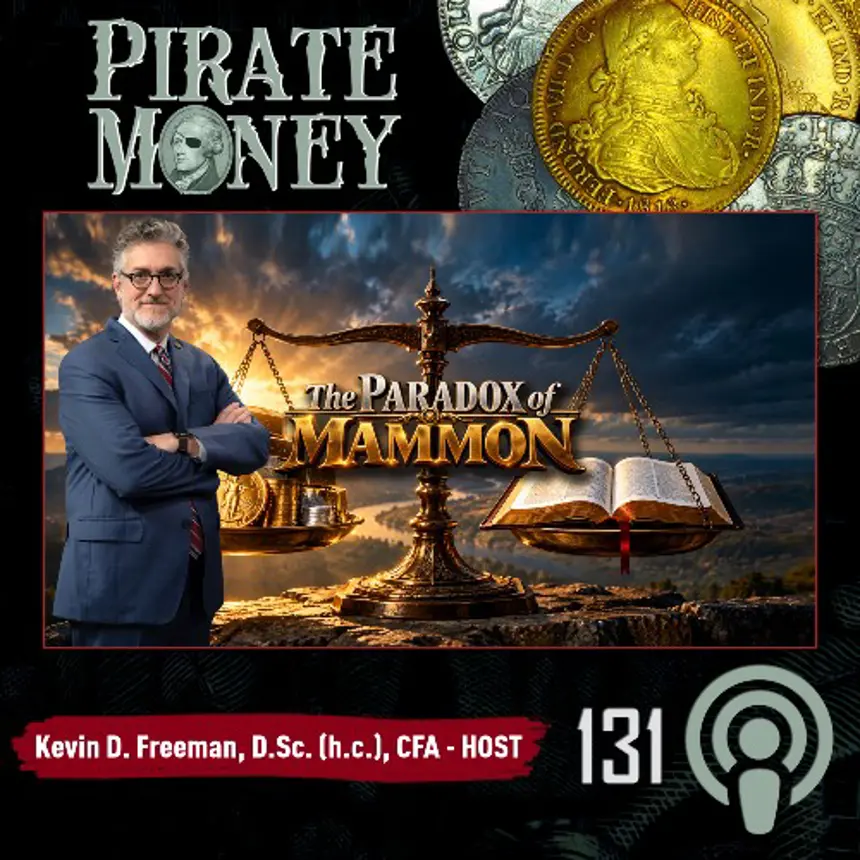
Kevin Freeman Yeah. Let's title the hour the Paradox of Mammon with the meaning underneath. We're looking from God's perspective. and people use money and they use it for independence, for security and for status, but God actually uses it for dependence, stewardship, and to test our hearts. And so we've got an overview hour. It's not a seminary lecture. It's really about the kitchen table. And, and it should be lively. So, Mike, keep pulling us back to the so what. And how does this impact my life and family?
Mike Carter I'll give you the so what for myself, you know, I've been at different stages in my life financially, different stages of success, and, you think that, gosh, once I get this, once I hit this number, I'm pretty much set, you know, I don't have to rely on anything, and then things will change like you know what? I do need God. And I think that's the important part that he teaches in the Bible. It's not about money. we talk all the time what money can provide, but this is about, putting your trust in God and how you use that money and the test that you're going through when you have it.
Kevin Freeman Yeah, think about that pride, though, that comes up. You know, I'm making good money. I remember the notion. Well, there's old saying, I've been poor and I've been rich. Rich is better. Yeah, but it doesn't last. Right. Sometimes I guess for some people it does. But you get this feeling, you know what? I can solve that problem. I can write a check and fix that. You don't need God. And I knew a man who was a, founder of one of the large tech companies, the uncle, a friend of mine, and he was highly successful. And my friend Jim said, you gotta meet my uncle, because he teaches Bible study and he's active in his church and he does all these wonderful things. And so I met him and I said, hey, where do you go to church? Well, I don't really go very much anymore. are you still teaching Bible? Well, you know, not really. And I realized that once he had sufficiency financially, he didn't have a need for dependence on God. So in that case, I understand that. Give me neither poverty nor riches. I get that from the scripture, is that if I'm too wealthy, that I don't think I need God. I don't want to be that.
Mike Carter Right.
Kevin Freeman Yeah.
Mike Carter So it's keeping it in perspective. And, you know, there's that kind of prosperity gospel thing, that some churches get accused of. God wants us to be successful. He wants us to have our needs met. He wants all these things to be done. But how do you use that money? And that's the ultimate test. That's the job interview God gives us when we pull out that card or decide how we're going to spend our money. What are we really using it for?
Kevin Freeman Yeah. No, I was in church on Sunday, and the pastor said, look, I don't buy into the prosperity gospel in that you accept Jesus in your life and everything works, because it's not that way. God teaches lessons many times through hardship, but he says, in the end, as a pastor, I look out at my congregation. Do I want them better off or not better off? I really want to see them, get through money issues. I want to see them prosperous, successful, and I don't mind it if they tithe off their prosperity either. So he's very bluntly honest about that. But yeah, there's nothing wrong with prosperity. And that's what I want to really get down and talk about from, a human sense when we say, I earned this, this is mine, I want a bigger barn so I have a safer future. And when I give, it's taking away from something that's mine. Now that's the human view. God's view is the earth is the Lord's and all of its fullness. You get that in Psalm 24:1 or Haggai 2:8. The silver is mine, the gold is mine. To put it in pirate money perspective, you know, basically we're fund managers. It's not ours. And I know that I was overseeing $2.5 billion almost for Templeton and it wasn't my money, it belonged to our customers. But you know, we had to make wise decisions with it. They had entrusted us with it. Well, it's not our money, it's God's money. And he's asked us to be stewards and he's checking, to see how we do with it.
Mike Carter Yeah, yeah. And we don't want to bury it in the ground. We want to do things to build. And that's where I think he wants us to have. And we know he wants us to have success. Now it doesn't mean life's going to be easy. It doesn't mean that if you do these things, everything's going to be beautiful. Because life is.
Kevin Freeman It doesn't mean you give. I gave to this ministry and therefore I'm going to get a million dollars in the mail tomorrow. It doesn't mean that either.
Mike Carter Not at all. Not at all. But it's about how do you further the kingdom, how do you help others, and how do you have your needs met at the same time? And God is always there. We don't always see where it's going to come from. But we've been through ups and downs ourselves in different economic cycles. and you know that God provides.
Kevin Freeman You know what's interesting though is I think about this, the three primary function of money according to the Federal Reserve and just about every economist are it's a unit of account, it's a store of value, and it's a means of exchange. It used to be money would be defined by a very thick wallet and you pull out a bunch of hundred dollar bills in there. But then pretty soon it became defined as some numbers written down in a check reg and they come on A bank statement. And now it is something that you take your phone and you log onto and say, oh, I've got this much money. Really, the difference between a poor man and a rich man, they both are likely to have a phone in America. But one of them's going to pull up and hit XYZ bank, and he's going to log in and it's going to show a bunch of zeros behind a number, and the poor man is going to show a bunch of zeros or a small number. But the point is that all they both have is a phone. Right? I mean, there's no real pile of money anywhere. It's just what society has agreed to.
Mike Carter And remember, Kevan, we can kind of remember if we go back to our days of our youth in the 70s, when money was a store of value and we're not seeing that so much anymore.
Kevin Freeman Yeah. All right, so let's go through those unit of account. We can measure everything. How many dollars does that cost? How much was that? You know, and that's a little scary, too, because we went out to dinner, at a fast food Mexican restaurant. My wife and I, we got some a la carte items last night, and nothing, no meals. It's just like, I just want a little. I just want one enchilada. And she said, I just want an enchilada. And then I got a little side of guacamole and one drink. It was 25 bucks. You know, that's crazy. and you say, well, $25 for eating out, but it was one enchilada a piece. It's like we split one dinner without the rice and the beans.
Mike Carter Yeah.
Kevin Freeman and no chips.
Mike Carter It's. It's the inflation factor. I look at prices of homes, I look at everything else is like, wow, well, now all of a sudden I'm like, oh, 500,000, 600,000 for a house, 800. You know what? A million dollars for that house isn't a bad. A bad deal. That used to be like a million
Kevin Freeman dollar home was a Taj Mahal. Right. So that's the store of value issue. And the means of exchange, it still works, people. Still, if I want to pay for my new book, Four Horsemen of the American Apocalypse, and pay for that with you, I could hand you, some cash and you would sell it to me. But, it is a good means of exchange. It is a good unit of account, but it's not been a good store of value. You know, God treats money as a tool, never, as treasure. And guess What? God made money as gold and silver and copper. It shows up in every civilization. That's not an accident. That's why, you know, the Olympics have gold, silver and bronze medals, and God made the medal. You go very, very early in Genesis and you'll read Genesis 2, 11 and 12, it talks about, gold just outside. That's where the gold is in those great hills. so God created gold as money, silver as money. He limited the supply, which is a feature, it's not a bug. We need a limited supply of money, otherwise you end up with inflation. And the long term supply of gold and silver is risen almost 2% a year, which is about how much the economy grows in real terms. Unlimited money created by paper. That gives you inflation. Every society has wanted free stuff. Eventually they've clipped the coin. That means they cut silver out or gold out and stolen from you, or they printed something, instead of that. All right, I need to share. There are only three things you can do with your money. You can give it, you can spend it, or you can invest it.
Mike Carter You can.
Kevin Freeman Here at Pirate Money Radio, we work to explain solutions that support all three areas in a way that promotes liberty, security and values. Patriot Mobile's mobile phone company supports the Pirate Money radio program. Patriot Mobile uses US carriers, including AT&T, Verizon and T Mobile, and operates on both Apple and Android phones. More information about the economic war room and Patriot Mobile is available at PirateMoneyRadio.com afr PirateMoneyRadio.com afR Mike, I'm excited. I think we're going to talk about some stewardship. Treating money as God expects us to treat it and knowing it's his.
Mike Carter Absolutely. And you look at the topics you're talking about with God's money, gold, silver, that's pirate money. That's what we're seeing in the States out there. Gold, creates a speed limit. It has limitations versus that constant money printing. So, looking forward to this next segment.
Kevin Freeman All right, we're going to take a break. When we come back, we'll talk about the heart test, how this tells whether or not we love God.
Mike Carter Welcome back to Pirate Money Radio with your host, Kevan Freeman.
Kevin Freeman And we're joined by the great Mike Carter. And we're talking about Mammon.
Mike Carter Mammon. Mammon. Money. Money. Right.
Kevin Freeman Money from a perspective. Yes.
Mike Carter You know, we hear money is a test in a lot of pulpits out there, in a lot of churches. but it kind of gets back to, as I was looking through again, the research in the show notes Jesus makes it a hiring exam for us. How do we spend our money? How do we handle. Do we know? It's a temporary thing, but what's the real assignment with money? What are we really supposed to be doing?
Kevin Freeman Yeah, we use the term mammon because that's a false deity. It was a false God in the time of Jesus, but it refers to money. And the reality of it is you can't. You said it in the first segment. God said it before you, by the way. You were just plagiarizing God. Yeah. it's called quoting the scriptures, not plagiarization. But you said you can't serve both God and mammon. You have to choose one. And that's what Jesus. It's throughout the scripture. Deuteronomy, I lay before you life and death, blessing and curse.
Mike Carter Choose.
Kevin Freeman I lay before you God and mammon.
Mike Carter Choose.
Kevin Freeman You can love one and hate the other, or hate one and love the other, but you cannot serve two masters.
Mike Carter Yeah. Yeah. And you know that you hit that when you said mammon is a rival deity. I mean, that kind of drives it home, you know, you don't think about that. Well, I got my money here. but not doing the right things, that becomes a deity. That's kind of serious.
Kevin Freeman And it was literal. They would actually take gold and silver and fashion. they would have their storehouse of wealth, and they would fashion it into an idol. And I don't know what the idols look like. I'm picturing little Buddhas they made out of gold or silver. A little fat guy sitting there. But they made idols.
Mike Carter We know that from the gold, that kind of stuff.
Kevin Freeman Golden calf, right? That was made out of gold.
Mike Carter Yeah. You know, it's kind of. People talk about money. There's tokens, rings. You touch it and it owns you. But you look at the temple of God, and it was full of gold, and God called it holy. We see gold streets. Gold streets in the Bible, gold's a good thing. But like you just said, if it's formed into something where you're worshiping that or that's what I'm living for, that becomes the idol. And, so the danger is not the coin. It's that throne that we put it on.
Kevin Freeman If it were the coin, and Jesus sent somebody fishing to find a gold coin in the fish's mouth, then Jesus was committing sin. He's not. It is a tool. It is a test, too. Luke 16:11 is one of my life verses. If you've not been faithful with unrighteous Mammon who will commit to your trust the true riches. Humans, we say, hey, you know what? Give me the money. And then when I have all my needs met, I'll serve God properly. That's not what God wants. We want God's checking. Are we putting the money part right before he check as a test of our heart? We want. Give me the money. Show me the money. I want the money. And then God, I'll serve you. After you provide for me, then I'll serve you. Now that's idolatry.
Mike Carter Yeah, yeah. What was that movie? Show Me the Money. Remember that?
Kevin Freeman Yeah.
Mike Carter Cuban. I forget the stars.
Kevin Freeman Cuban Gooding.
Mike Carter Yeah, Cuban Gooding Jr. Show M. Me the money. Show me the money.
Kevin Freeman Yeah, and Thom Cruise.
Mike Carter And I think maybe the kitchen table issue here.
Kevin Freeman You had me at hello. Yeah, I remember that movie.
Mike Carter But. But I think maybe the kitchen taboo issue here is, you know, you start to look at your bank balance. It's not like, how much money do I have? It's instead of looking like, all right, let's look at what. What God has. You know, that check balance. What. What's. What's he giving me right now? And so as we start to keep that in perspective and how do I use that? Those are the things that we want to talk a little bit more today. making sure that we're using money for good. and building upon all this legislative effort we're seeing out there with pirate money, gold, and making sure people have a fair store of value out there. And God's given us this opportunity.
Kevin Freeman Yeah. No. And it's throughout His Scriptures, Matthew 6:24. Jesus does not treat money as cold paper. He names it mammon. Ecclesiastes 10:19. He says, Money answers everything, which is not a compliment. it's actually making fun of money's claim to do that, because money can buy substitutes, but it can't buy the things that matter most. It can't buy you salvation. It can't buy you true relationships, and it can't buy you real health. It can pay a hospital bill. It can buy healthcare. and first Timothy 6:10 says, the love of money is a root of evil. 1 Timothy 6, 17:19. The rich are not told to become poor. They're told not to trust the uncertainty of riches, to do good, to be rich in good works, to store up a foundation for the coming age. The reality is money is temporal, and you said it. people treat money like Tolkien's ring. They think, well, if I put this on, then I'll have This power. And I'll have this control. No. Or they say I can't put it on. It's too dangerous. No, it is a tool God wants us to use. And he tests our heart to see if we're doing it. Deuteronomy 8, 11:18 says, when you eat and are full, your heart lifts you up and you forget the Lord who gave you the power to get wealth. Full barns produce spiritual amnesia. We gotta get this money part right, people. And if we do, God promises that we will enjoy true riches. So when we come back, we'll talk about how men cheat in this. We'll be right back.
Mike Carter Pirate Money Radio M helping you give, spend and invest in ways that align with liberty, security and values. Welcome back with your host, Kevan Freeman.
Kevin Freeman Yeah, I'm talking with Mike Carter, and we're talking about right before the break. Mike, I mentioned how sometimes men cheat in regard to money. And I know that shocks you sometimes I know that shocks you that people could be dishonest, in their dealing with money, with their weights and measures. They could lack integrity occasionally.
Mike Carter This is where I get angry in a useful way, especially as we start working this legislation and I see what's happening to people out there, people that are working so hard or they're saving up money and they think, ah, I'm going to get ahead in life. And then they keep printing and printing and that money they have is worth less and less. And God spends an astonishing amount of ink on the Scriptures, on fair weights and measures. and he's not being subdued or quaint about this. it's a loaded scale that steals from people who never sit at the table where that money is being born, where the fed might be printing it out there. That's not the right thing. We're supposed to make sure we're taking care of the poor, not taking advantage of the poor. And that happens all too often with what's out there.
Kevin Freeman Yeah, no, I've got the Scripture. Proverbs 11. One false balance is an abomination, and a just weight is his delight. Proverbs 20:10 and 20:23 talks about diverse weights and diverse measures. Leviticus 19:35, 36, Deuteronomy 25, 13:16, Micah 6, 11, Amos 8. All of these are talking about cheating people by changing the scale. Now, that's the old way, is that you change the scale. Oh, yeah, that's a full ounce of gold you got there. And so what you do is give them less than an ounce and you have dishonest weights and measures. But now with a printing press, all they have to do is just print more money and it's worth less. But people, no, no, that's a $20 bill. It's the same. You know, a $20 bill 100 years ago would buy you an ounce of gold. Today, a $20bill won't buy a fraction of a fraction of a fraction of an ounce of gold.
Mike Carter No doubt about it. Fiat is a dishonest weight. With the printing press, and those that get their first hands on money, they have the advantage. They can buy things at yesterday's prices, and then we're buying it at today's prices. That's that Cantillon effect we often talked about out there. But that's creating the wealth gap, that wealth gap that's creating this. Well, maybe I'll just give up. Maybe there's just socialism. This is where we're going to go. And we saw all that happen after the gold window. You know, you talk about fair weights and measures. You look at standards we have in business. At the gas pump, if you don't get an exact gallon of gas, that gas station's out of business. In consumer products, if you don't get. If it says 16 ounces and we're only putting 12 in, you're in trouble. But yet the government can just say, don't worry about that. We're just going to keep printing, and we're going to play with the scale. We're going to put the thumb on the scale, and take advantage of people out there.
Kevin Freeman Yeah, but they've been tricking people. At the grocery store. It used to say 16 ounces, and it costs a dollar. Now it says 12 ounces. They're honest. They tell you it's only 12 ounces, but they may keep the box the same size and then stick. Stick less in it.
Mike Carter It's happening. It's happening. And it's an unfair advantage. That loaded scale. and it's interesting, Kevan. We've talked about it. You've got it in the book. Ben Franklin is probably the most interesting convert on this subject. he sold the counties on paper money. We see him printing the Continental. He's making probably a little money off the printing press of what he's doing. and then he watches that Continental die in his own lifetime. and then he meets George Whitfield. Great Awakening. We talked about that movie, and it was unbelievable. It changes his perspective so much that he ultimately votes for the states to make only gold and silver legal tender. So he saw the damages of what that printing press did, he ran it. and they said, no, we need to make only gold and silver legal, tender. It's not a committee compromise. This is someone who changed his mind. And he was in charge. And we gotta admit, he was a smart guy.
Kevin Freeman He was a very smart guy. But he was also the father of paper money, according to the Federal Reserve. Look it up on their website. so that's a great story. And we gotta. I wanna dive more into that. We're gonna take a break in a minute here, but I wanna dive more into that, Mike, because you and I both saw that movie.
Mike Carter Yeah.
Kevin Freeman And it impacted me in a very strong and powerful way. It's true. Franklin was a deist. And we gotta talk about what that means to be a deist. I mean, well, yeah, there may be a God. He set things up and he put us here, but now we're in charge. and he rejected God in that sense. He rejected his father in that sense. And then that great preacher George Whitefield comes along, and then all of a sudden, he's finding truth. And that's where we are today. We need that great awakening. We need that truth found. And the place we're gonna see it, one of the first places we'll see it, handling money. The man who saved the Constitution because he turned to God. And we're going to talk about. And cover that in detail after the break. Plus, I want to talk about, rendered to Caesar that which is Caesar's. I want to talk about the poor. I want to talk about transactional gold and silver. So, Mike, hang with me, you all hang with us. When we come back from the break, we'll be talking about Ben Franklin.
Mike Carter Welcome to Pirate Money Radio with your host, Kevan Freeman, helping you unpack the economic headlines and providing real money solutions.
Kevin Freeman Yeah. And I'm back with Mike Carter, and we're talking about, yes, the man on the $100 bill, Ben Franklin, the father of paper money here in America. Mike.
Mike Carter Yeah, I mean, Ben Franklin, that movie, the Great Awakening, impacted me in so many ways, because it showed me a piece of history that I had not seen before, that I had not really understood completely. and you look at Ben Franklin, this revelation on the Continental, the revelation on maybe who God really is, that wasn't an overnight conversion for Ben Franklin. He was probably one of those really smart guys that thought he knew better than anybody else. But over roughly 30, 40 years with Whitefield, all of a sudden, God kept touching his heart. Kept touching his heart. And then he saw what was happening with the paper money, and he saw that, no, this is the way it needs to go. And so Franklin go back a little bit more. As a boy, he rejected his father's views on God. He was a scientist. He's an advocate of paper money because he didn't need God's money. Does that sound kind of like our opening? I've got money. That's my security. We don't need God's money. We can do this. In fact, we can print it. but later, he was the one that said, hey, the paper fail. And we believed only God actually governs. and all that after dishonest money. It was not a policy fight. It was a moral one for him. and I think we're back to that moral argument right now. What's really happening with our dollars today? With our money today. And thankfully, we have a solution. and that's, you know, transactional. Gold and silver.
Kevin Freeman Yeah. Well, I was sitting in that theater, and Marnie, my wife, knows I'm a rules follower. I follow the rules, silence your phones and everything. I couldn't help myself. We were on the back row, and I pull up my phone and I'm Googling. I shouldn't say googling. I'm doing a web search, and then I'm doing an AI search. I want to know, is this true about Franklin as a boy?
Mike Carter Really?
Kevin Freeman Did he reject his father and that. Apparently that's the case. I started studying the history. So I deep dove into Ben Franklin for, oh, several weeks. We're digging up and digging. I had a good conversation with Jon Voight, the actor, about this because he portrayed Franklin in a movie we recently saw. And so I went back and forth, I called him and said, john, did you know this about Franklin? Did you know this? And we went back and forth. He really didn't like his father's heavy handedness. He thought we were in a new world, that now is the time to throw off the oppression of God, which was gold and silver. You know, why do we have to have gold if we all agree this piece of paper is worth something, that should be good enough. well, that only works if the people are honest. Right? If you got somebody with a printing press, that's not honest. So Franklin was the father of paper money. He thought it. In fact, he wrote a whole treatise on how if we could print more paper money, it would bring greater prosperity. And then he watched it fail just like every other founder. We've got that clip that we Run of the founders. Thomas Jefferson. Paper is poverty, and Washington says it opens the door to everybody. A species of fraud. Franklin came around to that, but only after he met Whitfield.
Mike Carter Yeah, it's, powerful to see, and God's divine providence through that whole piece there. Yet we moved away from it. So we got back on the gold standard. Then we got off the gold standard, and then we started printing more money, and then that became convenient. I don't think they were bad actors. I mean, I think what happens, we want to help people, and then, well, we got a little debt. Well, well, let's just print a little more money. It's kind of like having an unlimited credit limit on your credit card.
Kevin Freeman Yep. It's when, but, honey, we've got to pay this bill, and there's not any money in the account. Well, I just use my credit card. And we've all fallen into that trap. And, you know, that's because money is limited unless you make it limitless. And that's what Franklin was doing. Franklin believed that God had created a clock and that he wanted to sit back and watch it operate. That's what a deist essentially thinks. And Franklin called himself a deist. But the man at the end of his life, after he met George Whitefield, after he heard the power of his preaching, after he saw the change in lives, after, you know, so many things, he came around to the conclusion that God notices when a sparrow falls from, the sky. He notices every hair on her head. And Franklin had lost some hair on his head. Like, you have my great minds, I guess.
Mike Carter Yeah, yeah.
Kevin Freeman Brilliant minds. Why would you waste your brain power pushing hair out your head? So anyway, Franklin realized that God reigns in the affairs of men. And so the end of his life, the last thing that he did was at the Continental convention, literally pushing them to go to God for prayer to create what we now know as the longest lived constitution in the history of mankind. No single document has lasted as long as the American Constitution.
Mike Carter Yeah. So, you know, look at Franklin. He's a man who trusted paper. but he learned in public that paper without metal is a leash. And when he believed God actually governors, he voted for honest weights. and so you look at. It's kind of interesting. You look at the Bible again, and Caesar, what did God say? He goes, pay unto Caesar. What's Caesar's? the government now wants more than a tithe, right?
Kevin Freeman Well, the government, yeah. If you pay taxes, it's important because the government then uses it to fund Programs. So you render under Caesar what is Caesar's. And, you know, God's kingdom is not of this world and all of that. But why do they take taxes when they have a printing press? You know, they're just printing it anyway, essentially, or they're creating it digitally as our, as the former.
Mike Carter But they print that, and then they call it compassion, you know, well, we're going to give people this money here. We're going to do this and that. But they're actually hurting with every dollar that they print out there. And it's interesting. I was studying Deuteronomy the other day, and God asked for first fruits. and he talks about leaving the food for the poor, in the field for a neighbor to see somebody that might need it out there. and you start looking at tithing. It's 10%, but in Deuteronomy, what does it say you're supposed to do every three years, another 10% to help the poor? So you start thinking about, is that the government's role? Well, they're not doing a great job of that.
Kevin Freeman No.
Mike Carter Or is that what we do? Is that part of that test? With that money that's in our wallet? It's like, okay, what am I doing to get to the church and myself? I've got to get. But there's times it's like, I don't know. This is a tight month. What am I going to do?
Kevin Freeman go to anybody April 15th and see how excited they are when they're writing that check to the IRS and they're making that payment. They don't seem very cheerful to me. God loves a cheerful giver. Well, a cheerful giver is one who asks the Lord, where do you want me, to do this? I'm bringing the whole tithe into the storehouse of the church. So I'm cheerfully giving. I'm tithing into my church. But those that are giving to the government, and then they see the government spending it on transgender programs in Brazil and like, whoa, whoa, wait a minute. I don't like rendering to Caesar that particular. But it's testing my heart. Right?
Mike Carter Yeah.
Mike Carter Yeah, it is. And, you know, what do we do? We take that. That exam. what are you doing with your money? What are you doing to support God's work? What are you doing to help other people out there? and as we get back to fair weights and measure, I think we will all have at least a store of value where maybe we can do a better job at some of that.
Kevin Freeman Yeah, well, I Wonder if Cesar takes, as much as he does. And it's certainly more than a tenth. It's 15% just for Social Security and Medicare. It's over that by the time you put the employer and employee portion. And then they tax your income. And, you know, it ranges, but some people are paying 30 or more percent at the federal level. Then you pay again at the state level, and then you go to buy something and you're paying, what, 7 or 8%? And then you buy a piece of property and you're paying a percentage every year. When you add it all up, I think the government's taking 50 to 60% of, that's what it feels like to me. Well, God only took 10%. Why does the government need six times what God needs?
Mike Carter And was that 50 to 60%? Did that include the inflation factor?
Mike Carter No.
Kevin Freeman And it didn't include the inheritance tax. If I want to leave it to kids and so forth, all of that. These aren't federal programs. God tells us to be generous with our money. If we treat money as ours, mine, mine, mine, mine, mine, then I don't want to give any. It's mine. But if we're merely stewards of it, and we see somebody who's in need, what's the Bible tell us to do? If somebody who's in need, they're,
Mike Carter supposed to help them.
Kevin Freeman Yeah. Or somebody comes and knocks at your door, and says, hey, I need help. And you say, be warm, be filled. Here's the gospel. By the way, Jesus loves you. And hand them a tract. No, fill their bellies first. Meet the needs of those. If we were living with money God's way. Leviticus 19, 9, 10. You mentioned it. Leave the edges of your field as a farmer so the poor can harvest. Proverbs 19:17. Kindness to the poor, lends to the Lord. Acts 20:35. It's more blessed to give than receive. 2 Corinthians 9, 6, 8. Be cheerful, givers. It's not to be extracted. Now, God doesn't hate rich people. He assigns them stewardship. Rich young ruler. He had a problem. His problem was his bank balance. It was the fact that he made the bank balance a throne. It was mammon to him, and he was afraid to give it up. The widow mark 12. Widow. Her two mites. The two copper coins. Those were more important than the large gifts because it showed her heart was willing to give.
Mike Carter Yeah. Yeah. And you know, Kevan, that's why the spendable gold piece matters. We have less and less. So it's harder Sometimes you feel I've got a scarcity. How do I give more when I keep losing out there? And so it's amazing. God put that metal on the ground. Family, ought to be able to use it for a grocery store without asking for a central bank or for permission out there.
Kevin Freeman Yeah. And we've invested in one of those solutions. Provider and support for this program comes from Glint. It's a financial technology service offering a debit card and mobile app that enables users to access gold holdings for everyday purchases. With Glint, users maintain ownership of allocated physical gold, which is stored in a managed vault. And at the time of transaction, gold is sold in real time to cover the purchase amount in local currency. Glint offers an alternative way to store and use the value. Combining gold and silver with modern payment infrastructure, Glint clients can monitor their gold balance, view transaction history, and manage their accounts through the Glint app, available on major mobile platforms. More information and details can be [email protected] Gold247. Mike let's talk more about transactional gold when we get back and how it works right after this break.
Mike Carter Welcome back to Pirate Money Radio with your host, Kevan Freeman.
Kevin Freeman Yeah, I'm talking with Mike Carter, and we're talking about God's perspective on money. And God believes gold and silver is real money. Paper. That's a promise that's never kept because the value of the paper money keeps going down. Mike just explained very quickly, about gold and silver being used as money.
Mike Carter Well, gold and silver is money. In today's transactional gold legislation, the ability to be able to take part of the money you make, hold it in gold or silver, and attach a debit card to it. And with that debit card, I can spend it just like I spend any other type of money out there. The difference is I have another way to pay. I have a hedge against inflation. And that physical gold is gold that I own. That's mine. It's never loaned out, it's always mine. and I can spend it wherever I want to spend it, which is a beautiful thing. And we're seeing more and more states pass it. Six now. Lots of enthusiasm as we go into this next legislative session. so, it's, exciting, to see what God is doing for fair weights and measures.
Kevin Freeman It's Pirate money is what it is. Yeah. You know, there are two stories that stand out to me, though, that from the scripture, talking about getting the money part right, there are two boy kings. There's Joe Ashley, who was seven years old when he became king. And then there's Josiah, who was 8 years old. And they had very different approaches. Both wanted to achieve something good for God. Both wanted to rebuild the temple to honor, the creator of this, world. One though, Joash, his answer was, I'm going to go out and take from the people and use those taxes and those proceeds, and I'm going to build up God's temple. Josiah did the exact opposite. He said, no, no, no. There's plenty of money in the temple. You get it out and give it to the people. And this is a test of one's heart. Yeah, both wanted to honor God. I get that. But when you're going to take from others to build the dream that you have versus you're going to say, hey, I've got this money I'm going to give to others to build the dream. Those are completely different. And 2 Chronicles 24 tells how Joash set out a chess chest outside the gate. He was collecting, he was administering, he was bringing it in. 2 Chronicles 34 is the opposite. Josiah's men were emptying the money in the temple and giving it to the workmen with no audit. They were dealing faithfully while the money was moving out. That's when Hilkiah the priest found the book of the law. That's the difference is, are you using money for God's purpose? Well, if you think God's purpose is to build the temple, then okay. But. But why are you going and taxing other people to do it if you have the money yourself? And I really think that's a key principle is how we treat money. Is it something to be used? Or are we going to adorn the inside of the temple with gold so that we can show off? Oh, isn't that idolatry?
Mike Carter Yeah. Yeah, but back up a little bit. When they spent the money, they took the money out of the temple to explain they found the book of the law. What do you mean by that?
Kevin Freeman Yeah. No. All right. So he says, we need to rebuild the temple. How are we going to do it? Are we going to tax the people? Josiah said, no. He said, take the money that's already in the temple and you go pay the workers. And literally, when they went to get the money and take it out, that's when they found that the Bible, the word of God, was covered up by money in the temple. So when they came to the temple, they were finding money. They weren't finding God's word. and so when they got the money part out, that's Luke 16:11. If you're faithful with your unrighteous mammon, you will be trusted with true riches. We have been faithless. And how. What's the definition of faithful? Well, in this case, it is. Are you getting the money moving? It's no different than the parable of the talents. Parable of the talents? Hey, master, I buried your money in the ground. And look, I brought it back to you, you wicked and slothful steward. Get out of here. He threw them out. The ones who were investing the money and bringing return. They were. They were praised.
Mike Carter Yeah. Yeah. Well, powerful stuff, Kevan. You see a pattern? Out at the national scale, we stopped agreeing with God about money, so we just kind of print our own. We don't have to have that speed limit of gosh, there's some limitation. How do we get more money? We just print it. and now we're hearing things like central bank digital currency. Well, this would be cleaner. We'll just pull that from air, and then we'll have ways to, start controlling or influencing how you spend your money.
Kevin Freeman CBDC is straight from the pits of hell. It is, in my opinion, the forerunner to the mark of the beast, from Revelation to where they completely control you with the government's money. God created money. It's gold, silver and copper. Man has printed money. And I'm not saying don't use US Dollars, continue to use those, but they lose their value every year. But I am saying avoid central bank digital currency where they can program it and they can control you. And you want to give to your church, they say, no, you're not giving to your church. You want to buy a cheeseburger, they said, no, you're going to buy a bug burger, right? Just like the, World Economic Forum. That's what we're looking at. Are we going to, as a nation, be honest with our weights and measures and our money? Are we going to serve God or are we going to serve Mammon? And that's what we've been talking about this whole hour. We've got one more segment for real life, and then we've got a bonus after that. So come back with us right after this break.
Mike Carter Pirate Money Radio, helping you give, spend and invest in ways that align with liberty, security and values. Welcome back with your host, Kevan Freeman.
Kevin Freeman Yeah, we're talking about the paradox of Mammon money. it is. What does God think of it when he uses the term Mammon? He's talking about a false deity that people have sworn allegiance to. Well, how's that different? From money today, the almighty dollar, we call it. Well, where does the term almighty dollar come from? There's only one Almighty. His name is God. so we're asking God, what does money look like from your side of the desk? We, as humans, we want independent security and status. God, you handed us a tool for dependent stewardship and a test of our hearts. You made m money. You created the whole concept of it. And you made the metal that you called money. Gold, silver, or copper. And then you named the rival, the false spirit, mammon, that invades people when they get all worked up on money. And you forbade being dishonest with this. You told the rich to be generous, to open their hands. You hid the book of the law in a room under money, waiting for faithful men to get the money out and pay the workmen. And then they found your truth. That's Luke 16:11.
Mike Carter That's good. Kevan Wesley. still, he kind of fits that all in one breath. Gain all you can without sinning. Save all you can without hoarding. Give all you can without making a speech about it. that's the beautiful part about that. You think about gain without sinning, so do it in a fair and just way. Save without hoarding. Don't be, you know, this is mine, mine, mine. and give without making a big deal out of it. That's something your kids can learn at the kitchen table.
Kevin Freeman All right, I want to tie this together so we know where paper money that we have, that we call almighty Dollar, that came from Ben Franklin. He was the creator of, that notion or idea in the Americas, and that's why they've honored him on the $100 bill. But Franklin met Whitfield, George Whitefield, who brought the Great Awakening to him. And he had a change of heart about the nature of God and about God's interaction with men. And what real money was. Franklin. but Whitefield. Where did Whitefield come from? He came from Jon Wesley at Oxford in the Holiness Club. Wesley shares the Gospel with Whitefield, and that's where it all came from. So I'm tying it all back together. You just mentioned Jon Wesley. Earn ethically, save honestly, give generously. Own something real that you can spend, even if it's a gram of gold. So your unit of account is not only a politician's promise, it's something real. God made gold, silver, copper. People have printed unrighteous mammon, which, by the way, in the scriptures it talks about gold and silver are purified by fire. What happens to paper when it encounters fire? Wood hangs dark.
Mike Carter It burns.
Kevin Freeman It burns fast. yeah. So we need to teach Our children Psalm 24.
Mike Carter 1.
Kevin Freeman If you want money from God's perspective, you realize the earth is the Lord's and everything in it, the world and all who live in it. Luke 16:11. Before you teach them a ticker symbol for stocks, which we're going to talk about next week, it's about stewardship. It's about, this is God's money, and we're merely stewards of it. So let's not let the spirit of mammon operate in our lives. We need honest weights and measures under the common constitution. I wrote about this in the book Pirate Money. I wrote about how in 1971, we started being dishonest with our money. I wrote about that in the new book the Four Horsemen of the American Apocalypse and Our Six Trials by Fire. So any final thoughts, Mike?
Mike Carter No, just hitting on those three verses you talked about. Psalm 24. We need to understand God owns it. You know, it's not our barns, it's not our money, it's not our homes, it's God's. And so we keep that in perspective. Proverbs 11. He hates the loaded scale. And we're seeing unfair weights and measures in such a big way today, and it's hurting so many people. And we've got a solution for that. So I'm thankful for those doors that are opening. But we go back to Proverbs 11. We want fair weights and measures. And then Luke 16, he watches how we handle the temporary pile before he hands us anything else. So as we look at the money we have, as we're blessed to get a paycheck or to get income this month, know that, thank you, Lord, that we have this. We're blessed that we have this. Now, how do I be a good steward with it?
Kevin Freeman You know, it reminds me of his kid playing Monopoly with my sister and brother. My parents would say, hey, you got some time. Go play a game. So we'd pull out Monopoly and play with it. That money in there wasn't real, that we were playing with. It didn't belong to us. The game belonged to my parents. We'd get in fights over it and everything else, and somebody would get upset and flip the Monopoly board. And that's because we made the Monopoly money, which was play too important. And we made that. That's what we're doing in real life. When we're treating the poor poorly and we're giving them dishonest weights and measures, we're dishonoring God, the owner of everything. So I think this has been a powerful hour that we've had. Mike, thank you for being part of it.
Mike Carter And you know that game, Kevan. I've had it where you win and you feel so good. I got these hotels, I got all this stuff, and then it all goes back in the box. And that's kind of the life lesson,
Kevin Freeman that is, what does the material stuff mean? Speaking of that real life, thank you to our real life audience. Stay faithful, stay free. But, you know, if you're following us on Pat Podcast or on American Family Radio, what we need you to do is stay tuned because we've got more after this break.
Mike Carter Welcome back to Pirate Money Radio with your host, Kevan Freeman.
Kevin Freeman Yeah. And I'm joined by Mike Carter. And for our American Family Radio and our podcast crew, thank you. We've told the truth about money from God's perspective. He owns it. He tests us with it. He forbids a false weight and measure, and he measures our hearts by how we treat money and, and whether the money that we have is used towards his purposes.
Mike Carter Yeah. You know, Kevan, not enough people in the church talk about God's view of money. You know, there's sermons about giving, but very few on stewardship. You know, and people tend to tune up because as soon as the pastor starts talking, they're like, oh, he's going to be asking for the tithe because there's a new building campaign coming. You know, we talked about this story with one of my friends when he laid out all the money he has. You said, have you talked to your pastor about this? And, he's like, oh, no, he'd want it all for the next building campaign. But that's not what stewardship is really about.
Kevin Freeman No. When God's word talks so much about money, it talks about a test of the heart. It's not something we really own. it can own us, but it's not something we own. It's supposed to be a tool that God's placed in our hands that he owns, that he wants us to use to build his kingdom.
Mike Carter Yeah, yeah, Kevan. And if you've been listening to the last couple weeks, we're talking about money, but we're talking about from a different perspective, from fair weights and measures, what to do with it, how to be good stewards. Kevan M. You've laid out in your book, the latest book, the importance of fair weights and measures and how not having that's caused so many geopolitical things out there. but go back and listen to those shows. we've got an app in our past shows at afr. you can listen to shows, watch them, and you can view them on Apple, Spotify, any podcast platform, YouTube and rumble. Sometimes we talk about stuff YouTube might not like, so you gotta look a little harder for it. But, it's important.
Kevin Freeman Yeah, no, it's an owner's manual that God's given us in his word. It talks about money all the time. God isn't shy in talking about unrighteous mammon, but he also talks about the rich. Ruler is like, go sell all you have and give to the poor. He talks to the rich and says, be sure and pay your labors overnight. He talks about the poor. Don't set your heart on uncertain riches. Those who desire to seek to be rich fall into a trap. Those who desire to treat money as God's and to use it for his purposes, they don't fall into a trap. Look, if I were God, I'd see the people that were handling my money correctly and I'd give more to them. And I think that's where we get this prosperity gospel notion, is the people that actually being honorable with God's treasure, sometimes God blesses them and makes them big stewards. And we know a few of those too. Good people. All right, let's pray. Father, the earth is yours and the fullness thereof. The silver is yours, the gold is yours. Forgive us for serving mammon and for blessing dishonest weights. Teach us to be faithful with little, to pay what we owe, to give with joy and to leave an inheritance of faith first, then of substance to our children's children. In Jesus name. Amen.
Mike Carter Amen. powerful stuff, Kevan. I mean, this is. It's in the Bible, but it's not talked about this way. And it's not applied as much as we are. We all need to be better at doing.
Kevin Freeman Yep. So if you have questions, prayer needs, or comments, email [email protected] we need to pray for America and the world to return to God's principles. And let's follow biblical wisdom with our money. So listen, wherever you get your podcast, it could be Apple, Spotify, or whatever, and share this with your friends. Check out PirateMoneyRadio.com this is Kevan Freeman. I'm joined this week by Mike Carter, and we. And we're here for Pirate Money Radio.
Mike Carter Foreign. Welcome to Pirate Money Radio with your host, Kevan Freeman, helping you unpack the economic headlines and providing real money solutions.
Kevin Freeman Ahoy, mates. Welcome aboard another voyage of Pirate Money Radio, the show that sails against the storms of fiat tyranny, cultural confusion and counterfeit ideas to chart a course toward liberty, security and values built on biblical truth. I'm your captain, Kevan Freeman, coming to you from the heart of Texas.
Mike Carter And I'm, Mike Carter. Great to be on Pirate Money again. You know, we always talk about money, Kevan, but excited about the show today. As I was going through the show notes and research, this really stands out alone to me. And we're going to look at money the way that God looks at money. And we hit on some ideas that I think aren't, often talked about, which is, to me, I think it's going to be a great show. So if you're in the car listening, stay tuned. This is exciting stuff. I was going through the Bible the other day, and it was interesting. In the NewSong Testament, I just looked up money. And Jesus names the big rival to God in spirituality. It's not Caesar, it's not baal, it's not some pagan idol. It's money. And he gave it a name. Mammon. Mammon. Can I say that right?
Kevin Freeman Mammon.
Mike Carter And you can't serve both. and so think about everything that competes in the world in your heart, and it's that thing in your pocket. We talk of gold, we talk of debit card. We call it pirate money. And those are great things for liberty, security and values. But keep keeping that perspective, and you're going to hit on that hard today. And, excited to get into the show.
Kevin Freeman Yeah. Let's title the hour the Paradox of Mammon with the meaning underneath. We're looking from God's perspective. and people use money and they use it for independence, for security and for status, but God actually uses it for dependence, stewardship, and to test our hearts. And so we've got an overview hour. It's not a seminary lecture. It's really about the kitchen table. And, and it should be lively. So, Mike, keep pulling us back to the so what. And how does this impact my life and family?
Mike Carter I'll give you the so what for myself, you know, I've been at different stages in my life financially, different stages of success, and, you think that, gosh, once I get this, once I hit this number, I'm pretty much set, you know, I don't have to rely on anything, and then things will change like you know what? I do need God. And I think that's the important part that he teaches in the Bible. It's not about money. we talk all the time what money can provide, but this is about, putting your trust in God and how you use that money and the test that you're going through when you have it.
Kevin Freeman Yeah, think about that pride, though, that comes up. You know, I'm making good money. I remember the notion. Well, there's old saying, I've been poor and I've been rich. Rich is better. Yeah, but it doesn't last. Right. Sometimes I guess for some people it does. But you get this feeling, you know what? I can solve that problem. I can write a check and fix that. You don't need God. And I knew a man who was a, founder of one of the large tech companies, the uncle, a friend of mine, and he was highly successful. And my friend Jim said, you gotta meet my uncle, because he teaches Bible study and he's active in his church and he does all these wonderful things. And so I met him and I said, hey, where do you go to church? Well, I don't really go very much anymore. are you still teaching Bible? Well, you know, not really. And I realized that once he had sufficiency financially, he didn't have a need for dependence on God. So in that case, I understand that. Give me neither poverty nor riches. I get that from the scripture, is that if I'm too wealthy, that I don't think I need God. I don't want to be that.
Mike Carter Right.
Kevin Freeman Yeah.
Mike Carter So it's keeping it in perspective. And, you know, there's that kind of prosperity gospel thing, that some churches get accused of. God wants us to be successful. He wants us to have our needs met. He wants all these things to be done. But how do you use that money? And that's the ultimate test. That's the job interview God gives us when we pull out that card or decide how we're going to spend our money. What are we really using it for?
Kevin Freeman Yeah. No, I was in church on Sunday, and the pastor said, look, I don't buy into the prosperity gospel in that you accept Jesus in your life and everything works, because it's not that way. God teaches lessons many times through hardship, but he says, in the end, as a pastor, I look out at my congregation. Do I want them better off or not better off? I really want to see them, get through money issues. I want to see them prosperous, successful, and I don't mind it if they tithe off their prosperity either. So he's very bluntly honest about that. But yeah, there's nothing wrong with prosperity. And that's what I want to really get down and talk about from, a human sense when we say, I earned this, this is mine, I want a bigger barn so I have a safer future. And when I give, it's taking away from something that's mine. Now that's the human view. God's view is the earth is the Lord's and all of its fullness. You get that in Psalm 24:1 or Haggai 2:8. The silver is mine, the gold is mine. To put it in pirate money perspective, you know, basically we're fund managers. It's not ours. And I know that I was overseeing $2.5 billion almost for Templeton and it wasn't my money, it belonged to our customers. But you know, we had to make wise decisions with it. They had entrusted us with it. Well, it's not our money, it's God's money. And he's asked us to be stewards and he's checking, to see how we do with it.
Mike Carter Yeah, yeah. And we don't want to bury it in the ground. We want to do things to build. And that's where I think he wants us to have. And we know he wants us to have success. Now it doesn't mean life's going to be easy. It doesn't mean that if you do these things, everything's going to be beautiful. Because life is.
Kevin Freeman It doesn't mean you give. I gave to this ministry and therefore I'm going to get a million dollars in the mail tomorrow. It doesn't mean that either.
Mike Carter Not at all. Not at all. But it's about how do you further the kingdom, how do you help others, and how do you have your needs met at the same time? And God is always there. We don't always see where it's going to come from. But we've been through ups and downs ourselves in different economic cycles. and you know that God provides.
Kevin Freeman You know what's interesting though is I think about this, the three primary function of money according to the Federal Reserve and just about every economist are it's a unit of account, it's a store of value, and it's a means of exchange. It used to be money would be defined by a very thick wallet and you pull out a bunch of hundred dollar bills in there. But then pretty soon it became defined as some numbers written down in a check reg and they come on A bank statement. And now it is something that you take your phone and you log onto and say, oh, I've got this much money. Really, the difference between a poor man and a rich man, they both are likely to have a phone in America. But one of them's going to pull up and hit XYZ bank, and he's going to log in and it's going to show a bunch of zeros behind a number, and the poor man is going to show a bunch of zeros or a small number. But the point is that all they both have is a phone. Right? I mean, there's no real pile of money anywhere. It's just what society has agreed to.
Mike Carter And remember, Kevan, we can kind of remember if we go back to our days of our youth in the 70s, when money was a store of value and we're not seeing that so much anymore.
Kevin Freeman Yeah. All right, so let's go through those unit of account. We can measure everything. How many dollars does that cost? How much was that? You know, and that's a little scary, too, because we went out to dinner, at a fast food Mexican restaurant. My wife and I, we got some a la carte items last night, and nothing, no meals. It's just like, I just want a little. I just want one enchilada. And she said, I just want an enchilada. And then I got a little side of guacamole and one drink. It was 25 bucks. You know, that's crazy. and you say, well, $25 for eating out, but it was one enchilada a piece. It's like we split one dinner without the rice and the beans.
Mike Carter Yeah.
Kevin Freeman and no chips.
Mike Carter It's. It's the inflation factor. I look at prices of homes, I look at everything else is like, wow, well, now all of a sudden I'm like, oh, 500,000, 600,000 for a house, 800. You know what? A million dollars for that house isn't a bad. A bad deal. That used to be like a million
Kevin Freeman dollar home was a Taj Mahal. Right. So that's the store of value issue. And the means of exchange, it still works, people. Still, if I want to pay for my new book, Four Horsemen of the American Apocalypse, and pay for that with you, I could hand you, some cash and you would sell it to me. But, it is a good means of exchange. It is a good unit of account, but it's not been a good store of value. You know, God treats money as a tool, never, as treasure. And guess What? God made money as gold and silver and copper. It shows up in every civilization. That's not an accident. That's why, you know, the Olympics have gold, silver and bronze medals, and God made the medal. You go very, very early in Genesis and you'll read Genesis 2, 11 and 12, it talks about, gold just outside. That's where the gold is in those great hills. so God created gold as money, silver as money. He limited the supply, which is a feature, it's not a bug. We need a limited supply of money, otherwise you end up with inflation. And the long term supply of gold and silver is risen almost 2% a year, which is about how much the economy grows in real terms. Unlimited money created by paper. That gives you inflation. Every society has wanted free stuff. Eventually they've clipped the coin. That means they cut silver out or gold out and stolen from you, or they printed something, instead of that. All right, I need to share. There are only three things you can do with your money. You can give it, you can spend it, or you can invest it.
Mike Carter You can.
Kevin Freeman Here at Pirate Money Radio, we work to explain solutions that support all three areas in a way that promotes liberty, security and values. Patriot Mobile's mobile phone company supports the Pirate Money radio program. Patriot Mobile uses US carriers, including AT&T, Verizon and T Mobile, and operates on both Apple and Android phones. More information about the economic war room and Patriot Mobile is available at PirateMoneyRadio.com afr PirateMoneyRadio.com afR Mike, I'm excited. I think we're going to talk about some stewardship. Treating money as God expects us to treat it and knowing it's his.
Mike Carter Absolutely. And you look at the topics you're talking about with God's money, gold, silver, that's pirate money. That's what we're seeing in the States out there. Gold, creates a speed limit. It has limitations versus that constant money printing. So, looking forward to this next segment.
Kevin Freeman All right, we're going to take a break. When we come back, we'll talk about the heart test, how this tells whether or not we love God.
Mike Carter Welcome back to Pirate Money Radio with your host, Kevan Freeman.
Kevin Freeman And we're joined by the great Mike Carter. And we're talking about Mammon.
Mike Carter Mammon. Mammon. Money. Money. Right.
Kevin Freeman Money from a perspective. Yes.
Mike Carter You know, we hear money is a test in a lot of pulpits out there, in a lot of churches. but it kind of gets back to, as I was looking through again, the research in the show notes Jesus makes it a hiring exam for us. How do we spend our money? How do we handle. Do we know? It's a temporary thing, but what's the real assignment with money? What are we really supposed to be doing?
Kevin Freeman Yeah, we use the term mammon because that's a false deity. It was a false God in the time of Jesus, but it refers to money. And the reality of it is you can't. You said it in the first segment. God said it before you, by the way. You were just plagiarizing God. Yeah. it's called quoting the scriptures, not plagiarization. But you said you can't serve both God and mammon. You have to choose one. And that's what Jesus. It's throughout the scripture. Deuteronomy, I lay before you life and death, blessing and curse.
Mike Carter Choose.
Kevin Freeman I lay before you God and mammon.
Mike Carter Choose.
Kevin Freeman You can love one and hate the other, or hate one and love the other, but you cannot serve two masters.
Mike Carter Yeah. Yeah. And you know that you hit that when you said mammon is a rival deity. I mean, that kind of drives it home, you know, you don't think about that. Well, I got my money here. but not doing the right things, that becomes a deity. That's kind of serious.
Kevin Freeman And it was literal. They would actually take gold and silver and fashion. they would have their storehouse of wealth, and they would fashion it into an idol. And I don't know what the idols look like. I'm picturing little Buddhas they made out of gold or silver. A little fat guy sitting there. But they made idols.
Mike Carter We know that from the gold, that kind of stuff.
Kevin Freeman Golden calf, right? That was made out of gold.
Mike Carter Yeah. You know, it's kind of. People talk about money. There's tokens, rings. You touch it and it owns you. But you look at the temple of God, and it was full of gold, and God called it holy. We see gold streets. Gold streets in the Bible, gold's a good thing. But like you just said, if it's formed into something where you're worshiping that or that's what I'm living for, that becomes the idol. And, so the danger is not the coin. It's that throne that we put it on.
Kevin Freeman If it were the coin, and Jesus sent somebody fishing to find a gold coin in the fish's mouth, then Jesus was committing sin. He's not. It is a tool. It is a test, too. Luke 16:11 is one of my life verses. If you've not been faithful with unrighteous Mammon who will commit to your trust the true riches. Humans, we say, hey, you know what? Give me the money. And then when I have all my needs met, I'll serve God properly. That's not what God wants. We want God's checking. Are we putting the money part right before he check as a test of our heart? We want. Give me the money. Show me the money. I want the money. And then God, I'll serve you. After you provide for me, then I'll serve you. Now that's idolatry.
Mike Carter Yeah, yeah. What was that movie? Show Me the Money. Remember that?
Kevin Freeman Yeah.
Mike Carter Cuban. I forget the stars.
Kevin Freeman Cuban Gooding.
Mike Carter Yeah, Cuban Gooding Jr. Show M. Me the money. Show me the money.
Kevin Freeman Yeah, and Thom Cruise.
Mike Carter And I think maybe the kitchen table issue here.
Kevin Freeman You had me at hello. Yeah, I remember that movie.
Mike Carter But. But I think maybe the kitchen taboo issue here is, you know, you start to look at your bank balance. It's not like, how much money do I have? It's instead of looking like, all right, let's look at what. What God has. You know, that check balance. What. What's. What's he giving me right now? And so as we start to keep that in perspective and how do I use that? Those are the things that we want to talk a little bit more today. making sure that we're using money for good. and building upon all this legislative effort we're seeing out there with pirate money, gold, and making sure people have a fair store of value out there. And God's given us this opportunity.
Kevin Freeman Yeah. No. And it's throughout His Scriptures, Matthew 6:24. Jesus does not treat money as cold paper. He names it mammon. Ecclesiastes 10:19. He says, Money answers everything, which is not a compliment. it's actually making fun of money's claim to do that, because money can buy substitutes, but it can't buy the things that matter most. It can't buy you salvation. It can't buy you true relationships, and it can't buy you real health. It can pay a hospital bill. It can buy healthcare. and first Timothy 6:10 says, the love of money is a root of evil. 1 Timothy 6, 17:19. The rich are not told to become poor. They're told not to trust the uncertainty of riches, to do good, to be rich in good works, to store up a foundation for the coming age. The reality is money is temporal, and you said it. people treat money like Tolkien's ring. They think, well, if I put this on, then I'll have This power. And I'll have this control. No. Or they say I can't put it on. It's too dangerous. No, it is a tool God wants us to use. And he tests our heart to see if we're doing it. Deuteronomy 8, 11:18 says, when you eat and are full, your heart lifts you up and you forget the Lord who gave you the power to get wealth. Full barns produce spiritual amnesia. We gotta get this money part right, people. And if we do, God promises that we will enjoy true riches. So when we come back, we'll talk about how men cheat in this. We'll be right back.
Mike Carter Pirate Money Radio M helping you give, spend and invest in ways that align with liberty, security and values. Welcome back with your host, Kevan Freeman.
Kevin Freeman Yeah, I'm talking with Mike Carter, and we're talking about right before the break. Mike, I mentioned how sometimes men cheat in regard to money. And I know that shocks you sometimes I know that shocks you that people could be dishonest, in their dealing with money, with their weights and measures. They could lack integrity occasionally.
Mike Carter This is where I get angry in a useful way, especially as we start working this legislation and I see what's happening to people out there, people that are working so hard or they're saving up money and they think, ah, I'm going to get ahead in life. And then they keep printing and printing and that money they have is worth less and less. And God spends an astonishing amount of ink on the Scriptures, on fair weights and measures. and he's not being subdued or quaint about this. it's a loaded scale that steals from people who never sit at the table where that money is being born, where the fed might be printing it out there. That's not the right thing. We're supposed to make sure we're taking care of the poor, not taking advantage of the poor. And that happens all too often with what's out there.
Kevin Freeman Yeah, no, I've got the Scripture. Proverbs 11. One false balance is an abomination, and a just weight is his delight. Proverbs 20:10 and 20:23 talks about diverse weights and diverse measures. Leviticus 19:35, 36, Deuteronomy 25, 13:16, Micah 6, 11, Amos 8. All of these are talking about cheating people by changing the scale. Now, that's the old way, is that you change the scale. Oh, yeah, that's a full ounce of gold you got there. And so what you do is give them less than an ounce and you have dishonest weights and measures. But now with a printing press, all they have to do is just print more money and it's worth less. But people, no, no, that's a $20 bill. It's the same. You know, a $20 bill 100 years ago would buy you an ounce of gold. Today, a $20bill won't buy a fraction of a fraction of a fraction of an ounce of gold.
Mike Carter No doubt about it. Fiat is a dishonest weight. With the printing press, and those that get their first hands on money, they have the advantage. They can buy things at yesterday's prices, and then we're buying it at today's prices. That's that Cantillon effect we often talked about out there. But that's creating the wealth gap, that wealth gap that's creating this. Well, maybe I'll just give up. Maybe there's just socialism. This is where we're going to go. And we saw all that happen after the gold window. You know, you talk about fair weights and measures. You look at standards we have in business. At the gas pump, if you don't get an exact gallon of gas, that gas station's out of business. In consumer products, if you don't get. If it says 16 ounces and we're only putting 12 in, you're in trouble. But yet the government can just say, don't worry about that. We're just going to keep printing, and we're going to play with the scale. We're going to put the thumb on the scale, and take advantage of people out there.
Kevin Freeman Yeah, but they've been tricking people. At the grocery store. It used to say 16 ounces, and it costs a dollar. Now it says 12 ounces. They're honest. They tell you it's only 12 ounces, but they may keep the box the same size and then stick. Stick less in it.
Mike Carter It's happening. It's happening. And it's an unfair advantage. That loaded scale. and it's interesting, Kevan. We've talked about it. You've got it in the book. Ben Franklin is probably the most interesting convert on this subject. he sold the counties on paper money. We see him printing the Continental. He's making probably a little money off the printing press of what he's doing. and then he watches that Continental die in his own lifetime. and then he meets George Whitfield. Great Awakening. We talked about that movie, and it was unbelievable. It changes his perspective so much that he ultimately votes for the states to make only gold and silver legal tender. So he saw the damages of what that printing press did, he ran it. and they said, no, we need to make only gold and silver legal, tender. It's not a committee compromise. This is someone who changed his mind. And he was in charge. And we gotta admit, he was a smart guy.
Kevin Freeman He was a very smart guy. But he was also the father of paper money, according to the Federal Reserve. Look it up on their website. so that's a great story. And we gotta. I wanna dive more into that. We're gonna take a break in a minute here, but I wanna dive more into that, Mike, because you and I both saw that movie.
Mike Carter Yeah.
Kevin Freeman And it impacted me in a very strong and powerful way. It's true. Franklin was a deist. And we gotta talk about what that means to be a deist. I mean, well, yeah, there may be a God. He set things up and he put us here, but now we're in charge. and he rejected God in that sense. He rejected his father in that sense. And then that great preacher George Whitefield comes along, and then all of a sudden, he's finding truth. And that's where we are today. We need that great awakening. We need that truth found. And the place we're gonna see it, one of the first places we'll see it, handling money. The man who saved the Constitution because he turned to God. And we're going to talk about. And cover that in detail after the break. Plus, I want to talk about, rendered to Caesar that which is Caesar's. I want to talk about the poor. I want to talk about transactional gold and silver. So, Mike, hang with me, you all hang with us. When we come back from the break, we'll be talking about Ben Franklin.
Mike Carter Welcome to Pirate Money Radio with your host, Kevan Freeman, helping you unpack the economic headlines and providing real money solutions.
Kevin Freeman Yeah. And I'm back with Mike Carter, and we're talking about, yes, the man on the $100 bill, Ben Franklin, the father of paper money here in America. Mike.
Mike Carter Yeah, I mean, Ben Franklin, that movie, the Great Awakening, impacted me in so many ways, because it showed me a piece of history that I had not seen before, that I had not really understood completely. and you look at Ben Franklin, this revelation on the Continental, the revelation on maybe who God really is, that wasn't an overnight conversion for Ben Franklin. He was probably one of those really smart guys that thought he knew better than anybody else. But over roughly 30, 40 years with Whitefield, all of a sudden, God kept touching his heart. Kept touching his heart. And then he saw what was happening with the paper money, and he saw that, no, this is the way it needs to go. And so Franklin go back a little bit more. As a boy, he rejected his father's views on God. He was a scientist. He's an advocate of paper money because he didn't need God's money. Does that sound kind of like our opening? I've got money. That's my security. We don't need God's money. We can do this. In fact, we can print it. but later, he was the one that said, hey, the paper fail. And we believed only God actually governs. and all that after dishonest money. It was not a policy fight. It was a moral one for him. and I think we're back to that moral argument right now. What's really happening with our dollars today? With our money today. And thankfully, we have a solution. and that's, you know, transactional. Gold and silver.
Kevin Freeman Yeah. Well, I was sitting in that theater, and Marnie, my wife, knows I'm a rules follower. I follow the rules, silence your phones and everything. I couldn't help myself. We were on the back row, and I pull up my phone and I'm Googling. I shouldn't say googling. I'm doing a web search, and then I'm doing an AI search. I want to know, is this true about Franklin as a boy?
Mike Carter Really?
Kevin Freeman Did he reject his father and that. Apparently that's the case. I started studying the history. So I deep dove into Ben Franklin for, oh, several weeks. We're digging up and digging. I had a good conversation with Jon Voight, the actor, about this because he portrayed Franklin in a movie we recently saw. And so I went back and forth, I called him and said, john, did you know this about Franklin? Did you know this? And we went back and forth. He really didn't like his father's heavy handedness. He thought we were in a new world, that now is the time to throw off the oppression of God, which was gold and silver. You know, why do we have to have gold if we all agree this piece of paper is worth something, that should be good enough. well, that only works if the people are honest. Right? If you got somebody with a printing press, that's not honest. So Franklin was the father of paper money. He thought it. In fact, he wrote a whole treatise on how if we could print more paper money, it would bring greater prosperity. And then he watched it fail just like every other founder. We've got that clip that we Run of the founders. Thomas Jefferson. Paper is poverty, and Washington says it opens the door to everybody. A species of fraud. Franklin came around to that, but only after he met Whitfield.
Mike Carter Yeah, it's, powerful to see, and God's divine providence through that whole piece there. Yet we moved away from it. So we got back on the gold standard. Then we got off the gold standard, and then we started printing more money, and then that became convenient. I don't think they were bad actors. I mean, I think what happens, we want to help people, and then, well, we got a little debt. Well, well, let's just print a little more money. It's kind of like having an unlimited credit limit on your credit card.
Kevin Freeman Yep. It's when, but, honey, we've got to pay this bill, and there's not any money in the account. Well, I just use my credit card. And we've all fallen into that trap. And, you know, that's because money is limited unless you make it limitless. And that's what Franklin was doing. Franklin believed that God had created a clock and that he wanted to sit back and watch it operate. That's what a deist essentially thinks. And Franklin called himself a deist. But the man at the end of his life, after he met George Whitefield, after he heard the power of his preaching, after he saw the change in lives, after, you know, so many things, he came around to the conclusion that God notices when a sparrow falls from, the sky. He notices every hair on her head. And Franklin had lost some hair on his head. Like, you have my great minds, I guess.
Mike Carter Yeah, yeah.
Kevin Freeman Brilliant minds. Why would you waste your brain power pushing hair out your head? So anyway, Franklin realized that God reigns in the affairs of men. And so the end of his life, the last thing that he did was at the Continental convention, literally pushing them to go to God for prayer to create what we now know as the longest lived constitution in the history of mankind. No single document has lasted as long as the American Constitution.
Mike Carter Yeah. So, you know, look at Franklin. He's a man who trusted paper. but he learned in public that paper without metal is a leash. And when he believed God actually governors, he voted for honest weights. and so you look at. It's kind of interesting. You look at the Bible again, and Caesar, what did God say? He goes, pay unto Caesar. What's Caesar's? the government now wants more than a tithe, right?
Kevin Freeman Well, the government, yeah. If you pay taxes, it's important because the government then uses it to fund Programs. So you render under Caesar what is Caesar's. And, you know, God's kingdom is not of this world and all of that. But why do they take taxes when they have a printing press? You know, they're just printing it anyway, essentially, or they're creating it digitally as our, as the former.
Mike Carter But they print that, and then they call it compassion, you know, well, we're going to give people this money here. We're going to do this and that. But they're actually hurting with every dollar that they print out there. And it's interesting. I was studying Deuteronomy the other day, and God asked for first fruits. and he talks about leaving the food for the poor, in the field for a neighbor to see somebody that might need it out there. and you start looking at tithing. It's 10%, but in Deuteronomy, what does it say you're supposed to do every three years, another 10% to help the poor? So you start thinking about, is that the government's role? Well, they're not doing a great job of that.
Kevin Freeman No.
Mike Carter Or is that what we do? Is that part of that test? With that money that's in our wallet? It's like, okay, what am I doing to get to the church and myself? I've got to get. But there's times it's like, I don't know. This is a tight month. What am I going to do?
Kevin Freeman go to anybody April 15th and see how excited they are when they're writing that check to the IRS and they're making that payment. They don't seem very cheerful to me. God loves a cheerful giver. Well, a cheerful giver is one who asks the Lord, where do you want me, to do this? I'm bringing the whole tithe into the storehouse of the church. So I'm cheerfully giving. I'm tithing into my church. But those that are giving to the government, and then they see the government spending it on transgender programs in Brazil and like, whoa, whoa, wait a minute. I don't like rendering to Caesar that particular. But it's testing my heart. Right?
Mike Carter Yeah.
Mike Carter Yeah, it is. And, you know, what do we do? We take that. That exam. what are you doing with your money? What are you doing to support God's work? What are you doing to help other people out there? and as we get back to fair weights and measure, I think we will all have at least a store of value where maybe we can do a better job at some of that.
Kevin Freeman Yeah, well, I Wonder if Cesar takes, as much as he does. And it's certainly more than a tenth. It's 15% just for Social Security and Medicare. It's over that by the time you put the employer and employee portion. And then they tax your income. And, you know, it ranges, but some people are paying 30 or more percent at the federal level. Then you pay again at the state level, and then you go to buy something and you're paying, what, 7 or 8%? And then you buy a piece of property and you're paying a percentage every year. When you add it all up, I think the government's taking 50 to 60% of, that's what it feels like to me. Well, God only took 10%. Why does the government need six times what God needs?
Mike Carter And was that 50 to 60%? Did that include the inflation factor?
Mike Carter No.
Kevin Freeman And it didn't include the inheritance tax. If I want to leave it to kids and so forth, all of that. These aren't federal programs. God tells us to be generous with our money. If we treat money as ours, mine, mine, mine, mine, mine, then I don't want to give any. It's mine. But if we're merely stewards of it, and we see somebody who's in need, what's the Bible tell us to do? If somebody who's in need, they're,
Mike Carter supposed to help them.
Kevin Freeman Yeah. Or somebody comes and knocks at your door, and says, hey, I need help. And you say, be warm, be filled. Here's the gospel. By the way, Jesus loves you. And hand them a tract. No, fill their bellies first. Meet the needs of those. If we were living with money God's way. Leviticus 19, 9, 10. You mentioned it. Leave the edges of your field as a farmer so the poor can harvest. Proverbs 19:17. Kindness to the poor, lends to the Lord. Acts 20:35. It's more blessed to give than receive. 2 Corinthians 9, 6, 8. Be cheerful, givers. It's not to be extracted. Now, God doesn't hate rich people. He assigns them stewardship. Rich young ruler. He had a problem. His problem was his bank balance. It was the fact that he made the bank balance a throne. It was mammon to him, and he was afraid to give it up. The widow mark 12. Widow. Her two mites. The two copper coins. Those were more important than the large gifts because it showed her heart was willing to give.
Mike Carter Yeah. Yeah. And you know, Kevan, that's why the spendable gold piece matters. We have less and less. So it's harder Sometimes you feel I've got a scarcity. How do I give more when I keep losing out there? And so it's amazing. God put that metal on the ground. Family, ought to be able to use it for a grocery store without asking for a central bank or for permission out there.
Kevin Freeman Yeah. And we've invested in one of those solutions. Provider and support for this program comes from Glint. It's a financial technology service offering a debit card and mobile app that enables users to access gold holdings for everyday purchases. With Glint, users maintain ownership of allocated physical gold, which is stored in a managed vault. And at the time of transaction, gold is sold in real time to cover the purchase amount in local currency. Glint offers an alternative way to store and use the value. Combining gold and silver with modern payment infrastructure, Glint clients can monitor their gold balance, view transaction history, and manage their accounts through the Glint app, available on major mobile platforms. More information and details can be [email protected] Gold247. Mike let's talk more about transactional gold when we get back and how it works right after this break.
Mike Carter Welcome back to Pirate Money Radio with your host, Kevan Freeman.
Kevin Freeman Yeah, I'm talking with Mike Carter, and we're talking about God's perspective on money. And God believes gold and silver is real money. Paper. That's a promise that's never kept because the value of the paper money keeps going down. Mike just explained very quickly, about gold and silver being used as money.
Mike Carter Well, gold and silver is money. In today's transactional gold legislation, the ability to be able to take part of the money you make, hold it in gold or silver, and attach a debit card to it. And with that debit card, I can spend it just like I spend any other type of money out there. The difference is I have another way to pay. I have a hedge against inflation. And that physical gold is gold that I own. That's mine. It's never loaned out, it's always mine. and I can spend it wherever I want to spend it, which is a beautiful thing. And we're seeing more and more states pass it. Six now. Lots of enthusiasm as we go into this next legislative session. so, it's, exciting, to see what God is doing for fair weights and measures.
Kevin Freeman It's Pirate money is what it is. Yeah. You know, there are two stories that stand out to me, though, that from the scripture, talking about getting the money part right, there are two boy kings. There's Joe Ashley, who was seven years old when he became king. And then there's Josiah, who was 8 years old. And they had very different approaches. Both wanted to achieve something good for God. Both wanted to rebuild the temple to honor, the creator of this, world. One though, Joash, his answer was, I'm going to go out and take from the people and use those taxes and those proceeds, and I'm going to build up God's temple. Josiah did the exact opposite. He said, no, no, no. There's plenty of money in the temple. You get it out and give it to the people. And this is a test of one's heart. Yeah, both wanted to honor God. I get that. But when you're going to take from others to build the dream that you have versus you're going to say, hey, I've got this money I'm going to give to others to build the dream. Those are completely different. And 2 Chronicles 24 tells how Joash set out a chess chest outside the gate. He was collecting, he was administering, he was bringing it in. 2 Chronicles 34 is the opposite. Josiah's men were emptying the money in the temple and giving it to the workmen with no audit. They were dealing faithfully while the money was moving out. That's when Hilkiah the priest found the book of the law. That's the difference is, are you using money for God's purpose? Well, if you think God's purpose is to build the temple, then okay. But. But why are you going and taxing other people to do it if you have the money yourself? And I really think that's a key principle is how we treat money. Is it something to be used? Or are we going to adorn the inside of the temple with gold so that we can show off? Oh, isn't that idolatry?
Mike Carter Yeah. Yeah, but back up a little bit. When they spent the money, they took the money out of the temple to explain they found the book of the law. What do you mean by that?
Kevin Freeman Yeah. No. All right. So he says, we need to rebuild the temple. How are we going to do it? Are we going to tax the people? Josiah said, no. He said, take the money that's already in the temple and you go pay the workers. And literally, when they went to get the money and take it out, that's when they found that the Bible, the word of God, was covered up by money in the temple. So when they came to the temple, they were finding money. They weren't finding God's word. and so when they got the money part out, that's Luke 16:11. If you're faithful with your unrighteous mammon, you will be trusted with true riches. We have been faithless. And how. What's the definition of faithful? Well, in this case, it is. Are you getting the money moving? It's no different than the parable of the talents. Parable of the talents? Hey, master, I buried your money in the ground. And look, I brought it back to you, you wicked and slothful steward. Get out of here. He threw them out. The ones who were investing the money and bringing return. They were. They were praised.
Mike Carter Yeah. Yeah. Well, powerful stuff, Kevan. You see a pattern? Out at the national scale, we stopped agreeing with God about money, so we just kind of print our own. We don't have to have that speed limit of gosh, there's some limitation. How do we get more money? We just print it. and now we're hearing things like central bank digital currency. Well, this would be cleaner. We'll just pull that from air, and then we'll have ways to, start controlling or influencing how you spend your money.
Kevin Freeman CBDC is straight from the pits of hell. It is, in my opinion, the forerunner to the mark of the beast, from Revelation to where they completely control you with the government's money. God created money. It's gold, silver and copper. Man has printed money. And I'm not saying don't use US Dollars, continue to use those, but they lose their value every year. But I am saying avoid central bank digital currency where they can program it and they can control you. And you want to give to your church, they say, no, you're not giving to your church. You want to buy a cheeseburger, they said, no, you're going to buy a bug burger, right? Just like the, World Economic Forum. That's what we're looking at. Are we going to, as a nation, be honest with our weights and measures and our money? Are we going to serve God or are we going to serve Mammon? And that's what we've been talking about this whole hour. We've got one more segment for real life, and then we've got a bonus after that. So come back with us right after this break.
Mike Carter Pirate Money Radio, helping you give, spend and invest in ways that align with liberty, security and values. Welcome back with your host, Kevan Freeman.
Kevin Freeman Yeah, we're talking about the paradox of Mammon money. it is. What does God think of it when he uses the term Mammon? He's talking about a false deity that people have sworn allegiance to. Well, how's that different? From money today, the almighty dollar, we call it. Well, where does the term almighty dollar come from? There's only one Almighty. His name is God. so we're asking God, what does money look like from your side of the desk? We, as humans, we want independent security and status. God, you handed us a tool for dependent stewardship and a test of our hearts. You made m money. You created the whole concept of it. And you made the metal that you called money. Gold, silver, or copper. And then you named the rival, the false spirit, mammon, that invades people when they get all worked up on money. And you forbade being dishonest with this. You told the rich to be generous, to open their hands. You hid the book of the law in a room under money, waiting for faithful men to get the money out and pay the workmen. And then they found your truth. That's Luke 16:11.
Mike Carter That's good. Kevan Wesley. still, he kind of fits that all in one breath. Gain all you can without sinning. Save all you can without hoarding. Give all you can without making a speech about it. that's the beautiful part about that. You think about gain without sinning, so do it in a fair and just way. Save without hoarding. Don't be, you know, this is mine, mine, mine. and give without making a big deal out of it. That's something your kids can learn at the kitchen table.
Kevin Freeman All right, I want to tie this together so we know where paper money that we have, that we call almighty Dollar, that came from Ben Franklin. He was the creator of, that notion or idea in the Americas, and that's why they've honored him on the $100 bill. But Franklin met Whitfield, George Whitefield, who brought the Great Awakening to him. And he had a change of heart about the nature of God and about God's interaction with men. And what real money was. Franklin. but Whitefield. Where did Whitefield come from? He came from Jon Wesley at Oxford in the Holiness Club. Wesley shares the Gospel with Whitefield, and that's where it all came from. So I'm tying it all back together. You just mentioned Jon Wesley. Earn ethically, save honestly, give generously. Own something real that you can spend, even if it's a gram of gold. So your unit of account is not only a politician's promise, it's something real. God made gold, silver, copper. People have printed unrighteous mammon, which, by the way, in the scriptures it talks about gold and silver are purified by fire. What happens to paper when it encounters fire? Wood hangs dark.
Mike Carter It burns.
Kevin Freeman It burns fast. yeah. So we need to teach Our children Psalm 24.
Mike Carter 1.
Kevin Freeman If you want money from God's perspective, you realize the earth is the Lord's and everything in it, the world and all who live in it. Luke 16:11. Before you teach them a ticker symbol for stocks, which we're going to talk about next week, it's about stewardship. It's about, this is God's money, and we're merely stewards of it. So let's not let the spirit of mammon operate in our lives. We need honest weights and measures under the common constitution. I wrote about this in the book Pirate Money. I wrote about how in 1971, we started being dishonest with our money. I wrote about that in the new book the Four Horsemen of the American Apocalypse and Our Six Trials by Fire. So any final thoughts, Mike?
Mike Carter No, just hitting on those three verses you talked about. Psalm 24. We need to understand God owns it. You know, it's not our barns, it's not our money, it's not our homes, it's God's. And so we keep that in perspective. Proverbs 11. He hates the loaded scale. And we're seeing unfair weights and measures in such a big way today, and it's hurting so many people. And we've got a solution for that. So I'm thankful for those doors that are opening. But we go back to Proverbs 11. We want fair weights and measures. And then Luke 16, he watches how we handle the temporary pile before he hands us anything else. So as we look at the money we have, as we're blessed to get a paycheck or to get income this month, know that, thank you, Lord, that we have this. We're blessed that we have this. Now, how do I be a good steward with it?
Kevin Freeman You know, it reminds me of his kid playing Monopoly with my sister and brother. My parents would say, hey, you got some time. Go play a game. So we'd pull out Monopoly and play with it. That money in there wasn't real, that we were playing with. It didn't belong to us. The game belonged to my parents. We'd get in fights over it and everything else, and somebody would get upset and flip the Monopoly board. And that's because we made the Monopoly money, which was play too important. And we made that. That's what we're doing in real life. When we're treating the poor poorly and we're giving them dishonest weights and measures, we're dishonoring God, the owner of everything. So I think this has been a powerful hour that we've had. Mike, thank you for being part of it.
Mike Carter And you know that game, Kevan. I've had it where you win and you feel so good. I got these hotels, I got all this stuff, and then it all goes back in the box. And that's kind of the life lesson,
Kevin Freeman that is, what does the material stuff mean? Speaking of that real life, thank you to our real life audience. Stay faithful, stay free. But, you know, if you're following us on Pat Podcast or on American Family Radio, what we need you to do is stay tuned because we've got more after this break.
Mike Carter Welcome back to Pirate Money Radio with your host, Kevan Freeman.
Kevin Freeman Yeah. And I'm joined by Mike Carter. And for our American Family Radio and our podcast crew, thank you. We've told the truth about money from God's perspective. He owns it. He tests us with it. He forbids a false weight and measure, and he measures our hearts by how we treat money and, and whether the money that we have is used towards his purposes.
Mike Carter Yeah. You know, Kevan, not enough people in the church talk about God's view of money. You know, there's sermons about giving, but very few on stewardship. You know, and people tend to tune up because as soon as the pastor starts talking, they're like, oh, he's going to be asking for the tithe because there's a new building campaign coming. You know, we talked about this story with one of my friends when he laid out all the money he has. You said, have you talked to your pastor about this? And, he's like, oh, no, he'd want it all for the next building campaign. But that's not what stewardship is really about.
Kevin Freeman No. When God's word talks so much about money, it talks about a test of the heart. It's not something we really own. it can own us, but it's not something we own. It's supposed to be a tool that God's placed in our hands that he owns, that he wants us to use to build his kingdom.
Mike Carter Yeah, yeah, Kevan. And if you've been listening to the last couple weeks, we're talking about money, but we're talking about from a different perspective, from fair weights and measures, what to do with it, how to be good stewards. Kevan M. You've laid out in your book, the latest book, the importance of fair weights and measures and how not having that's caused so many geopolitical things out there. but go back and listen to those shows. we've got an app in our past shows at afr. you can listen to shows, watch them, and you can view them on Apple, Spotify, any podcast platform, YouTube and rumble. Sometimes we talk about stuff YouTube might not like, so you gotta look a little harder for it. But, it's important.
Kevin Freeman Yeah, no, it's an owner's manual that God's given us in his word. It talks about money all the time. God isn't shy in talking about unrighteous mammon, but he also talks about the rich. Ruler is like, go sell all you have and give to the poor. He talks to the rich and says, be sure and pay your labors overnight. He talks about the poor. Don't set your heart on uncertain riches. Those who desire to seek to be rich fall into a trap. Those who desire to treat money as God's and to use it for his purposes, they don't fall into a trap. Look, if I were God, I'd see the people that were handling my money correctly and I'd give more to them. And I think that's where we get this prosperity gospel notion, is the people that actually being honorable with God's treasure, sometimes God blesses them and makes them big stewards. And we know a few of those too. Good people. All right, let's pray. Father, the earth is yours and the fullness thereof. The silver is yours, the gold is yours. Forgive us for serving mammon and for blessing dishonest weights. Teach us to be faithful with little, to pay what we owe, to give with joy and to leave an inheritance of faith first, then of substance to our children's children. In Jesus name. Amen.
Mike Carter Amen. powerful stuff, Kevan. I mean, this is. It's in the Bible, but it's not talked about this way. And it's not applied as much as we are. We all need to be better at doing.
Kevin Freeman Yep. So if you have questions, prayer needs, or comments, email [email protected] we need to pray for America and the world to return to God's principles. And let's follow biblical wisdom with our money. So listen, wherever you get your podcast, it could be Apple, Spotify, or whatever, and share this with your friends. Check out PirateMoneyRadio.com this is Kevan Freeman. I'm joined this week by Mike Carter, and we. And we're here for Pirate Money Radio.
Is money your servant—or your master? Discover what Scripture really says about wealth, gold, honest money, generosity and stewardship. From Mammon and dishonest weights to Franklin, Wesley and the biblical call to earn ethically, save wisely and give generously, this powerful conversation challenges how we think about money—and who ultimately owns it.
 Live
Live
Did you know American Family Radio is listener-supported? Your monthly financial support will allow us to continue upholding Godly values through our numerous channels, like American Family Radio, One Million Moms, The Stand magazine, and many more.
Become a Great Commission Partner TODAY to help AFR transform culture by rebuilding the family. When you donate today, you’ll get access to: